La Malédiction (1)
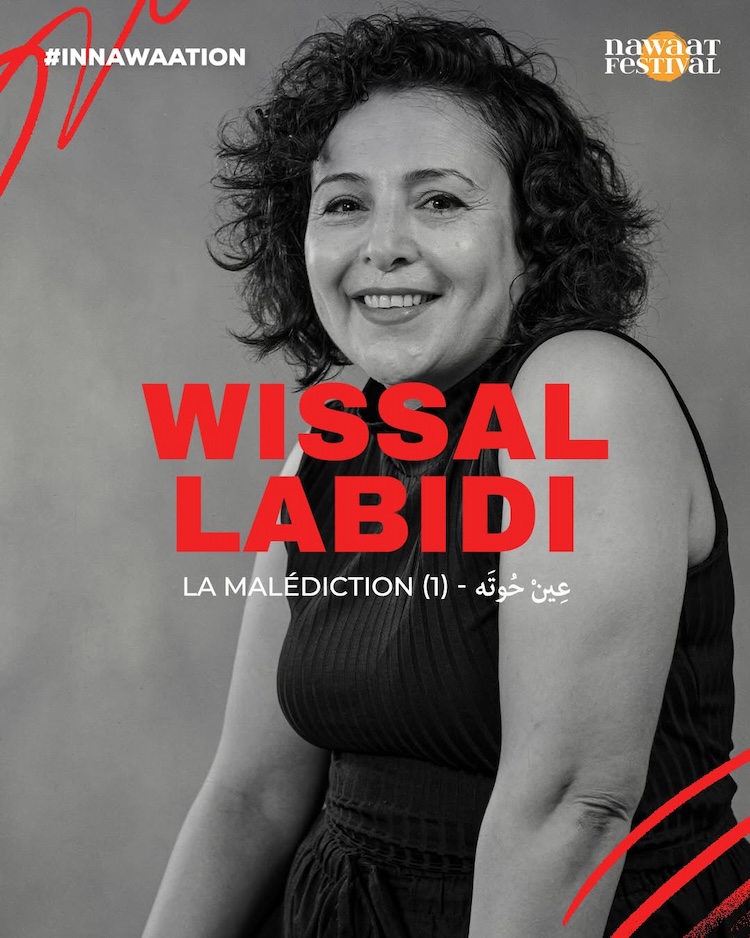
Wissal Labidi
Wissal Labidi is a versatile Tunisian artist. She trained in graphic design at the School of Arts and Crafts in Tunis, then at the Tunisian National Theatre’s School of Acting. In 2013, she also took part in the international Truth and Dare programme in Tunis and Copenhagen.
She has created several shadow-theatre productions with the Lab’Z’orchestra collective and performed in Tunisian theatre productions, including Fenêtre sur… by Raja Ben Ammar and Bis by Sonia Zarg Ayouna. Her work also encompasses writing and translation for both theatre and poetry.
theatrical performance
Wissal Labidi’s La Malédiction I is a raw, hybrid theatrical performance that confronts violence against women through a layered dialogue between art, testimony and collective memory. Drawing on an excerpt from Virginie Despentes’s King Kong Theory, reworked into Tunisian Arabic, it combines literary adaptation with accounts gathered from women who have endured physical, psychological and sexual violence. The result is an uncompromising piece that makes room for experiences too often silenced, dismissed or reduced to passing news items.
Performed at Nawaat’s fifth festival as one of the projects selected by the Innawaation incubator, the work refuses euphemism and the comfort of distance. Labidi’s performance brings the audience into direct contact with the social mechanisms that normalise violence: victim-blaming, disbelief, denial and the persistent questioning of women’s words..
Through a stripped-back staging and intensely physical presence, the piece explores bodies marked by trauma but also sustained by resistance, survival and the difficult process of naming what has happened.
Rather than presenting feminist struggle as a simple opposition between women and men, La Malédiction I calls for recognition, responsibility and justice. Developed in dialogue with psychologist Sandra Dachraoui, it treats speech itself as a path toward liberation: listening to survivors, believing them and acknowledging violence are essential first steps. At the centre of the festival, the performance articulates a language of revolt that is intimate as well as political, affirming the dignity and force of women who continue to stand despite violence and silence.

