L’bahreya
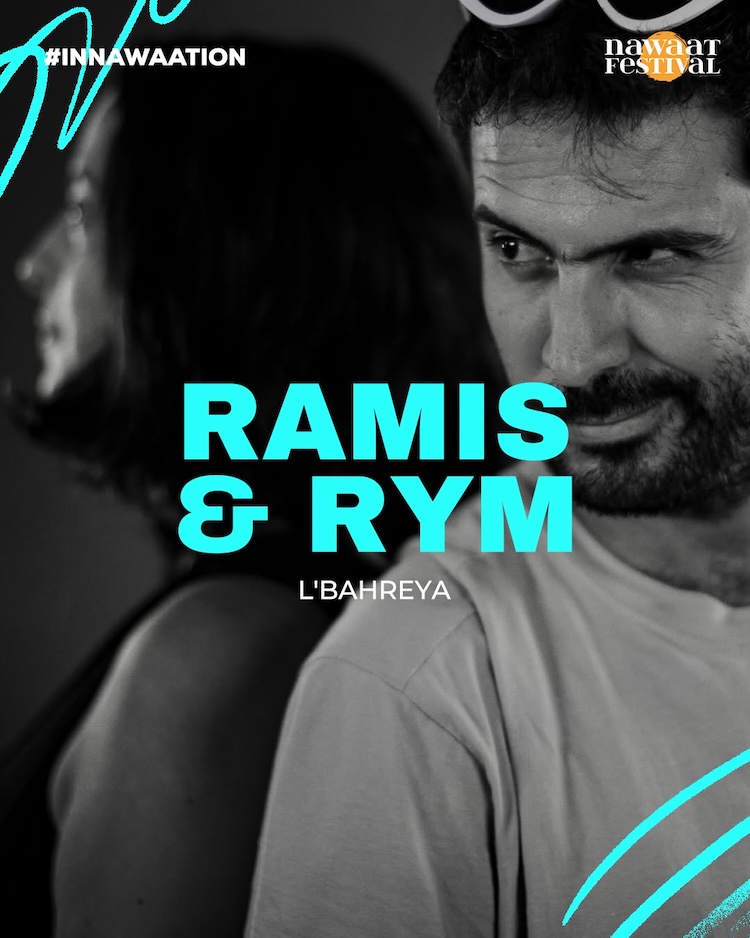
RamiS & Rym
Ramis Barka is a Tunisia-based visual artist specialising in storyboarding and animation. Trained in 3D animation at ISAMM, he recently expanded his expertise through a storyboard course with StoryboardArt, taught by artists working with Pixar, DreamWorks, and Marvel Studios. With more than a decade of experience, he has collaborated with Tunisian studios, agencies, and directors.
Rym Amami co-founded the animation studio Freesh Production in 2012. She also joined the organising committee of the Chouftouhonna feminist art festival, later becoming a podcast producer at Inkyfada. She is the screenwriter of the comic books Shift and the light novel Phaza 907 B. In 2024, she took part in the TQR artistic residency organised by the Mawjoudin association and performed her work The Crow’s Maze on stage.
collective investigative game
With L’bahreya, artists Ramis Barka and Rym Amami created an immersive, collective investigative game that turned the festival space into the scene of an environmental mystery. Participants were invited to trace a scientist who had come to Tunisia to measure marine pollution and then mysteriously disappeared. Videos, graffiti, hidden objects and seemingly obvious details became clues in an open-ended investigation, encouraging festival-goers to explore every corner of the venue, exchange findings and piece together the story collectively.
Behind this playful format lay a serious inquiry into the socio-economic and environmental consequences of industrial development along the Mediterranean, including the stakes around seawater desalination.
Read more: L’bahreyaAs participants followed the clues, they encountered information about marine pollution in Tunisia: the shrinking of Posidonia seagrass meadows, the disappearance of fish species, and the destructive effects of unchecked industrialisation on the sea, land and air.

The project transformed complex ecological questions into a tangible and accessible experience, combining strategy, testimony, observation and puzzle-solving. Rather than treating environmental awareness as a passive lesson, L’bahreya made it an active and shared process. Its game mechanics particularly engaged younger audiences, showing how artistic and interactive formats can foster critical awareness, environmental education and a culture of resistance to pollution. By the end of the investigation, the project invited participants not only to solve a fictional disappearance, but also to recognise their own role in confronting industrial models that threaten ecosystems and communities.
