Despite its central role in the production process, the work carried out by women in Tunisia remains invisible and unregulated, outside the restricted circle of the country’s official economy and statistics. It neither transcends the barriers of family hierarchy, nor the precarious circuits of the country’s informal economy. Over time, the government has devised a number of illusory initiatives—from cooperatives to community-based enterprises—however, all of these experiments have failed, having only ever been political fronts. These models have always failed to take into account the different realities in which women operate, and perverted the very essence of a social and solidarity economy.
In suburbs, low-income neighborhoods and underserved rural areas, women compensate for what the formal economy lacks through their work. The latter is divided into two types of activities: invisible work, carried out within the household (unpaid and unrecognized, essentially destined for domestic consumption), and undeclared work, which generates income but is never accounted for, since it is neither reflected in national statistics nor the country’s GDP. In reality, it constitutes an entire economic network that operates from within household kitchens, sewing workshops and other “clandestine” spaces where baked goods, pottery and other products are made and then sold.
It is thanks to these activities, to this daily struggle, that women manage to overcome institutional abdication that has caused so much damage over the decades. This history serves as a daily reminder of the need for a new economic model that is more inclusive and equitable, capable of encompassing all of the activities that the official economic system has been unable to integrate.
WORK CARRIED OUT BY WOMEN, FORGOTTEN BY THE STATE
Domestic work falls within the vast, invisible economic network formed by women, and yet it remains absent from official statistics and any form of economic recognition. 38-year-old Nadia is a homemaker who lives in a low-income neighborhood of the capital. She shares her daily struggle:
I wake up before everyone else, cook, clean, take care of the children, take my mom to the doctor… I work more than men who leave the house, but when it comes to evaluating work, we say that men work and I am unemployed.
All of these tasks: cooking, cleaning, caring for children and the elderly, are essential for the reproduction of social life, but they are socially reduced to fulfilling a “natural” extension of the maternal role, and are not regarded as an economic effort deserving of recognition.
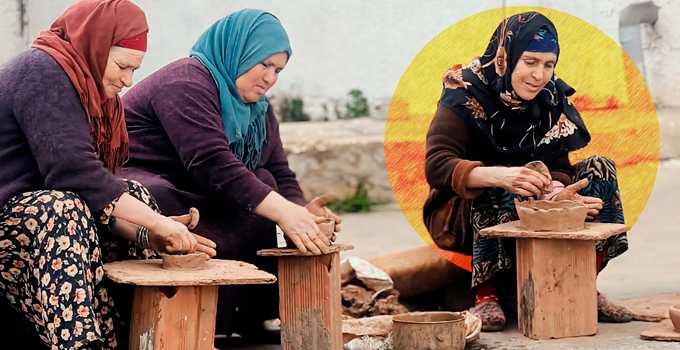
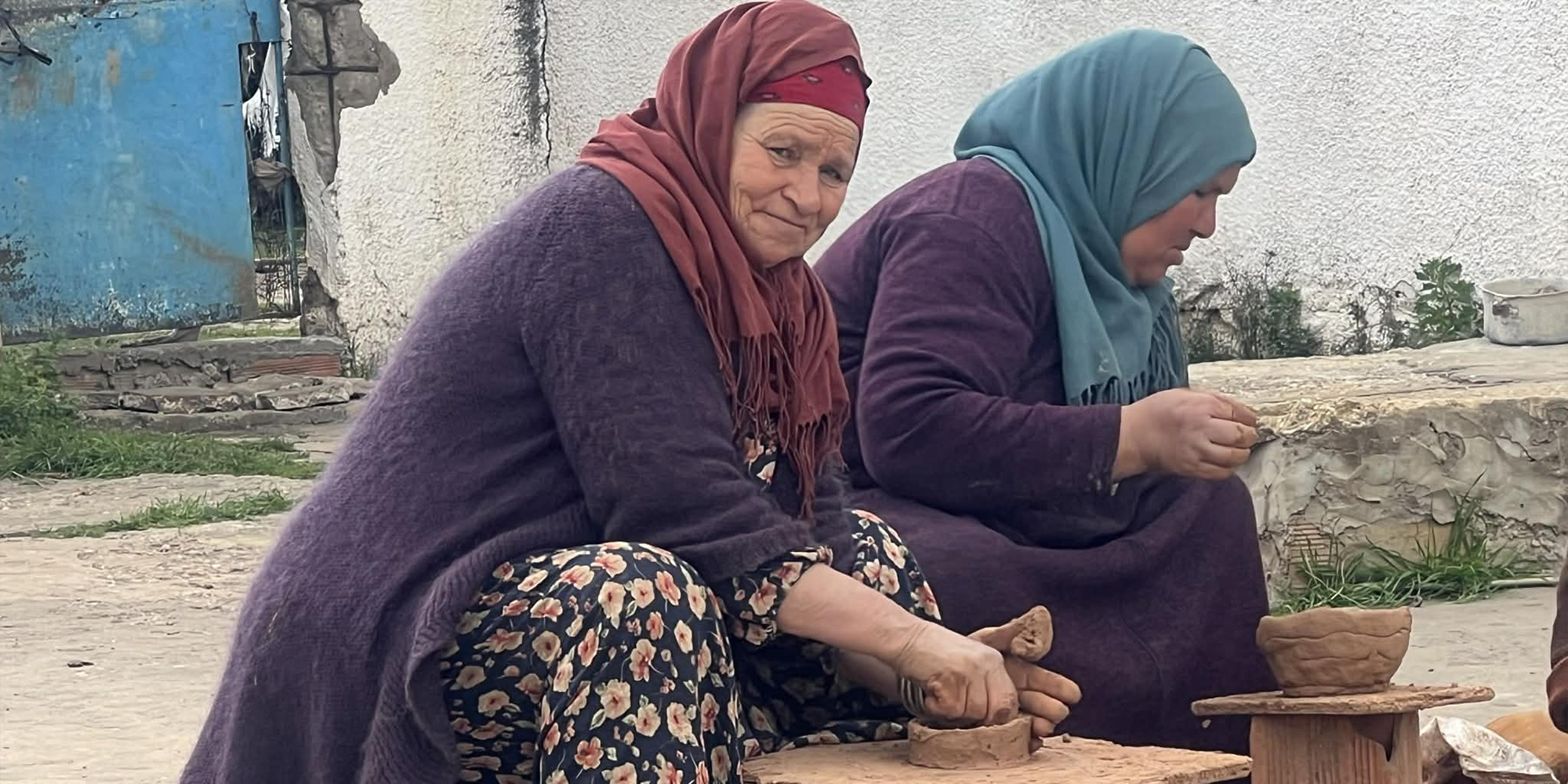
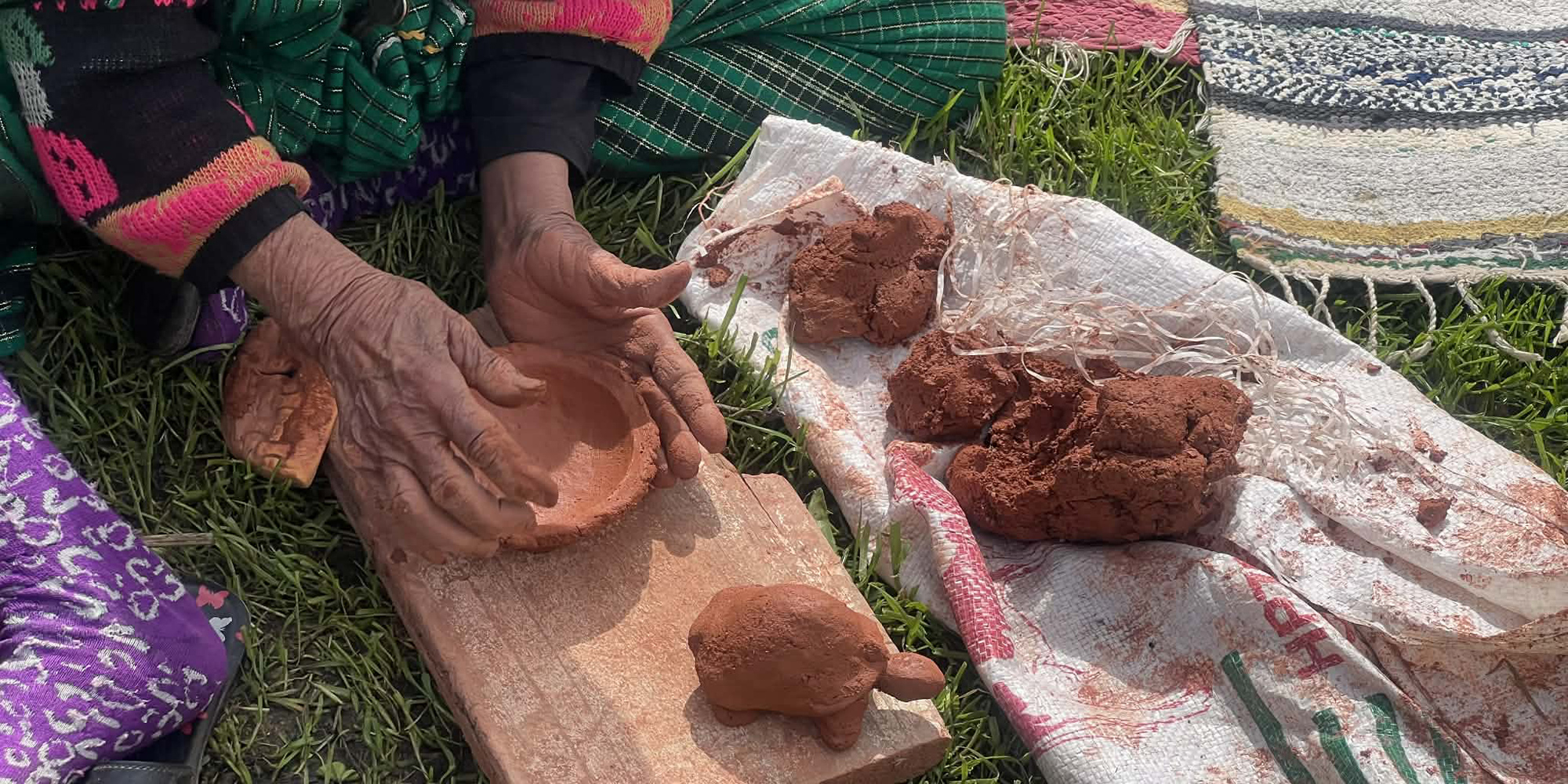
Unregulated (or undeclared) work is different from invisible work in that it is remunerated, but takes place outside of the regulatory framework and does not benefit from any social protections. This is the case for the potters of Sejnane, who embody a deeply cultural, living model of unregulated work carried out by women. Their craft is handmade pottery and art objects inspired by the local patrimony, using traditional techniques that have been passed on from one generation to another, without machines or modern means of production.
Despite international recognition of Sejnane’s pottery as Intangible Cultural Heritage by UNESCO, work carried out by these women has yet to be integrated into the regulated economic circuit. Their products are sold in precarious conditions, without the guarantee of a stable income or professional recognition equivalent to the economic and cultural value that they produce.
Salha, mother of three, is 39 years old and grew up in a rural setting. She tells Nawaat about her home-based work as a seamstress: “My clients are my neighbors and residents of the neighborhood. I am not commercially registered and can’t rent a space. I work every day to make a living and aspire to developing my project, but lack support.” Although Salha’s work earns her a direct income, her situation is precarious and unstable due to the lack of regulations and protections.
Interviewed by Nawaat on the subject, economic researcher and feminist activist Souad Triki points out the importance of distinguishing between “invisible work” and “unregulated work.” According to Triki, confusing the two makes it impossible to understand the reality in which women operate, especially in low-income neighborhoods and rural areas, where these different forms of work overlap, and constraints are amplified.
As Triki explains, “invisible work is the daily effort that women exert within the household without any financial compensation, whether cooking, cleaning, caring for children or elders. This work is essentially for domestic consumption, not for the market.” Although this effort generates a fundamental economic and social value which contributes to providing for the family and reproducing society’s active forces, it remains excluded from economic indicators and national statistics, and is not recognized as a legal economic activity. For Triki, this institutional exclusion “makes women more vulnerable to exploitation and limits their chances of accessing economic autonomy, in the absence of any social or legal recognition of the real value of this work.”
According to the Social Institutions and Gender Index (SIGI) 2023 report, Tunisian women dedicate an average of 5.3 hours a day to unpaid domestic work1, approximately 8.1 times more than the average number of hours—0.6—that men invest in the same activities.
Triki also highlights “a paradox that reveals the inequality between the two sexes: women who take on these tasks do it for free, however, if someone from outside the household (a housekeeper) is hired to carry out the same tasks, she is paid. And yet we expect women to continue to do this work under the pretext that it is part of “the image of mother/good wife” created by society, and because the job market only offers women half of the opportunities that are open to men, if we consider unemployment rates among women and men in Tunisia.”

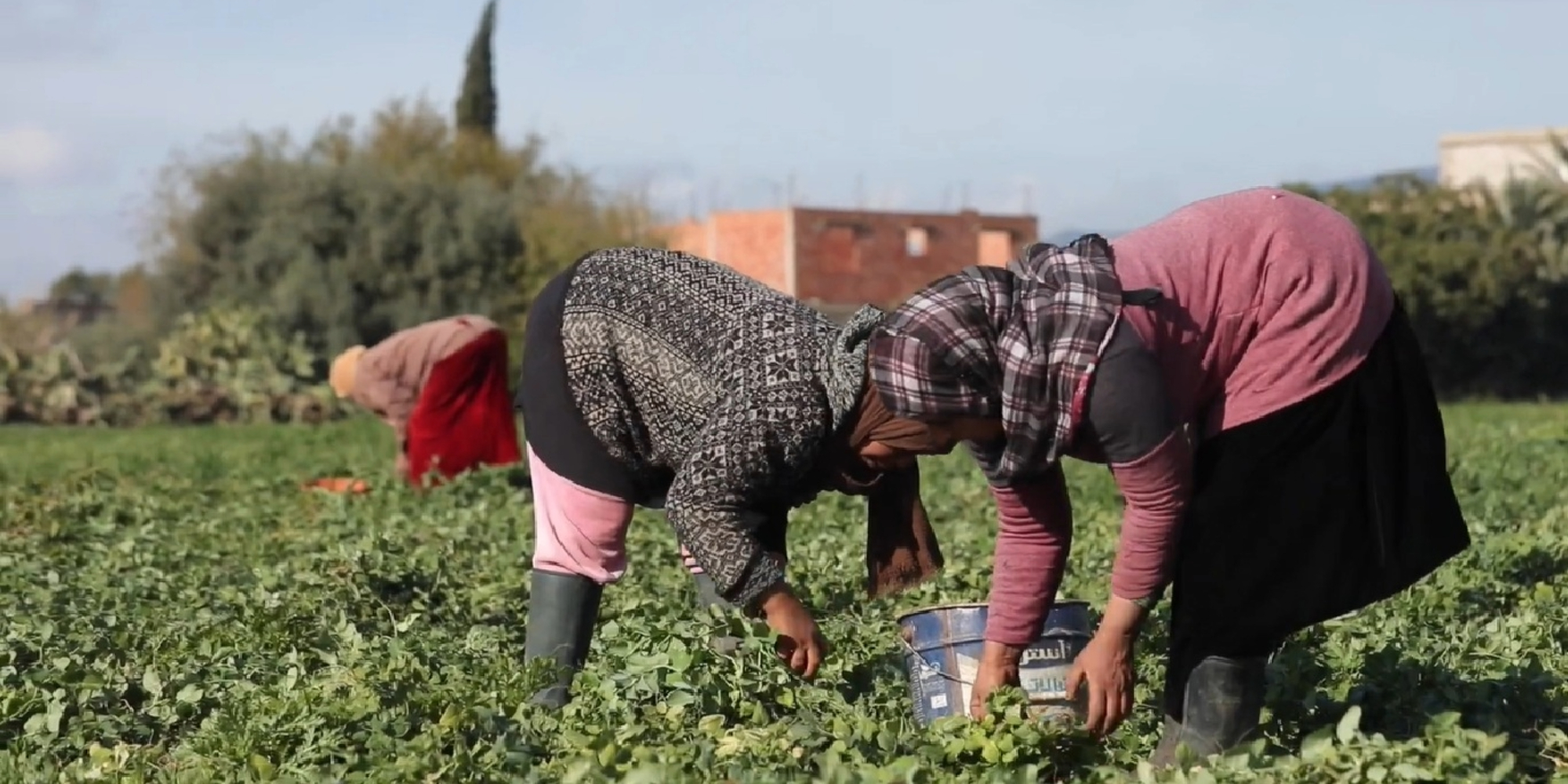
She furthermore evokes the situation of women who work in the agricultural sector, often placed under the category of “domestic employees.” A classification which excludes their true work productivity from official statistics. In fact, despite their daily participation in direct production activities such as irrigation, agriculture, milking and other manual labor, they are not recognized as active workers and their labor is not accounted for in accordance with labor standards.
According to Triki, this exclusion deprives women of the legal or economic recognition which would guarantee their financial independence. A land owner, on the other hand, is considered to be an active worker even if he does not really participate in the production process. Although statistics indicate that women represent an important part of the agricultural workforce in Tunisia, their work remains invisible and unpaid when undertaken in the context of a family operation.
What about unregulated work? This type of work is indeed remunerated, but takes place outside a legal and fiscal framework. For women, activities in this category often depend on traditional skills such as sewing, embroidery, knitting or preparing home-baked goods, the goal being to sell the items produced rather than to use them for domestic consumption. These activities thus provide women with a direct income, outside the economy’s formal circuits.
A study published by the Ministry of Employment and Professional Training on April 7, 2021 shows that 36% of total employment is undeclared, with a rate of 27% among women and 39% among men. Despite its precarious nature, this type of work constitutes “a form of daily resistance by women for financial independence, in a context marked by the progressive collapse of the regular work market, and decreased employment possibilities for women, especially those from the most disadvantaged groups,” Triki remarks.
The sum of these factors: women-run initiatives remain individual and seasonal, prone to disappearing or being interrupted with the first crisis to arise. This is due to the absence of networking, plus a lack of technical and financial support as well as clear pathways towards integration into the economic circuit. Women who work in the shadows create “opportunities for survival, but in inequitable conditions,” Triki tells us.
STRUCTURAL FLAWS IN THE REPRESENTATION OF WOMEN
Layla Riahi is a university professor, researcher and member of the advisory committee for the Network for Social and Solidarity Economy in the Middle East and North Africa. Faced with the limits and shortcomings of official mechanisms in recognizing the invisible and undeclared work carried out by women, Riahi focuses on the flaws in Tunisian legislation concerning social and solidarity economy2. She points out that the law does not make any explicit reference to women, does not pursue any kind of gender approach, and does not recognize the contexts in which work carried out by women is invisible. For Riahi, this omission reveals a structural defect in the law’s approach with regard to women. She tells Nawaat:
Truly integrating the undeclared work that women carry out cannot be accomplished by simply setting up a legal framework, but rather by helping women to organize into cooperatives that enable them to control the production and reproduction process, to access resources and to bring real value to their work, which allows them to create added value and to improve their economic situation.
Riahi furthermore notes that “the law is not a determining factor, but a facilitating factor, in that it helps to organize women within the production process, to account for their work, to share assets and redistribute benefits equitably. In Tunisia’s case, however, this has not taken place.”
In light of the country’s expanding informal economy, Riahi observes that “even if it raises some of these questions, the law on social and solidarity economy does not define the mechanisms that could allow us to develop the idea of cooperation or to improve women’s precarious status. Instead, it has torpedoed structures showing certain characteristics of social and solidarity economy, and recycled them without producing any real benefits for the groups concerned.”
Houcine Rhili, researcher specializing in resource management and development, remarks that “one of the law’s main shortcomings is that it completely ignores the question of gender, even though this economic model was created to support the most vulnerable groups, in particular women who work in the invisible and unregulated economy.”
Rhili explains his analysis to Nawaat:
The law on social and solidarity economy which was promulgated in 2020 was not presented as a tool to integrate and empower women, but rather as a lever to guarantee social justice globally, which I see as a deviation from the very concept of social economy. Consequently, this economic model cannot be substituted for the state’s role in social justice, but must instead serve as a mechanism for creating collective wealth in a more balanced social framework, guaranteeing economic dignity for marginalized groups.
In contrast with Tunisia’s case, statistics from Morocco illustrate the expansion of cooperatives in the social and solidarity economy and their integration into the official development structure. The network encompasses more than 61,000 cooperatives involving the participation of some 800,000 members. Approximately 8,000 of these cooperatives are women’s cooperatives, according to data from the Secretary of State for Morocco’s social and solidarity economy.
In contrast, Rhili remarks, the Tunisian government has not focused on training or skill development for women, but has instead pushed them towards activities that produce minimal added value, which has kept women’s work precarious, even in the context of new legislation.
EXPERIMENTS IN SOCIAL ECONOMY, DISCONNECTED FROM SOCIETY
The Network for Social and Solidarity Economy in the Middle East and North Africa defines social and solidarity economy as an economic model that enables populations to invent tools for economic management, thus empowering them to manage their resources and reach their objectives and aspirations in perfect harmony with their natural environment and their cultural and social history.
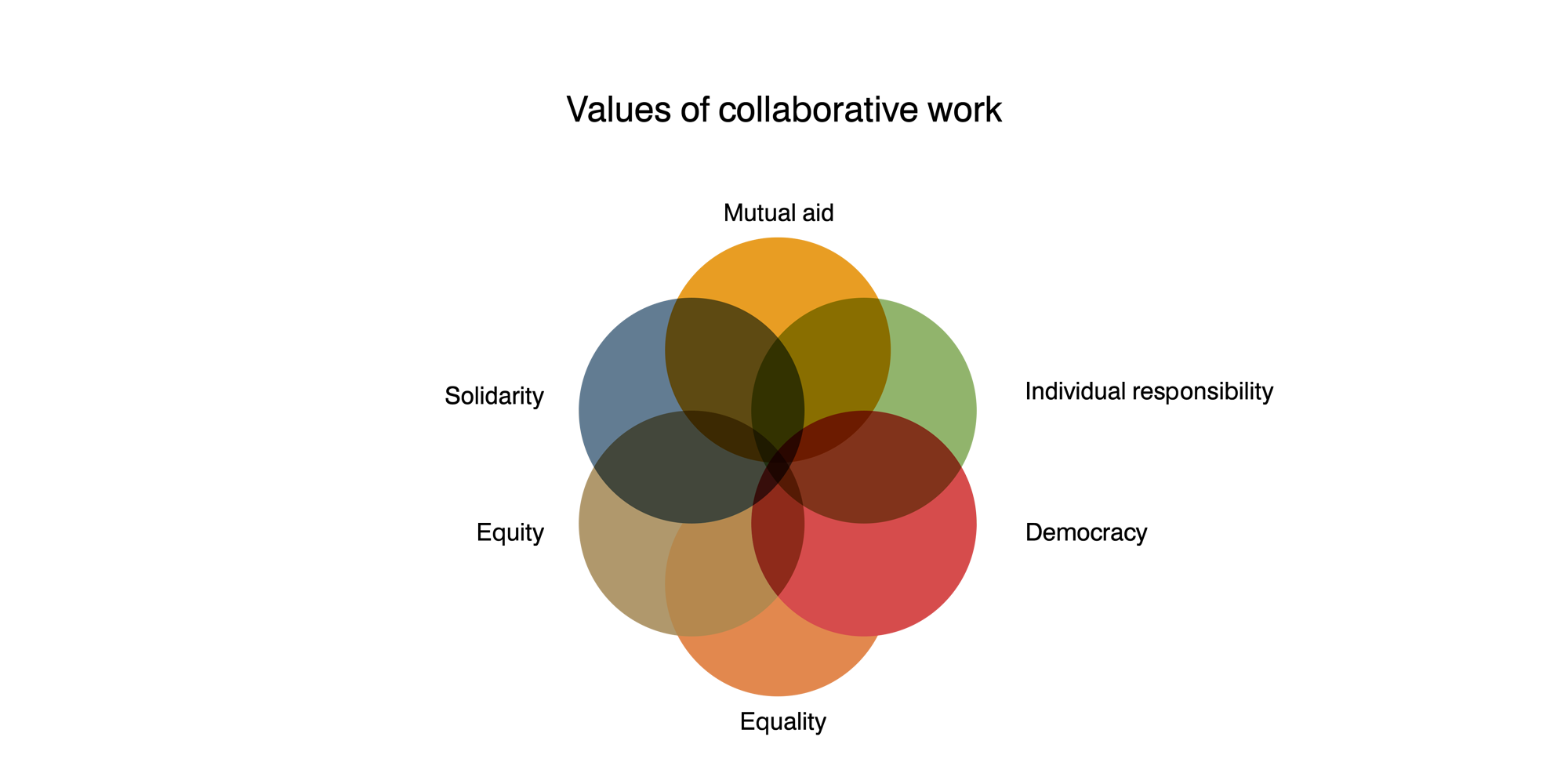
Social and solidarity economy is based on six basic principles: individual responsibility, mutual aid, solidarity, democracy, equity and equality. Tunisia’s experiments in social economy reflect a complete disregard for these principles.
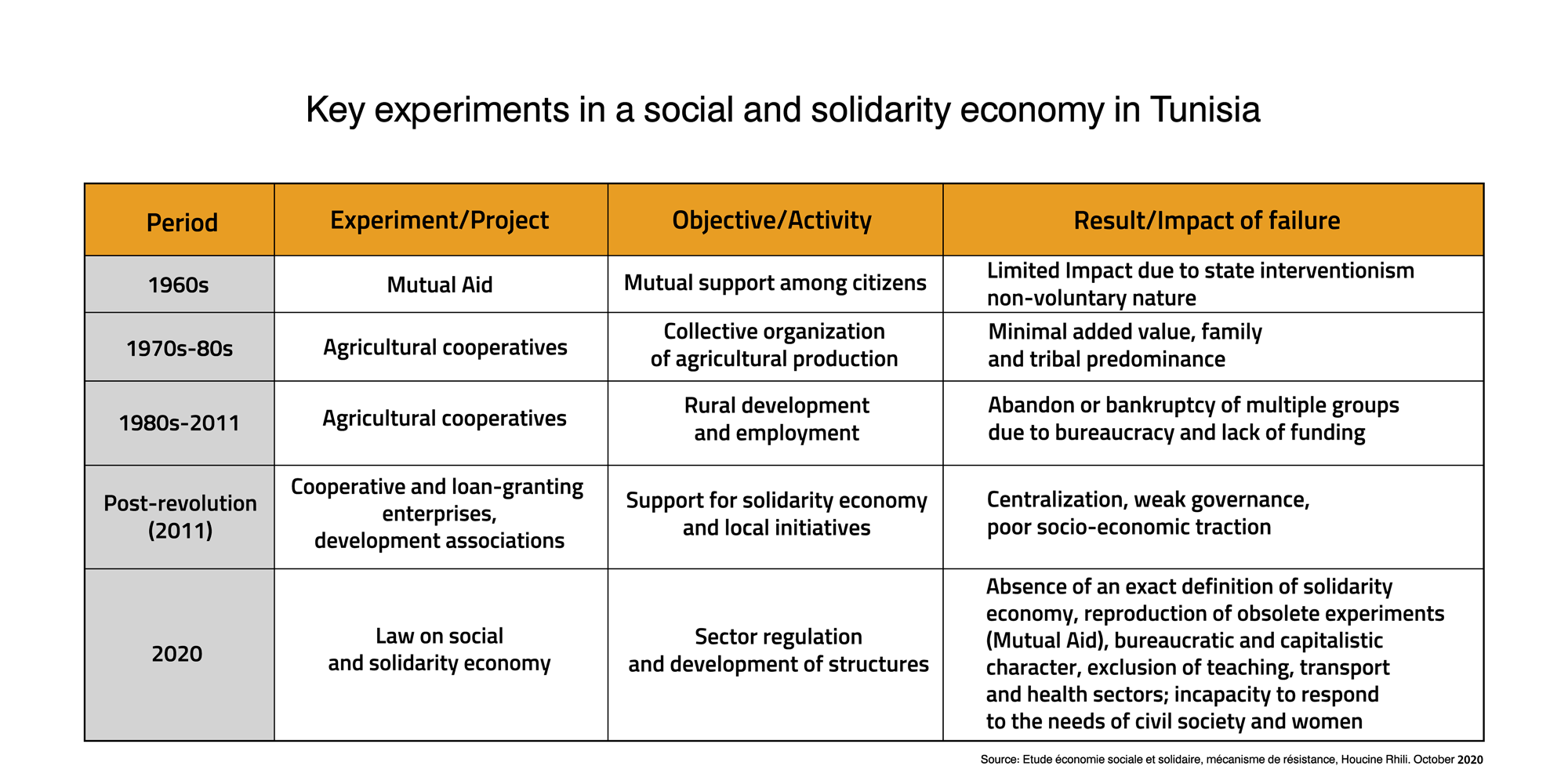
According to a study entitled “Economie sociale et solidaire, mécanisme de résistance” [Social and Solidarity Economy, Mechanism of Resistance], by Houcine Rhili (October 2020), this failure is a result of interventionism by the state and central government, as well as the condition of mandatory participation and increased monitoring of social enterprises. As a consequence, the latter are no longer voluntary and autonomous—one of the universally fundamental principles of social and solidarity economy. Since the 1960s, Tunisia has carried out a number of experiments in social economy, first in the form of cooperatives, then through agricultural cooperatives and agricultural development associations, and finally as development associations during the post-revolution period. However, these experiences have had a limited impact.
The same study indicates that weak governance and the absence of democratic and transparent management led to the dominance of family and tribal influence within many structures, which reduced their effectiveness. Meanwhile, value-added economic activities were so limited that they did not significantly contribute to national development or employment, largely due to a lack of public funding and insufficient technical expertise. This situation resulted in the abandonment or bankruptcy of many companies, particularly agricultural development cooperatives.
Beyond the paralyzing bureaucracy which has resulted from interference and increased number of control and oversight mechanisms, these same enterprises have often been used as instruments of political cronyism rather than as mechanisms for the development of a solidarity economy. The sum of these factors has been the limited economic impact of Tunisia’s social and solidarity economy, not surpassing 1.2% in the best case scenario. Moreover, the number of members remains well below expectations, indicating the degree to which a solidarity economy has failed to gain socio-economic traction, despite the different legislative and developmental approaches adopted, according to the same study.
COMMUNITY-BASED ENTERPRISES: FAILURE RECYCLED
Despite political buzz around the choice of community-based enterprises3, presented as a bottom-up social program and lever of local and regional development, official statistics published by the Ministry of Employment and Professional Training reveal outcomes so poor that the project is emptied of its economic substance. As of November 10, 2025, no more than 230 community-based enterprises had been created, including only 60 (less than two-thirds) that had become active, thus illustrating the model’s poor feasibility. In terms of employment, the entire system—with all of its legal, financial, property and fiscal advantages—had only resulted in the creation of some 380 jobs, an average six jobs per active enterprise. In comparison with the vast amount of public resources allotted to this experiment, its outcomes have been derisory.
Beyond these are still other benefits: fiscal exemptions over a ten-year period, suspension of the value-added tax, loans at preferential interest rates guaranteed by the government, access to state-owned agricultural lands and properties, exploitation of forest resources, and the unprecedented simplification of procedures for creating an enterprise thanks to a decrease in the required number of founders and capital. And yet all of these advantages have not enabled the creation of real added value, since the activity of most community-based enterprises has remained limited to serving as low-productivity intermediaries based on the redistribution of profit margins instead of on wealth creation. This is the case for the sale of agricultural products or first materials without any industrial transformation.
On this point, Rhili explains that “the majority of community-based enterprises do not produce value, but simply redistribute it, since an enterprise that merely imports bags of ammonium nitrate (agricultural fertilizer) and resells them by the kilo to farmers does not enter into any sort of transformation, production or development process; however, it also remains hostage to the same elementary commercial cycle.” Rhili highlights that “this model is not an exception, because it applies to the majority of community-based enterprises whose activities are limited to pure agriculture without any orientation towards industrialization, transformation or innovation. Which explains the poor—essentially inexistent—added value of these experiments.”
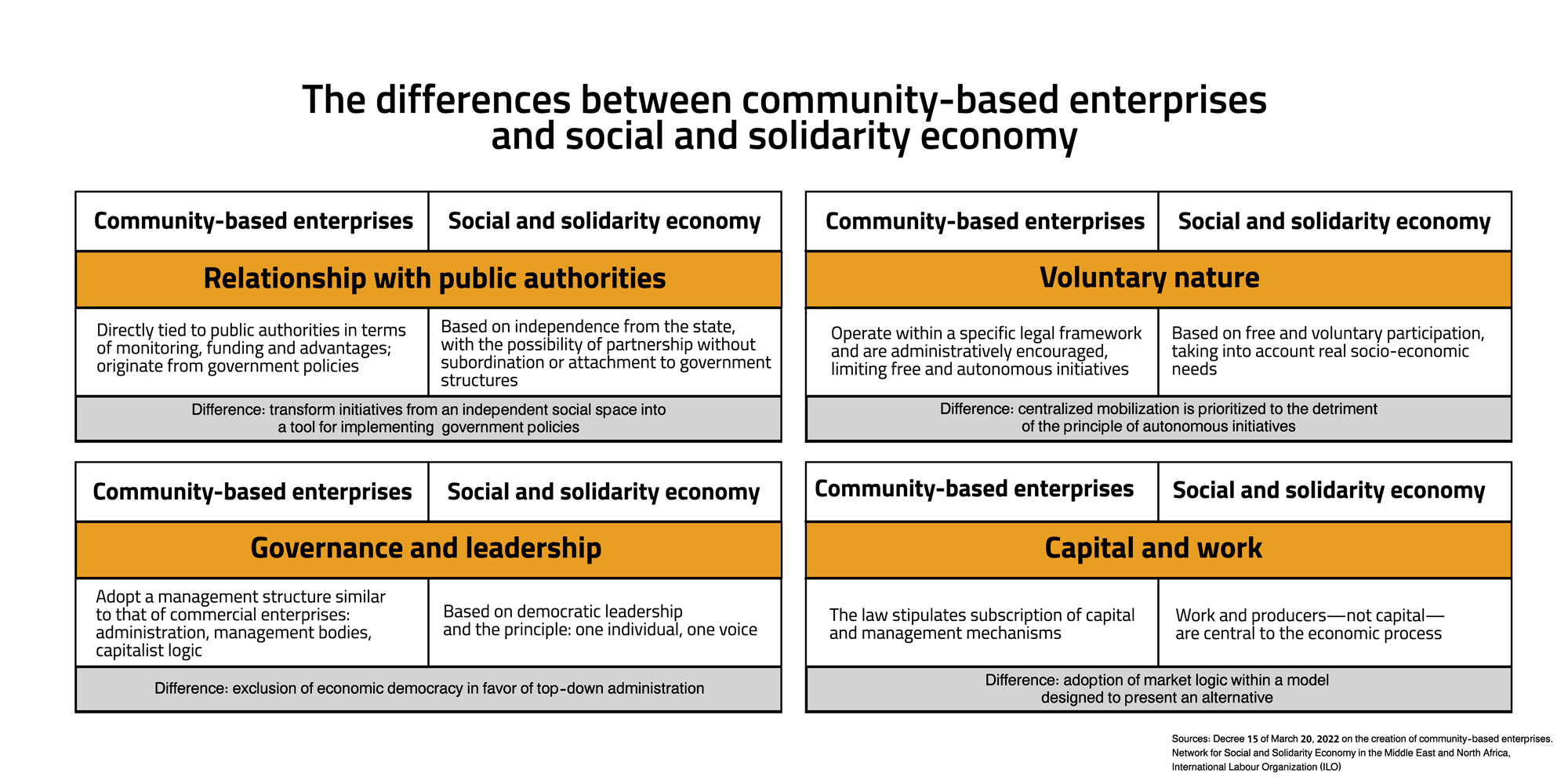
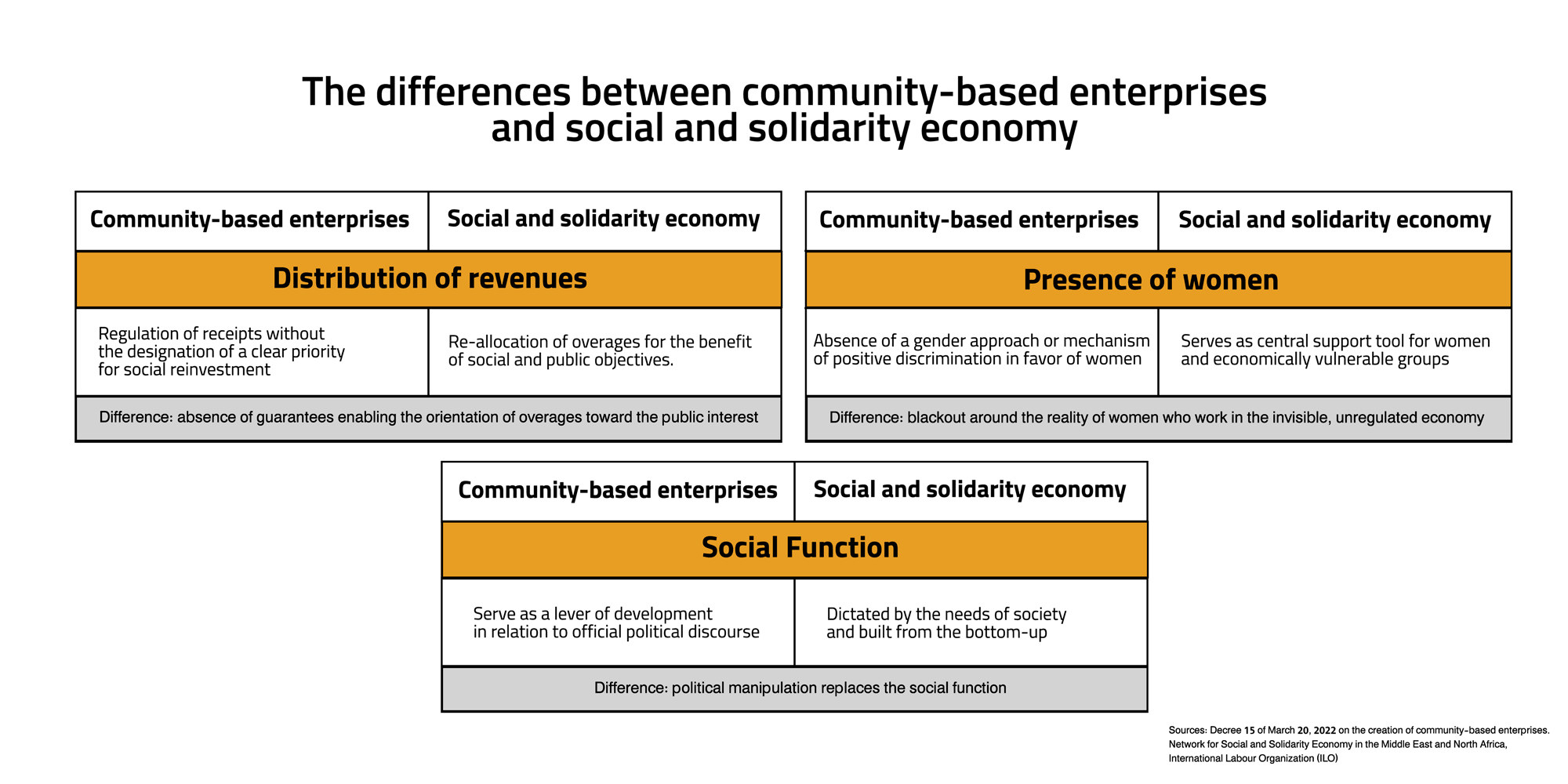
The failure is structural, and cannot be justified by situational factors. Indeed, the failure lies within the nature of the project itself, presented to society as an inevitable choice, neither based on existing economic dynamics nor real social needs. The problem in Tunisia is not in the type of social enterprise, or the number of its founding members; instead, the problem lies within a model of development in crisis, a model which reproduces the same flawed policies under new names. In this context, authorities’ insistence on relaunching the formula of community-based enterprises seems nothing more than an attempt to cover up an endemic incapacity to create wealth and achieve effective development.
Along these lines, Rhili argues that the experiment of community-based enterprises can be considered, in practice, to be a failure just three years after being launched. A fact officially acknowledged in the October 2025 revision of Decree 15. This revision must not be regarded as a technical improvement, but as implicit admission of the fact that the initial formula did not produce the economic and social dynamic promised at the outset. The government has done everything in its means to try and save a model which struggled to mobilize society and to create initiatives of real economic substance. One such attempt consisted in facilitating the creation of an enterprise by reducing the required number of members from 50 to ten at the local level and 15 at the regional level.

Rhili frames this failure within a broader trend in Tunisia, where the same experiments in solidarity economy have been reproduced over the years. Indeed, since the 1960s, the country has recreated the same types of structures associated with the early cooperatives which operated in the sector of rural agriculture, then those which worked in agricultural development, and finally, today, the formula of community-based enterprises, without ever expanding into the sectors of industry, environment or the transformation of agricultural products. As a historical reference, Rhili points to the experiment of cooperatives in the 1960s which also ended in failure due to state interventionism and a model which was neither voluntary nor independent.
Given their low added value and absence of effective supervision, Rhili warns that the magnitude of financial and fiscal advantages (especially tax exemptions over a ten-year period) granted to community-based enterprises makes them susceptible to serious risks associated with poor management of public funds and even money laundering. He refers to previous experiments, such as the investment promotion laws of 1972 and 1974 and the Investment Code of 1993, in which advantages were used as a mechanism to launch provisional companies that benefitted from exemptions and subsequently declared bankruptcy upon termination of the grace period, only to be reactivated under new names, without ever achieving sustainable development or creating jobs.
For Lyla Riahi, community-based enterprises represent a model that is easy to manipulate for the purposes of political cronyism. She explains that the law regulating these structures neither defines their work nor their resources, and does not place them at the heart of the production process, but only mentions subscription of capital and management mechanisms. She adds that the system of governance within these enterprises is undemocratic and inaccessible to workers and producers. As a result, this model is a far cry from the universally-recognized framework of cooperative movements, which are based on collective control of production, autonomy and effective participation in the decision-making process. Riahi concludes that this model does not respond to conditions for organizing work and does not create real pathways towards emancipation for women who work in the informal economy; it neither enables them to overcome their vulnerability nor to collectively appropriate their own means of production.
This evolution demonstrates how Tunisia’s social and solidarity economy—from the early model of cooperatives to the current model of community-based enterprises—has always been a lever of political manipulation. With the rise of populism in Tunisia today, this model has become a propaganda tool for a government that has proven unable to respond to the population’s socio-economic aspirations. Women in the country’s urban and rural areas continue to resist this failure every day, through work which—despite remaining ever precarious—constitutes an entire economic network.
- Organization for Economic Cooperation and Development, Social Institutions and Gender Index (2023). SIGI Country Profile: Tunisia. OECD/UN Women. ↩︎
- Source: Law 2019/79 on social and solidarity economy, approved by the Assembly of the People on June 17, 2020. ↩︎
- Decree 15 of March 20, 2022 on the creation of community-based enterprises. ↩︎


iThere are no comments
Add yours