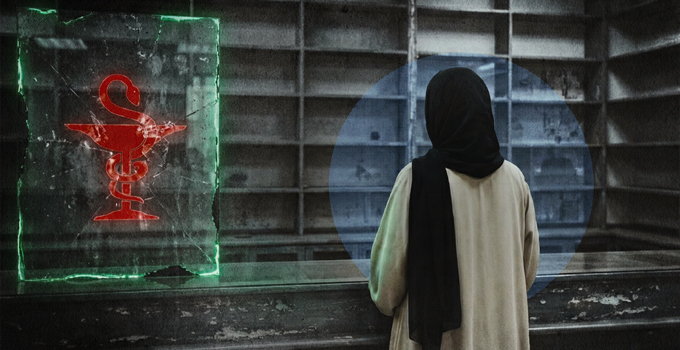
For many Tunisians, the searchfor vital medications has become an endless nightmare and desperate race against time. Families mobilize to check in different pharmacies across regions and governorates from north to south of the country, in the hope of securing a container of pills—the cost of which is sometimes less than what it takes to track it down. Groups active on social media have set out to help families look for medicine, even abroad. The crisis sheds light the country’s failing public health system that is in urgent need of reform.
“The State guarantees prevention and healthcare for every citizen and provides the means necessary to ensure the safety and quality of health services.” Article 38 of the Constitution thus lays out a fundamental right that is, in theory, the cornerstone of the lives of Tunisian citizens. Today, however, these rights are nothing more than slogans proclaimed in official discourse. Relayed via presidential press releases, these slogans are completely disconnected from the catastrophic state of the country’s healthcare system. A chronic shortage of the most vital medications endangers many lives and is fueled by inextricable financial and logistical crises. The government’s pompous rhetoric has worn thin as Tunisians have been left to face their fate alone.
THYROID MEDICATION
Leila drags her feet as she heads to work, her little bag in hand, ruminating about the thyroid medicine that costs no more than five dinars. It is vital to her health, and has become inaccessible in Tunisia. At the first pharmacy she steps into, she is greeted by silence and a fleeting smile from the pharmacist who tells Leila what she tells most women who come in for the same medication: “It’s out of stock, we may get more later.” She leaves with the same sense of disappointment that weighs upon her each time she leaves a pharmacy. However, Leila is still hopeful, and continues her search at another pharmacy. Yet again she is faced with the same response: “This medicine isn’t available, we will let you know as soon as it arrives.” With each passing moment, she grows increasingly anxious and depressed. This daily trek from one pharmacy to another in search of medication embodies a struggle that no police intervention can hide, as is the case in other sectors.
Talking to Nawaat, Leila attempts to hide her distress behind a weary smile:
I spend long days without my thyroid medication and sometimes have to return to the pharmacy or else wait there for hours, met by nothing but silence and false promises… Every day, little by little I feel my body collapsing and my spirits falling.
Along the way, Leila has discovered an entire world of Tunisians who, in their search for medication, have lost all hope in the State and thus taken it upon themselves to find a solution. Some medications are imported into the country inside travelers’ luggage, while others are shared among patients according to their priority and the seriousness of their condition. As Leila explains, “I know women who obtain medication illegally from individuals who import them from Europe or other countries. But I am not as fortunate as these women and, like others, I am forced to face this shortage every day.” Beyond representing a daily chore, the shortage of medications represents a direct threat to the well-being of women, who are most susceptible to hyperthyroidism; the latter can lead to slow death and devastating suffering.
Leila is among many women who see their predicament as a crime, and believe that the state only remembers them when it is time to collect taxes and bills, without providing the health services worthy of their status as citizens—and not as subjects.
I feel abandoned. It is as if the government has stopped guaranteeing our right to stay healthy, even though we women are in most need of this medication. We are victims of a shortage that many people only understand when they confront it themselves.
To compensate for the shortage of medication and the government’s negligence, Tunisians look to groups active on social media in order to track down medications that are otherwise impossible to find, and to put out calls for help.
Levothyroxine is the basic treatment for hypothyroidism, a condition in which the thyroid gland does not secrete enough thyroxine hormone (T4) that is responsible for regulating metabolism, body temperature, heart rate and vital functions. This medicine plays an extremely important role for women, since thyroid hormone deficiency can affect the menstrual cycle, fertility and pregnancy, and increase the risk of health complications for the mother and fetus if not treated properly.
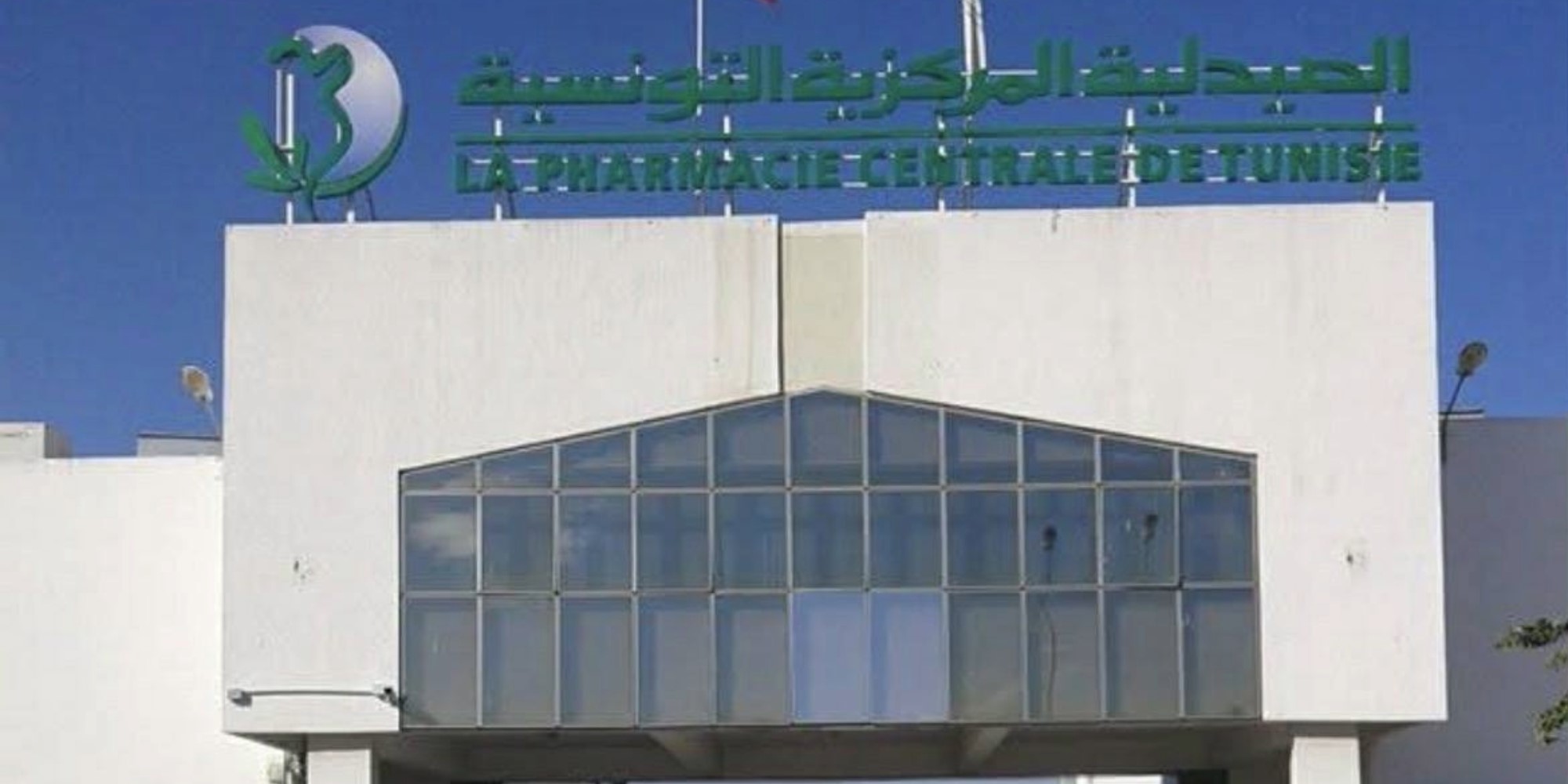
In Tunisia, Levothyroxine is available in a range of doses, including 25 micrograms, 50 micrograms, 75 micrograms, 100 micrograms and 125 micrograms. These doses are marketed under several brand names such as Levothyrox, Berlthyrox, Euthyrox and Thyroxine; each product is registered with the National Medication Agency in order to guarantee traceability and production quality. According to data from the Central Pharmacy, and despite the registration of these different products in Tunisia, Levothyroxine is not manufactured locally but rather imported from reliable European laboratories in order to ensure consistent quality and availability in pharmacies.
Leila’s distress is not an isolated case, but in fact symbolizes a larger crisis that affects women across the country. Over the course of several months of research, Nawaat identified hundreds of posts and calls for help by women from different governorates and regions who were looking for thyroid medicine. Pages and groups online have transformed into platforms for collective calls for help: “This medication is impossible to find!”, “Woman urgently needs…!”, “Her health is deteriorating”… Short, direct appeals that reveal the magnitude of panic caused by the forced interruption of vital treatment. This outpouring of spontaneous, moving testimonies illustrates the ordeal largely endured by women, who are the most vulnerable to thyroid conditions. It shows how the medication shortage has pushed women to manage on their own instead of relying on state institutions, which are supposed to guarantee this right without intermediaries or calls for help. The scenario is clearly at odds with the Tunisian Central Pharmacy’s efforts, in an official statement published in September, to reassure Tunisians about the availability of thyroid medicine. A statement which appears entirely disconnected from reality, as demonstrated by what is available (or not) pharmacy shelves, and by the ongoing and desperate search by many for the treatment in question. Between official discourse and the day-to-day reality of citizens putting out calls for help, waiting and distress, the gap between the state and its citizens continues to widen, as a box of medicine has become the symbol of a deeper crisis: that of a health system incapable of fulfilling its role.
MEDICATION SHORTAGES, SYMPTOM OF A FAILING SYSTEM?
The crisis has grown to the extent that it now affects all categories: children, women, men, the elderly. For Tunisians facing chronic illnesses to those in need of emergency treatment, the search for medication has become a fact of daily life. It is the result of a failing system: from supply chains to import and pricing policies, budgetary challenges, complications relating to social coverage and the disorder which characterizes relations among different actors in the healthcare sector. The emergence of this severe medication shortage has called into question Tunisians’ right to care and exposes the extreme vulnerability of official choices in managing an issue that is supposed to be a priority in the State’s commitments to its citizens.
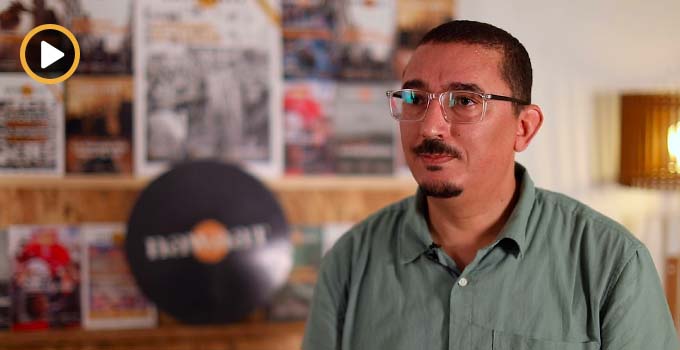
In an interview with Nawaat, Zoubeir Guiga, president of the Tunisian Union of Private Pharmacy Owners, inferred that the relative availability of certain products currently on the market is far from a lasting solution. “It is a familiar scenario: the situation improves slightly, then collapses even further after a few months.” The problem, Guiga argues, is not supply alone, but rather the absence of a radical treatment of the underlying causes, to the effect that the crisis persists. He further explains that one of the most problematic aspects of how this issue is being managed is the government’s denial. A grave error for which all parties are responsible, above all the state which monopolizes the pharmaceutical sector and lacks a clear vision as it continues to simply manage the crisis instead of putting an end to it.
As far as identifying where responsibility lies, Guiga contests discourse blaming international pharmaceutical companies and reproaches their “lack of humanity”. For Guiga, this approach lacks realism; he affirms that international laboratories are for‑profit companies that operate according to a straightforward motto: “Pay, and you will have medication!” He stresses that relations with these companies are governed by compliance with agreements and the timely settlement of debts, in contrast with Tunisian laboratories which allow for amicable solutions. Guiga adds that the State must facilitate the work of local firms and encourage them to invest more in and rely more on local production. He notes that some of the medication currently unavailable or whose supply is irregular can be manufactured in Tunisia. However, “These medications are generally not profitable, so it is easier and cheaper to import them, since they are inexpensive overseas,” Guiga points out.
The heart of the problem in Tunisia, Guiga continues, “is not the global shortage of medicines, but poor administrative management and minimal profitability,” especially with regard to the Central Pharmacy. This is because the latter sells medications for less than their real cost, meaning that it is forced to sell without profits. There are direct implications for private pharmacies, which in turn are forced to ration medications and to supply them in quantities that are insufficient for demands. As Guiga explains, “We ration medications because the State itself rations them for us.” As a consequence, he warns, more and more Tunisians are turning to neighboring countries to obtain necessary medications, or else importing them informally. Guiga stresses the danger of procuring such medications, since they are not subject to strict control and could thus have disastrous implications for the health of Tunisians. While the government continues to relay slogans affirming the right to health and access to medicine, our interlocutor observes, no concrete plans or strategies have been laid out to put an end to the crisis. This has fueled frustration and despair, despite the resistance of certain actors, including the Tunisian Union of Private Pharmacies Owners which continues to “fight for a better future that guarantees the right to medicine, health and a decent life for Tunisians,” says Guiga.
The shortage of medication in Tunisia, as depicted by the testimonies of patients and data provided by professional organizations and human rights associations, can be seen as an obvious symptom of a failing healthcare system, a system managed with makeshift repairs, for which political responsibility manifests merely as soporific slogans disconnected from reality. It is thus impossible to dissociate the shortage of medication from the broader context of a decaying healthcare system in which citizens’ suffering is twofold, as they face increasingly inadequate healthcare services as well as the increasingly uncertain supply of medication.
THE FUTURE OF PUBLIC HEALTH IN TUNISIA?
The deplorable state of Tunisia’s public hospitals is no secret. From major university hospitals to regional and local health facilities, infrastructure is worn out and dilapidated, departments are overwhelmed, medical equipment is either in disrepair or lacking, and facilities no longer provide adequate conditions for receiving and treating patients. Overcrowding has become commonplace. Emergency rooms are overrun and hospital stays are cut short under pressure of demand. Patients and their families are forced to adapt to the lack of beds and equipment, appointment delays and disruptions in the provision of basic services. This situation is common to most public health facilities across the country.
Furthermore, medical and paramedical professionals find themselves working in difficult conditions, under constant professional and psychological pressure and often without the logistical and technical means necessary to carry out their work. Such hardships reinforce the sense among unions, professional organizations and rights associations that public health facilities are no longer capable of fulfilling their fundamental mission. The Tunisian Forum for Economic and Social Rights (FTDES) argues that the shortage of medication and equipment can no longer be considered circumstantial, but indeed reflects the failure of public policies:
“Depriving thousands of patients their medications through complete or intermittent suspension of supplies, cannot be considered a simple circumstantial crisis, but in fact constitutes a serious violation of the constitutional right to health, and a crime for which all those who have shown negligence, laxity or manipulation in the arena of public health bear responsibility.”
Along the same lines, the Tunisian League for the Defense of Human Rights (LTDH) considers that the public health system in Tunisia “is collapsing at an accelerated and alarming rate” and that the situation “is no longer a circumstantial crisis but reflects a systemic failure of public policies for which the State is entirely responsible.” It adds that, due to budget cuts, dilapidated infrastructure and the absence of basic equipment and medication, thousands of citizens are being deprived of their right to care because private pharmacies have stopped providing medication to those with social coverage, which constitutes a flagrant violation of the right to health and to life. The League also asserts that “this deplorable situation exposes patients to inhumane conditions that exacerbate their sense of vulnerability and despair and threaten their physical integrity, without the concerned authorities being held accountable.” It calls for a national dialogue on health policies that is serious, transparent, and far from populist discourse and false promises.
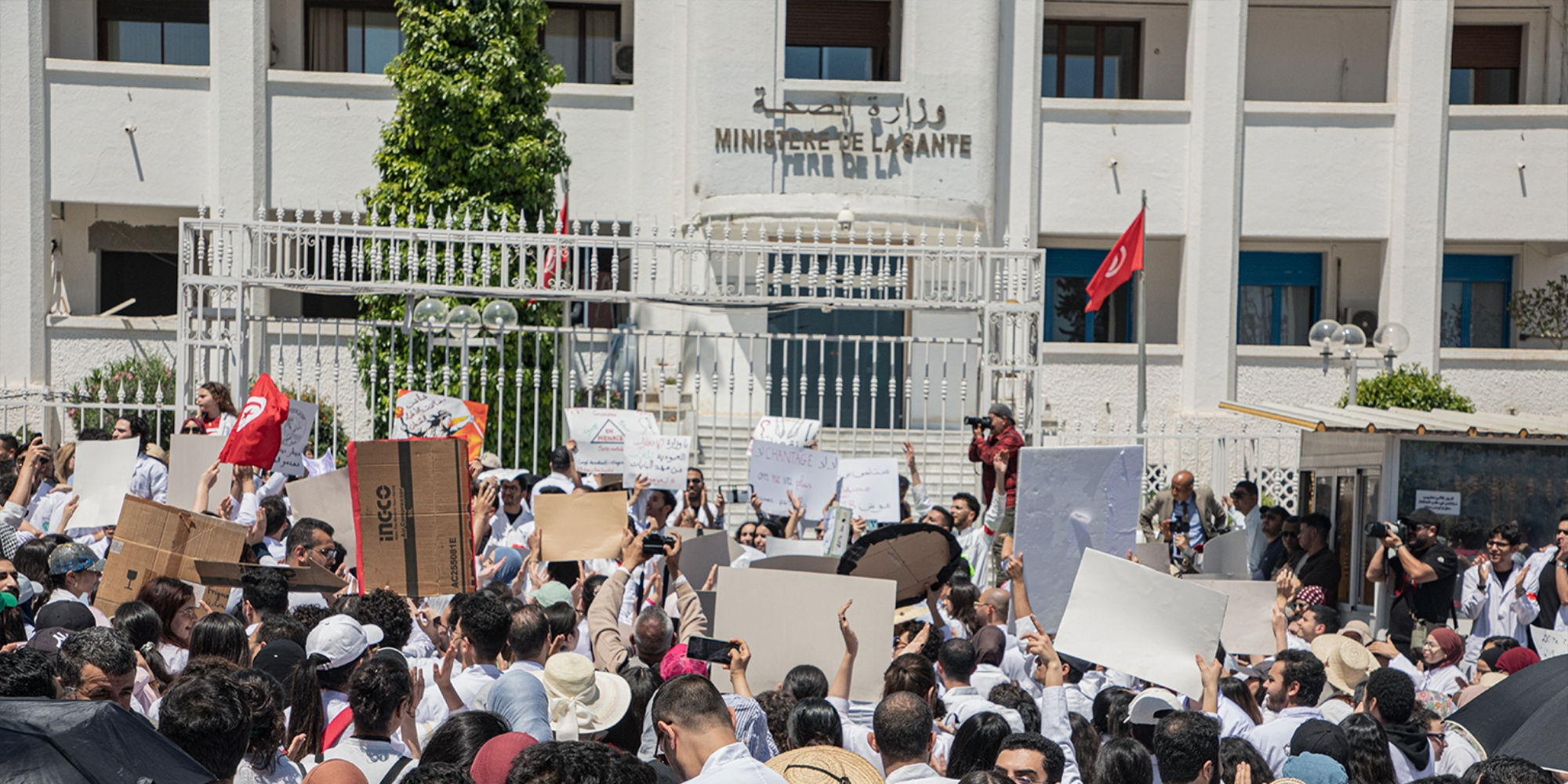
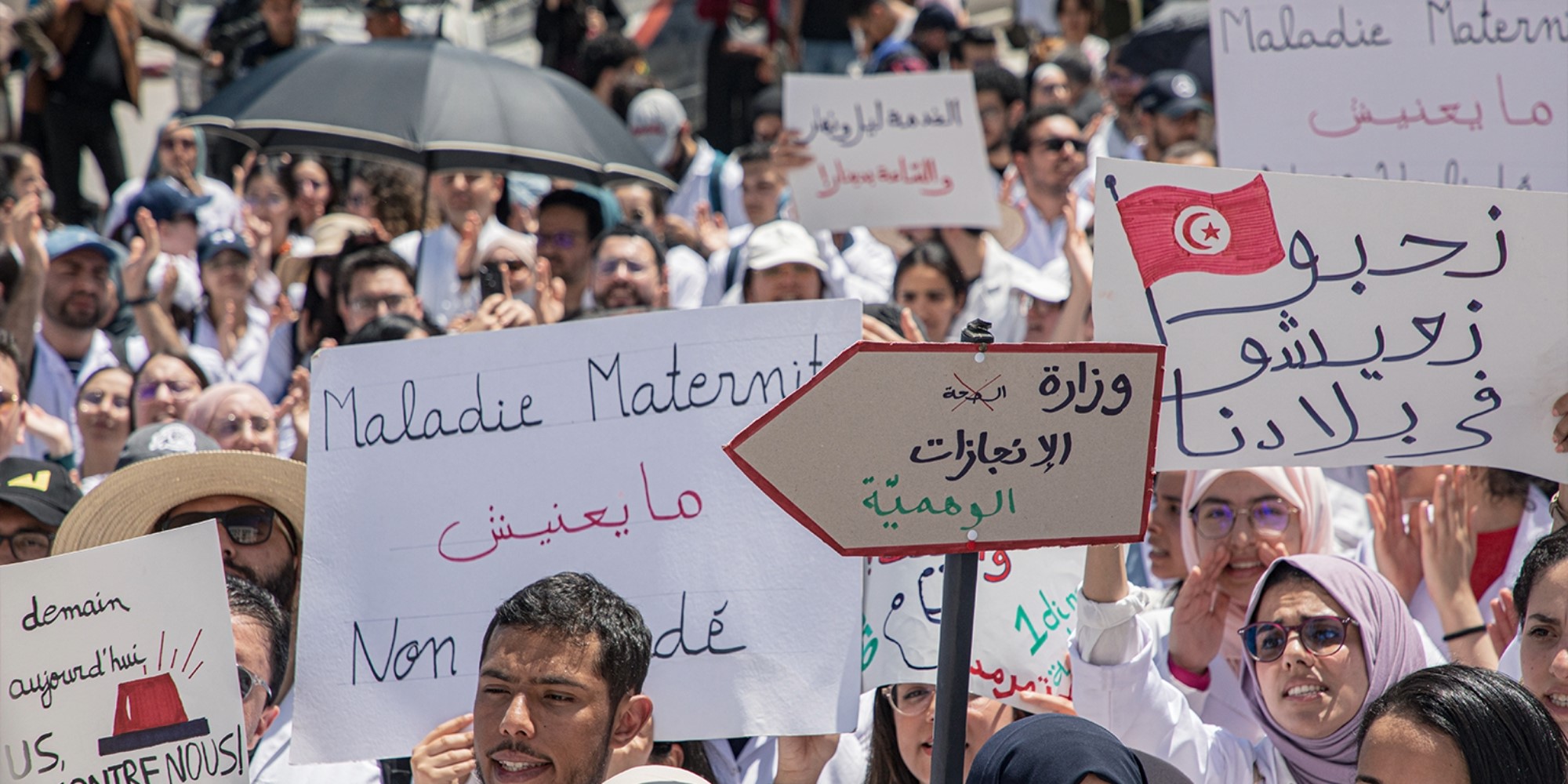
Within the country’s public hospitals, cries of alarm are not only being raised by patients and civil society organizations, but also by professionals in the sector. The Tunisian Organization of Young Doctors elaborated an uncompromising evaluation of the public health situation. The mobilization of young doctors in repeated strikes and demonstrations has revealed the extent to which public hospitals are deficient, from severe equipment and medication shortages to stifling professional pressure and inhumane working conditions, in infrastructure that is run-down and often falls short of guaranteeing minimum safety conditions for patients and medical staff alike. For the first time, protests in the sector are not aimed at wage increases or bonuses, but at sounding the alarm that the entire system is in danger of collapse. The Tunisian Organization of Young Doctors has repeatedly warned that continuing to work in such an environment jeopardizes the future of young doctors, directly affects the quality of services provided to citizens, and accelerates the exodus of skilled professionals to the private sector or abroad.
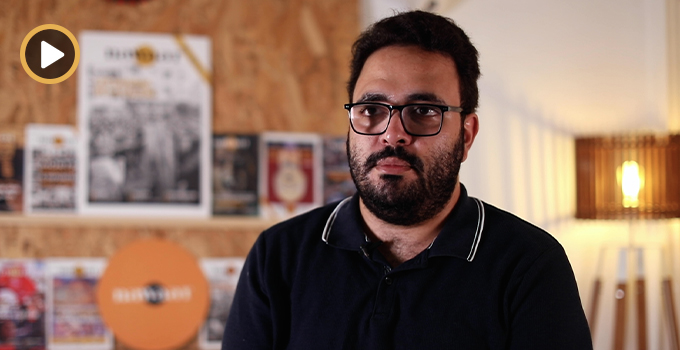
The Organization’s vice‑president, Bahaeddine Rabai, confides to Nawaat,
We are often forced to ask patients to buy their medicines elsewhere, not only in ordinary departments, but even in emergency departments. We are sometimes up against shortages of essential medicines and painkillers, which is unacceptable.
For Rabai, this daily reality is not isolated from the broader context. He notes that the health sector has been deep in crisis for nearly 20 years and that, in the absence of radical solutions, the situation is only growing worse. To move out of crisis, he argues, the Health Ministry must engage in a genuine participatory process with concerned partners. He holds the Ministry responsible for the system’s gradual deterioration, from the dilapidated infrastructure to the difficult working conditions endured by medical and paramedical professionals in public hospitals. Rabai highlights the financial aspect of the crisis, noting that “only 5% of the state budget is allocated to the health sector, which is derisory and neither allows for the reform nor the development of the healthcare system.” A fact which threatens to exacerbate the crisis in the absence of a clear vision enabling public health to reclaim its place and role in the country.
SOCIAL SECURITY FUNDS COMPROMISED
For decades, social security funds have constituted one of the main levers of the State’s commitment to its citizens. Today, on the verge of bankruptcy, these funds reflect the State’s failure to manage resources and to guarantee consistent health services. In theory, social security funds provide the basis for citizens’ medical coverage; now, however, structural financial problems have resulted in significant deficits and the interruption of basic services for social security recipients. As a consequence, the funding that was designed to provide social protection has become an extra burden on access to care, and has exacerbated the vulnerability of Tunisians within a failing, under‑resourced public health system.
In an interview with Nawaat, Hicham Boughanmi, member of the General Health Union and secretary general of the Pharmacy Owners Union, also iterates that the health and pharmaceutical crisis in Tunisia is not limited to a mere shortage of certain medications or the interruption of supplies to pharmacies, but is part of the generalized collapse of the public health system. For patients seeking medications at public pharmacies within hospitals and dispensaries, the situation can be dire: out of the five medications required for their treatment, they are sometimes only able to obtain one. The crisis is therefore accentuated in public pharmacies, since private pharmacies are run according to the non-negotiable rules of profitability. Boughanmi explains that the situation is exacerbated by the government’s preference for bandaid solutions over the implementation of a set, comprehensive plan, although it has the necessary means and expertise. According to Boughanmi,
The absence of political will makes it impossible to implement these solutions; the heart of the issue is social security funds, which are suffering from severe financial problems due to the accumulation of debt and changes in the demographic pyramid.
Tunisia’s National Social Security Fund has been negatively impacted by tax evasion in informal sectors where companies and individuals do not pay taxes owed. Beyond this, the National Pension and Social Welfare Fund is burdened by debt issues within the public sector and the civil service due to the budget deficits of public companies. While an official evaluation of the situation, complete with clear, precise figures, has yet to surface, the effects are apparent in social coverage for medication and basic services. Boughanmi believes that a long‑term solution would entail restoring the budgetary balance of these funds. However, this solution is not a practical one, since patients cannot simply wait for an extended period of time. He suggests more immediate solutions: digitizing distribution channels in central pharmacies, drawing up clear schedules that specify the quantities of medications and timeframes for distribution, and ensuring that supply corresponds with the market’s needs—“an experiment that has proved successful in a number of hospitals,” he remarks. He concludes that the current wait-and-see approach of addressing each new shortage as it arises has the effect of increasing suffering and undermining the stability of the healthcare system. He calls for a reassessment of the administrative and financial management of public pharmacies and social security funds, and for the State to show real political will to save the public health system before it is too late. Without this, slogans proclaiming citizens’ right to health will remain only that— simple slogans, devoid of any real meaning.
So simple and cruel is the drama that has played out around the right to health in Tunisia. Access to vital medicines has become a nightmare for thousands of families who are mobilizing to seek help, since the government has left them to their own devices. Today, Tunisia’s public health system is, as professionals in the sector describe it, in a veritable coma. And still, authorities are ignoring the voices of young Tunisians calling out the destruction of public health in Tunisia.

iThere are no comments
Add yours