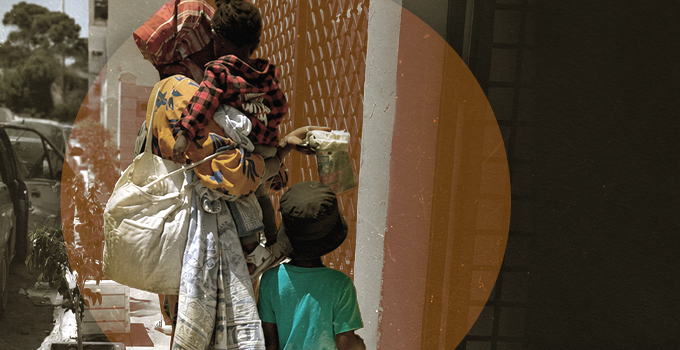
It is Friday, the day of prayer. Outside the Al Qods mosque in downtown Tunis, a young woman from sub-Saharan Africa is carrying an 18-month-old girl. Standing beside her is a boy of six years. The heat is oppressive. The baby struggles to open her eyes, then buries her face into the shoulder of her mother, who is holding out a plastic bag.
Others seeking the charity of passers-by are stationed at different places along the sidewalk, which has become a strategic location for begging. Competition is tough. “Our presence is not always welcome,” the young woman tells Nawaat. Even among mosque-goers, reactions can be hostile: “Some jostle me as they pass by, muttering words in Arabic,” she says.
The little boy smiles. His smile is beaming, almost insolent, in contrast with the roughness of the surrounding area. He tells us he is from Sierra Leone, and that his father went back home. He plans to join him one day. What about school? “He’s not here for that,” his presumed mother cuts in.
The story doesn’t hold for long. The young woman now affirms that the boy is from Nigeria. She only speaks English. Sometimes they exchange in a local language, a private code that eludes passers-by and perhaps, at times, even truth itself.
The young woman arrived in Tunisia by land two years ago with the little boy. “The journey? It was horrible,” is all she says, as if to avoid reliving a painful memory. Her daughter was born in Tunisia. Unable to work since the child’s birth, she begs. The father left through the “voluntary return” program run by the International Organization for Migration (IOM). She speaks of the future in a tone of resignation, her gaze turned toward the street. “Here, there is no future for us. We don’t live—we only survive.”
This scene is far from isolated. Only meters away, at the square of Bab Bhar in downtown Tunis, two teens meander among busy passers-by. They hold out a hand, soliciting help. In vain: they are met with complete indifference.
A GROWING PHENOMENON
According to civil society organizations consulted by the World Organisation Against Torture (OMCT), recourse to begging has increased among sub-Saharan Africans in Tunisia, especially in downtown Tunis over the during the second half of 2025.
Primarily concerned are women accompanied by their children, however, there are also children who have been separated from their parents and left to fend for themselves. This increase coincides with operations to dismantle improvised camps and the growing poverty of migrants from countries in sub-Saharan Africa. According to a recent report by the OMCT, 6% of children served by a humanitarian organization affirm having begged in 2025 in order to survive.
Not all situations are alike. Some children beg alone, without an adult to look after them. Others are forced to beg by a family member or other individual. Such economic exploitation can pave the way to human trafficking.
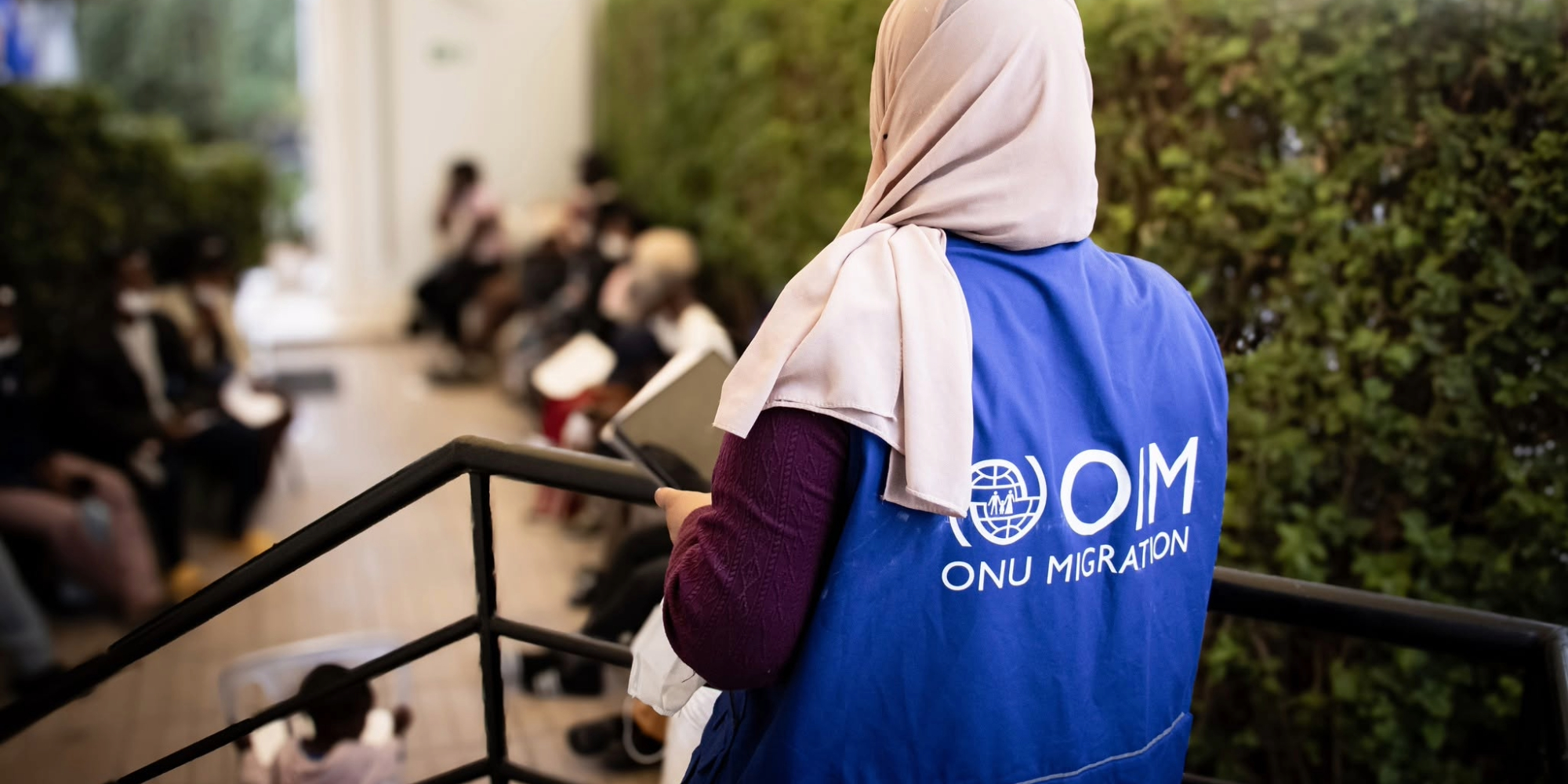
On average, begging brings in 30 dinars a day, depending on day, time, location and competition. However, the growing presence of those soliciting assistance in the streets has also been accompanied by an increase in arrests, the OMCT reports.
THOUSANDS OF CHILDREN UNDER THE RADAR
This mother and her two children are but one case among thousands of others drowning in the cold statistics put out by UN agencies. Most cases elude any kind of census. Births take place under the administrative radar. Irregular arrivals into the country by land routes never leave a trace.
As of April 30, 2025, the OMCT reports, the majority of migrant children came from Syria (44%), Sudan (22.6%) and Somalia (5.9%). The UNHCR recorded 1,522 child refugees or asylum seekers, representing 19% of registered migrants. 313 of them were unaccompanied, without a parent or guardian. As of December 30, the UNHCR only provided shelter for 172 children, including 129 who were unaccompanied.
Others seek asylum without ever obtaining status. Between June 2024 and December 2025, 220 children requested international protection and were unable to register. 125 of these children are unaccompanied orphans—administrative phantoms.
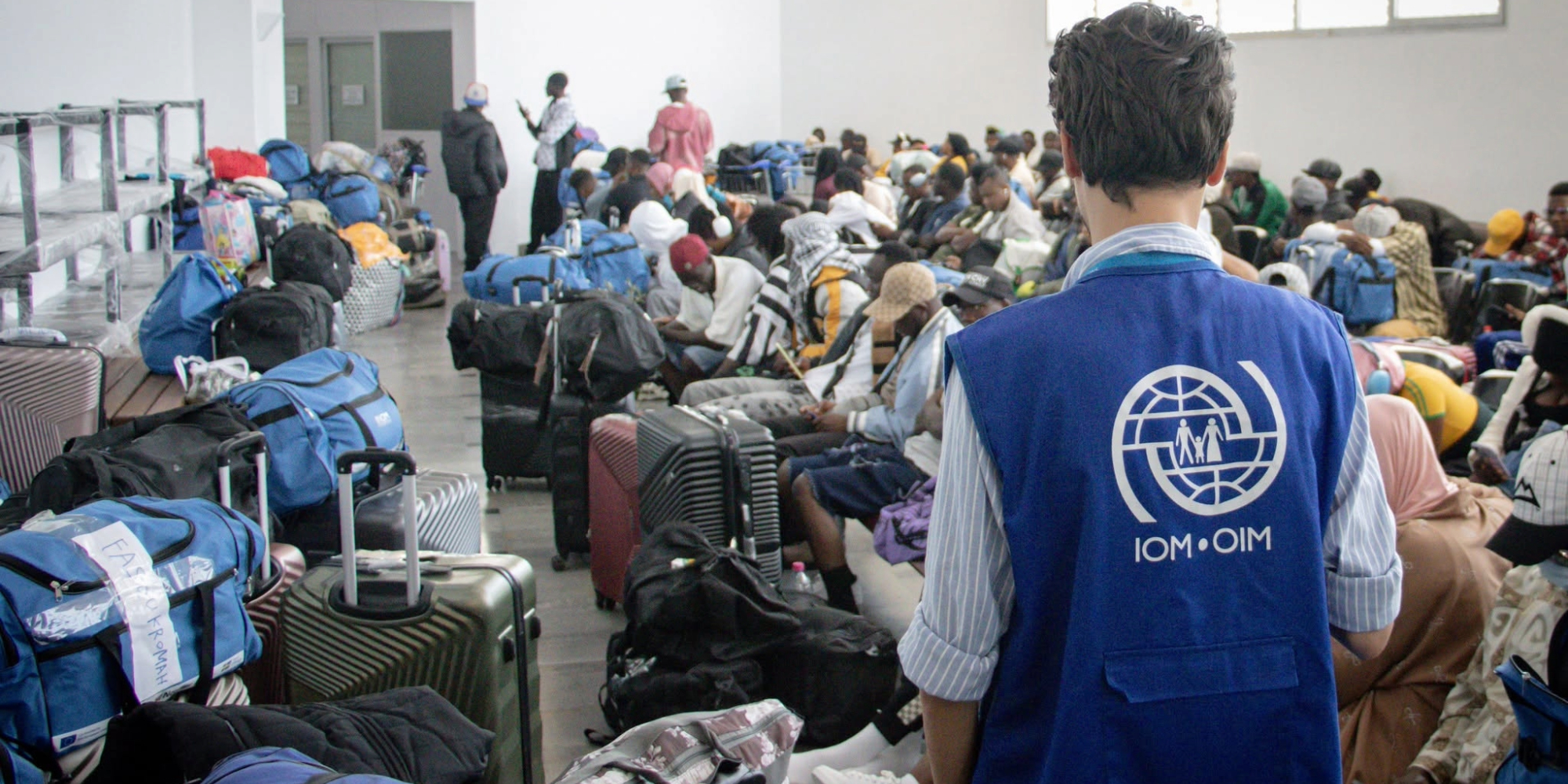
The IOM for its part counted 3,480 new children in 2025 alone. This included nearly 800 minors separated from one or both of their parents due to death or disappearance somewhere along the journey. At the end of December, 1,350 registered children were still homeless.
How many migrant children are actually in Tunisia? Nobody knows. Combined, the UNHCR and IOM registries suggest that there were around 5,000 children in 2025 alone. This number does not account for parents who never attempted to register, and the newborns growing up in Tunisia, invisible and in the margins of these statistics.
THE RIGHT TO EXIST LEGALLY, ONLY IN THEORY
Behind these statistics lies complete disregard for the fundamental right to exist legally. Many parents never manage to complete the overly complex administrative process required to register the birth of their child. Others were unable to register their child before arriving in Tunisia because they lacked access to an embassy. Still others have had their papers confiscated or lost during arrests, forced displacement or deportation.
In order to circumvent these barriers, some use a false identity, or destroy their own identity documents, the OMCT points out. The result: hundreds of children growing up in Tunisia without any legal presence, exposed to statelessness and family separation, and deprived of any long-term solution.
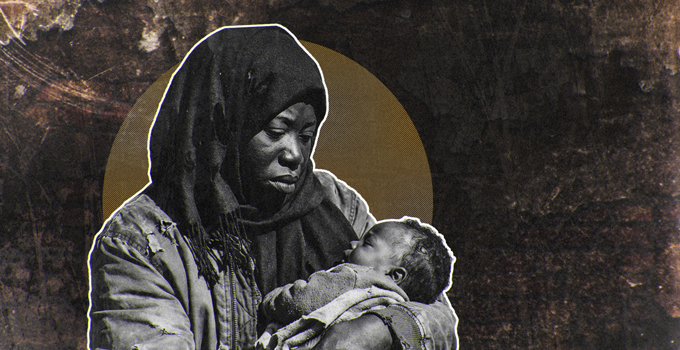
Access to healthcare is no easier. Malnutrition, infectious diseases, psychological distress… The needs are many, as are the obstacles to obtaining care: the absence of identity documents, births that did not take place at a hospital, children without a legal guardian to represent them.
School represents another closed door. Access to education is systematically blocked. The language barrier for those who speak neither Arabic nor French means that they cannot attend classes. Beyond this, many children lack papers or a guardian. In short, the education system lacks the means necessary to accommodate such diverse profiles. For many, growing up here is an impossible challenge. “There is no future here in Tunisia, especially for children,” the young woman outside of the Al Qods mosque tells us.
Institutional protection, when it does exist, is precarious and temporary. Social workers lack specific training, protection structures are too few, and coordination between the government and civil society is often lacking.
“If we try to find solutions for foreign minors, protection services tell us that we’ve come to the wrong place and that we should address the Interior Ministry,” says one actor in the field who is cited in the OMCT report.
In the meantime, international protection has been essentially inoperative since June 2024. The right to asylum has been suspended. Concretely, every family, every child who has arrived after this date can no longer register as an asylum seeker. Those who previously registered only benefit from partial protection, without the possibility of relocation. All others who never registered prior June 2024 now find themselves in legal limbo.
So too is the option of “voluntary return” hindered by the absence of documents proving identity, family ties or nationality. As a result, the prospect of repatriation and family reunification is often impossible, and children are thus exposed to poverty and multiple forms of violence.
HUMAN TRAFFICKING
Begging is often only the tip of the iceberg. In the south of Tunisia, 70% of children followed by a humanitarian organization affirm that in 2025 they were victims of different forms of human trafficking, including kidnapping for ransom. Although not a recent phenomenon, this form of trafficking has become more widespread. The scenario is always the same: identification of a target, kidnapping, request for ransom, negotiation, release upon fulfillment of ransom.
The sums demanded—most often somewhere between 400 and 1,500 euros, vary according to families’ presumed resources. Following an initial uptick in such kidnappings around Sfax and Kasserine in the beginning of 2024, the trend continued to spread into other regions—Zarzis, Tunis and Medenine—in 2025. Victims describe acts of extreme violence during their captivity.
Still more alarming is the emergence of debt bondage, documented for the first time in 2025. In this type of forced labor, an individual must work, or remain under the control of another person, in order to pay back a debt which is, by design, not reimbursable. It is a form of modern slavery. An older but still current practice is the selling of migrants, including children, to Libyan authorities in exchange for money or fuel.
Forced labor remains the most common form of trafficking: 59% of children surveyed in the south affirm having been subjected to forced labor. Sexual abuse manifests in multiple forms: forced prostitution or the “negotiation” of sexual relations in exchange for food, water or other basic necessities.
Girls, sometimes very young, are victims of this form of trafficking. Some testimonies even characterize these practices as currency in financing one’s journey across the Mediterranean. Criminal networks, composed of Tunisian smugglers or migrants themselves, continue to organize this kind of exploitation.
ARBITRARY DETENTION AND FORCED DEPORTATION
This violence does not end with arrests. The OMCT has recorded an increase in arbitrary, and sometimes secret, detentions. One-fourth of migrant children (25%) affirm having been detained without any procedural guarantee, in conditions that are often deplorable, exacerbated by overcrowding, lack of care and violence.
Nearly one out of five foreign detainees in Tunisian prisons is under the age of 20. Many of these children find themselves behind the same walls as adults. In juvenile rehabilitation centers, one minor out of ten is a migrant.
One of the most dangerous risks for these youth is forced displacement to border regions, or deportation to Libya or Algeria. Between January and April 2025, this was the fate of at least 12,000 migrants, most of whom were transferred to Algeria.
Two-thirds (67%) of migrant children in Tunisia have experienced such displacement, making it the most common violation reported among this population. International law considers what takes place in many of these cases as akin to torture. Forced displacement breaks families apart, sometimes leading to the forced disappearance of family members and leaving children without a guardian, ever more vulnerable to abuses.
Beyond this institutional violence is the violence to which children are exposed on a daily basis—committed by state agents during checks and deportations, by neighbors in encampments, through tensions within their communities, by Tunisian citizens as a result of xenophobia or racism. Faced with such abuses, some children decide on their own to leave. Others are part of “voluntary return” programs to their countries of origin.
International law sets strict guidelines for such returns, which are contingent upon the child’s best interest and the right to family unity. Furthermore, each minor must be accompanied by a responsible adult and ensured dignified reception upon arrival.
For victims of trafficking, repatriation must be voluntary and take into account individual safety. In practice, however, verification of identity and kin remain largely absent, allowing for the deportation of children without any prior medical evaluation or determination of kinship. These verifications are not mere formalities, but indeed reflect the state’s responsibility to assess each situation in order to uphold the principle of non-refoulement.
On the ground, none of these guarantees seem to be in place. The return program organized by Tunisian authorities does not follow any formal procedure to determine a child’s best interest, nor is there any mechanism in place to locate a child’s family or identify a responsible adult to receive him or her upon arrival in the country of origin.
The OMCT has documented cases in which returns have in fact led to family separation. Moreover, once returned, these children do not benefit from any structured reintegration program, access to means of support, basic services or community support. This raises serious questions about the sustainability of such returns and the risk that they might lead to future migration attempts.
Outside of the Al Qods mosque, Friday prayer is coming to an end. As mosque-goers dissipate, the flow of spare change dwindles. The young mother picks up her daughter and makes her way to another sidewalk. Tomorrow, she will be somewhere else, in some other invisible and endless waiting line. A line formed of children who the Tunisian government neither counts, nor provides care for, nor schooling, while its institutions demonstrate their capacity to arrest, detain, and drive them out of the country.

iThere are no comments
Add yours