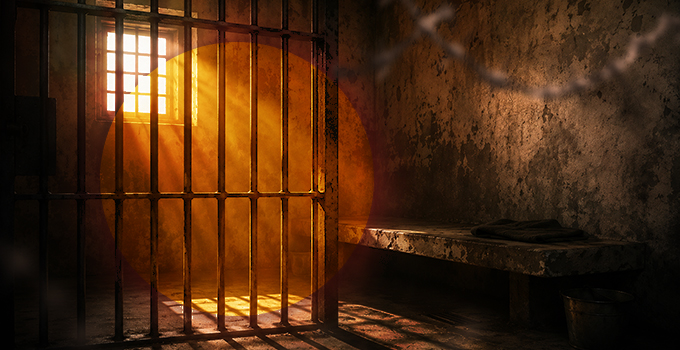
The temperature is close to 120 degrees (50 degrees celsius) and the air is stifling, heat compounded by the ambient cigarette smoke. It takes physical stamina and sangfroid to survive inside these overcrowded cells, where the only view is that of concrete walls and cellmates facing the same distress, with moments of respite few and far between. This is the reality for thousands of prisoners as the country endures an oppressive heat wave. Thousands of prisoners are thus serving a double sentence: incarceration—legitimate or otherwise—and the indecent conditions of their detention.
Without water and electricity, devastated by the flames of wildfires, thousands of Tunisians have been left to fend for themselves through scorching heat and the government’s disastrous response to it. During an interview with Nawaat, the Organization of Young Doctors reported that some 200 persons have succumbed to the heat in deplorable conditions.
In Tunisian prisons, the deaths of three detainees are mourned by their families, who point a finger at deteriorating conditions for inmates. Ali Ben El Tijani Ben Mohamed El Mansi and Ali Bejaoui died at the civil prison in Gabes, while Hamza Dridi died at the civil prison in Borj El Amri.
After gathering testimonies from the families of the deceased, the Tunisian Human Rights League (LTDH) in Ben Arous evoked “suspicious” deaths in a statement published on July 28.
The family of Ali Ben El Tijani Ben Mohamed El Mansi affirms that the latter died on Thursday, July 23. Family members report having found bruises on his side and a fractured neck after they recovered the prisoner’s body.
Tunisian Prisons: Lawless Zones
29/05/2025

Nawaat spoke with the mother of 33-year-old Hamza Dridi from Megrine. She describes how, when she last visited her son in prison, he alerted her to the conditions suffered in detention. Hamza Dridi complained that prisoners had had no running water for four days in a row, making it impossible for them to wash despite extreme temperatures. According to family members, Dridi expressed concern about the effects of the heat exacerbated by the lack of water and inability to shower.
Dridi’s family further reported that this conversation had been overheard by a prison guard during the visit. Shortly thereafter, Dridi was allegedly punished and placed in a disciplinary cell on Friday. Five days later, on the following Wednesday, he was dead.
Hamza Dridi had been detained for one year and eight months for a crime relating to cannabis. His case had yet to receive a verdict. His mother confirms that Dridi did not suffer from any known illness and questions the circumstances of his death which occurred during a period of extreme temperatures. At the time of our interview, the autopsy report had not yet been made public and the exact cause of death was unknown.

The LTDH office in Gabes affirms having gathered a number of testimonies corroborating the deterioration of conditions for inmates at the local prison: recurring water cuts and electricity outages, extreme overcrowding, suffocation. Conditions which compromise the physical integrity of detainees, and raise serious concerns about compliance with minimum standards in terms of how prisoners are treated.
THE DAUGHTER OF A POLITICAL PRISONER SPEAKS OUT
The families of political prisoners also report deplorable conditions for detainees across the board. Among them, the testimony of Halfa Chebbi, daughter of Ahmed Nejib Chebbi, sparked a wave of solidarity. Overcome with emotion, the young woman reported:
It doesn’t matter what happens, whether the situation improves or not, we are all responsible for having let it happen. May God give them strength. We are living in a major crisis; people are roaming the streets in order to escape the water cuts and electricity outages at home. People are dying. We are all suffering. But what about prisoners, about their experience crammed together with other detainees into 16 square meters of space day after day, without the possibility of going out into the courtyard—despite the fact that they have the right to two hours outdoors.
Prison staff tell me that after 11am, my father is no longer allowed outside in order to spare him from the heat. They blame the lawyers who arrive after that time.
Chebbi continues: “Outside, families sit out under the scorching sun just to get a bit of air, but can’t even breathe normally. Prison conditions are extremely difficult. We are facing an indescribable injustice.”
Following her testimony, Halfa Chebbi’s 82-year-old father, a historical figure of Tunisia’s political opposition—was transferred to the hospital as his health deteriorated. Rumors circulated about the death of 85-year-old Ennahdha party leader and former parliamentary president Rached Ghannouchi as a result of the heat wave. These rumors were subsequently proven false: Ghannouchi was hospitalized before being returned to his cell.
THE GOVERNMENT KEEPS ITS SILENCE
Faced with rumors and controversy, the government has kept silent. The General Committee of Prisons and Rehabilitation (IGPR) finally published a statement on Monday, July 28, denying information that circulated about the diminished health of certain detainees and about a ban which prevented their families and lawyers from visiting.
The IGPR affirms that “all imprisoned persons benefit from medical care in compliance with provisions in place, provided by the prison’s medical and paramedical personnel, otherwise they are transferred to urgent care in public hospitals in order to receive the necessary medical attention. Similarly, visits take place in compliance with legal procedures and regulations in place.” The IGPR furthermore indicates that it took “all necessary measures within prison facilities in terms of detention conditions and medical care” during the heat wave.
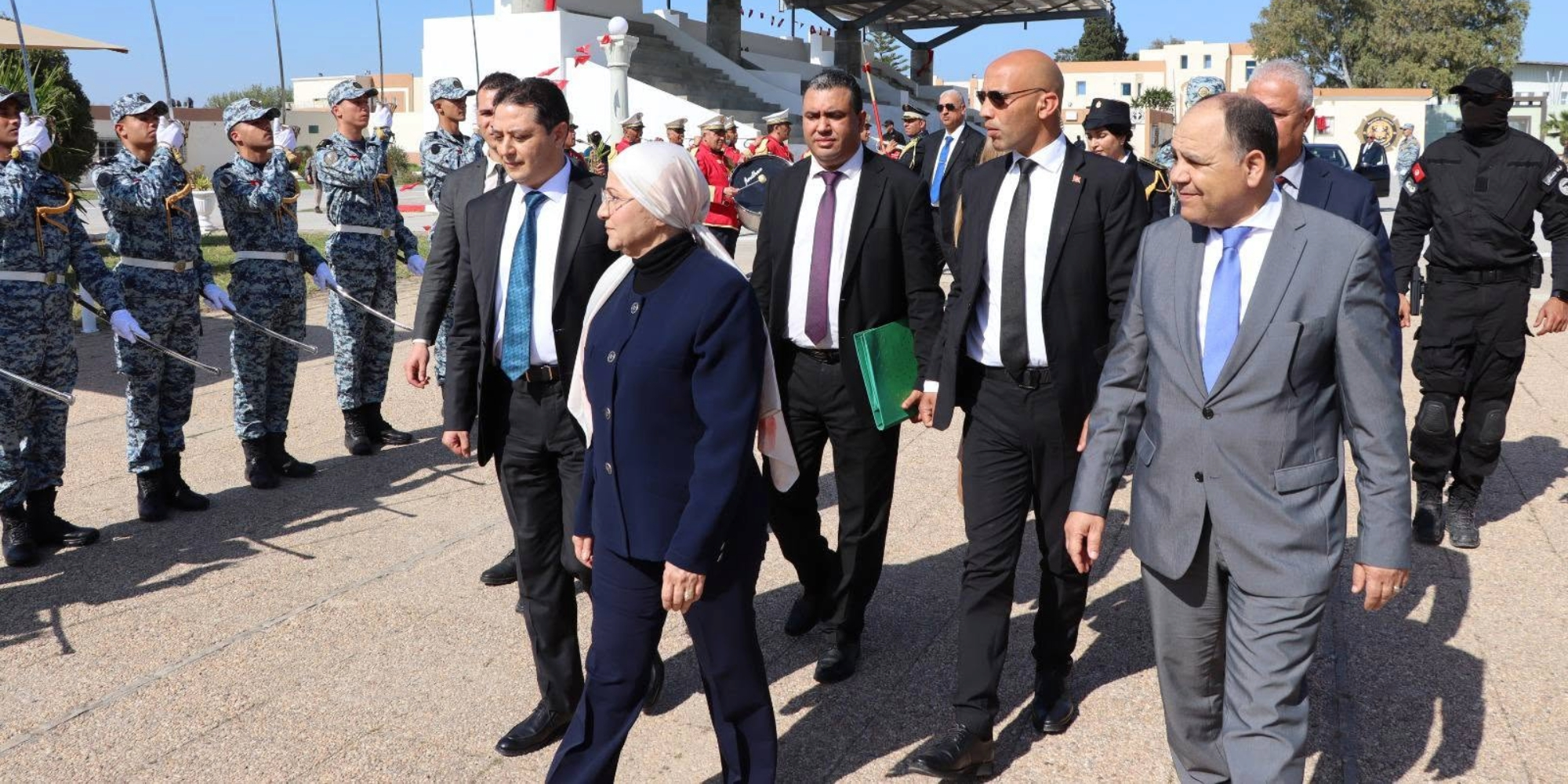
The Ministries of Justice and the Interior, for their part, responded on July 29 by announcing the arrest of six individuals accused of having spread rumors on social media about a fire that broke out at the civil prison in Messadine, and the evacuation of a number of detainees as a result of the heat wave. The rumor sowed panic among prisoners’ families, many of whom gathered outside the prison to ascertain the fate of their loved ones.
The IGPR denied this rumor, avowing its adherence to an ongoing preventative approach and its adoption of a global safety and risk management system based on the regular maintenance of all installations and equipment, especially electric generators, and on ensuring the water supply through the use of emergency tanks in case of exceptional disruptions in the network.
However, the performance and efficacy of these mechanisms remain difficult to measure owing to the opacity surrounding detention conditions inside Tunisian prisons.
On July 21, the LTDH office in Sousse announced that one of its delegations had been denied access to the Messadine civil prison, on the grounds that authorization had to be obtained from the Justice Ministry. The LTDH considers this requirement to constitute a violation of the memorandum of understanding concerning its visits within prison establishments. The example of Messadine falls within a series of restrictions that the LTDH has denounced over the past several months.
“We know that these measures exist. But to what extent are they operational during the heat wave? We don’t know, since the Justice Ministry has denied our visits within prison establishments,” remarks Chadi Trifi, a member of the LTDH executive bureau during an interview with Nawaat.
Trifi explains that the lack of information pushed the LTDH to lead its own investigation among the families of prisoners. It is calling for an urgent, independent and transparent investigation into the recent deaths in order to determine responsibility, and further demands immediate intervention to improve detention conditions, guarantee a regular supply of water and electricity, and reduce overcrowding.
CONSEQUENCES OF OVERCROWDING
As a consequence of overcrowding, it is hard to imagine decent conditions for those behind bars. To mark the 69th anniversary of the proclamation of the Tunisian Republic on July 23, President Kais Saied granted a special presidential pardon to 2,439 prisoners, and released 490 others.
“But this is a drop of water in the ocean. We are talking about some 2,500 prisoners, out of more than 60,000 prisoners, many of whom are awaiting a definitive verdict on their case. Some of these individuals are presumed innocent, not to mention those who are political prisoners,” Trifi points out.
This overpopulation is the cause of deplorable conditions for detainees. In a report published by the LTDH in 2025 on the state of prisons in Tunisia, the vast majority were found to be in a state of lamentable disrepair.
Infrastructure is often dilapidated, poorly maintained, and no longer up to par with security requirements, the dignity of detainees or international norms. The LTDH reports that in eight prisons across the country, the space available to inmates measures no more than two meters squared per person, whereas international standards set a minimum surface area of four meters squared per person.
Sanitary conditions are also inadequate: many prisoners do not have regular access to products essential to personal hygiene, sanitary facilities including toilets and showers are often insufficient compared with the number of individuals in detention, while access to health care is very limited.
If these conditions constitute the norm even outside the peak of extreme temperatures during the summer months, the argument of their “compliance” with minimum standards falls to pieces in the midst of such a severe heat wave. Are Tunisian prisons so drastically disconnected from reality, as millions of ordinary Tunisians suffer the effects of the same inferno? Pretending the contrary no longer constitutes simple denial: it is a political strategy which entails disguising indecency as normal, until death strikes once again to remind us of this falsity. And indeed, the death toll continues to rise.

iThere are no comments
Add yours