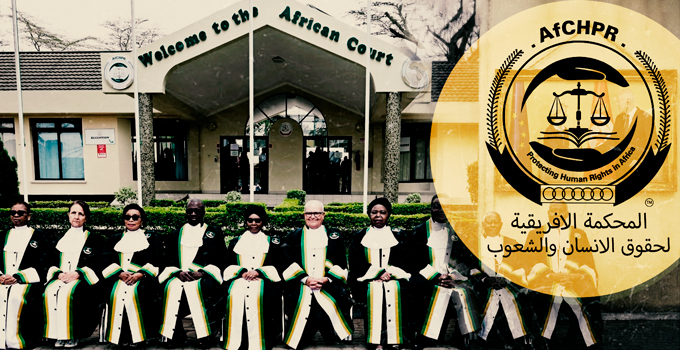
For the first time, Tunisia must respond before an international court regarding the systematic violations perpetrated against migrants within the country. Lawyers of the Italian association “Associazone Studi Giuridici sull’Immigrazione (ASGI) and attorney Brahim Belguith have submitted four petitions to the African Court on Human and Peoples’ Rights. On June 30, ASGI and Belguith held a press conference to shed light on the details of this recourse to an international jurisdiction.
Arbitrary detention, torture, mass expulsion into the desert, the sale of human beings to Libyan border guards. Macabre as they are, such practices are only the tip of the iceberg of a system documented by civil society since 2023.
FOUR STORIES, A COMMON PLIGHT
Behind the initials protecting their identities, four individuals have told the same story albeit with grim variations. L., a Cameroonian national who fell victim to trafficking even before arriving in Tunisia, was intercepted at sea by the Tunisian National Guard in 2024, then detained for more than 20 days in a military camp in the desert.
Imprisoned in a cage beneath an electric pylon, without access to adequate food or water, L. bore witness to the violence inflicted upon more than a hundred other detainees, before being sold to Libyan border guards. She was once again detained and endured sexual violence.

S.T., an Ivorian national, attempted to make his way into Tunisia in August 2023 after having fled insecurity in Libya. Arrested in the desert and beaten with batons, belts and whips, he was abandoned in the desert with dozens of other migrants.
Two individuals in his group succumbed to dehydration and overheating before he was forcibly transferred to the military zone Ras Jedir, where he survived for 20 days without care or adequate provisions.
S.D. from Guinea-Conakry attempted to cross the Mediterranean with 46 others in July 2024. Following what appeared to be a rescue after five days at sea, S.D. says he was beaten and robbed upon debarking in Sfax, then forcibly relocated to the desert with the rest of the group.
There, he witnessed the rape of detained women. After being sold to Libyan smugglers, he was imprisoned and tortured in Libya, where his release was contingent upon the payment of a ransom by his family.
A.S. from Sierra Leone survived the wreck of his vessel on April 5, 2024 off the coast of Sfax. According to A.S., the wreck was caused by a dangerous maneuver executed by the Tunisian Coast Guard after tear gas was launched at the vessel.

Women and children drowned before his eyes. Fished out of the water, hand-cuffed and beaten, he was subsequently abandoned in the desert with the other survivors before being captured and transferred to a Libyan detention center. Today, he lives in the Netherlands where he obtained asylum.
IN THE ABSENCE OF A CAPABLE TUNISIAN JUDICIARY
For attorney Brahim Belguith who helped to bring these cases before the African Court, the choice of this particular jurisdiction was not arbitrary, but a last resort. “The African Court is a complementary judiciary system, in the absence of a Tunisian judiciary capable of presiding over these cases,” he explains to Nawaat.
Without identity documents or money, the victims did not have the material means necessary to file their complaints at a Tunisian police station. This obstacle alone illustrates the impunity which enables these violations to persist.
The appeal does not aim to establish individual criminal responsibility. The African Court does not have this authority. The Court can, however, acknowledge the international responsibility that Tunisia bears in violating a series of fundamental rights guaranteed by the African Charter of Human and Peoples’ Rights, namely the right to respect for one’s life, the prohibition of torture, the right to liberty and security, the prohibition of mass expulsions, and the principal of non-refoulement.
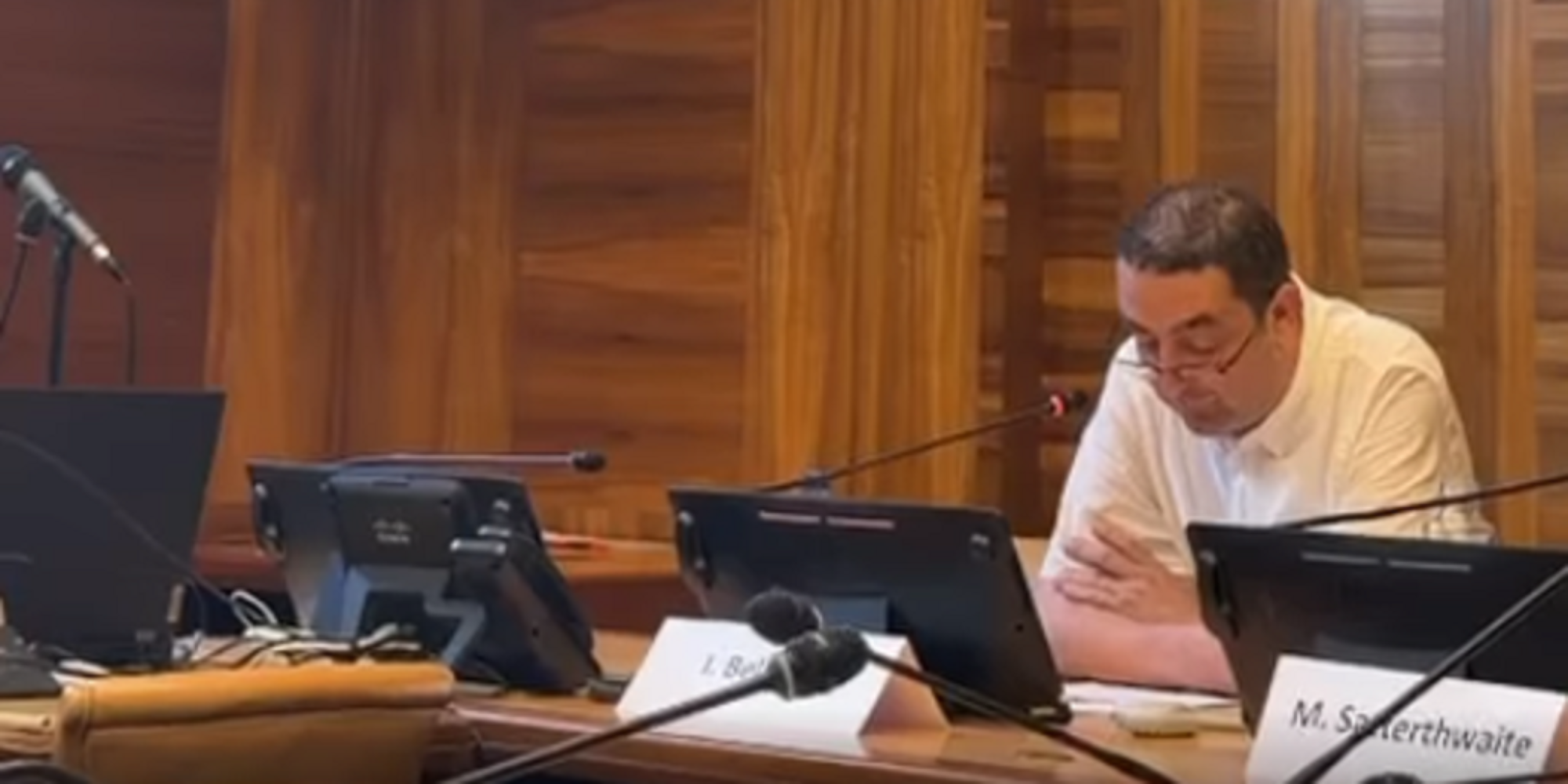
Tunisia also violated the UN conventions which it previously ratified, as well as provisions of its own Constitution. “It is the principle—even if it isn’t enough,” Belguith remarks.
Ultimately, referral to the International Criminal Court (ICC) will become an option, the attorney informs us. However, this requires an investigative standard that is not yet achievable: “Testimonies must be well documented according to the standards required by the ICC, and cannot only be drawn from what has been diffused by the media or associations.”
The work undertaken to bring these cases before the African Court is thus part of a long-term strategy in which each thoroughly-prepared testimony contributes to the possibility of future criminal action. This strategy surpasses the framework of a single judiciary system. In an interview with Nawaat, lawyer Adelaide Massimi of the ASGI affirms that networking is what makes for a strong case. Thanks to Euro-African networks, both formal and informal, strategic litigations and advocacy initiatives can be built in tandem, with each actor playing a different and complementary role.
Although to date only four individuals have attempted the path of legal recourse, their testimonies have been presented as being representative of the plight shared by thousands of others.
Since 2023, the practices described have been increasingly documented by survivors, civil society organizations and international tribunals. Those most vulnerable to these practices are West Africans who migrate into or cross through Tunisia as they make their way to Europe.
It is precisely the fact that these practices are systemic—and not incidental—that the petition aims to underline. By bringing these violations to the attention of the African Court, lawyers are striving to obtain a reading of these practices in relation to the African Charter, and to highlight that Tunisia is accountable to citizens of the African Union.
EUROPEAN UNION, COMPLICIT THROUGH ITS FUNDING AND SILENCE
One of the key points of Belguith’s argument is the responsibility born by the European Union. According to the attorney, the EU’s complicity in these violations is twofold: through its silence in the face of widely documented abuses, and through the funding it provides Tunisia to manage its borders.
This observation directly aligns with the terms of the petition, which emphasizes that the practices in question are made possible by the material, technical and financial support provided to Tunisian authorities by the European Union. As such, the plaintiffs and their counsels call upon the EU and its Member States to put an end to any form of migration cooperation that contributes, either directly or indirectly, to the perpetration of these violations. They argue that the facts revealed by these four cases show that Tunisia can neither be considered a safe country for migrants and its own citizens, nor as a safe location for persons rescued at sea. In recent years, Tunisia’s qualification as a safe place has served to justify part of Europe’s migration policy in the region.
THE LAW OF DENIAL
Faced with these significant accusations, Tunisia’s official response has generally been pure and simple denial. In response to the circulation of a video revealing attempted sexual assault on a sub-Saharan woman by a group of Tunisians, the Interior Minister offered an evasive reply, denouncing a plot to tarnish the State’s image, before reiterating his determination to ensure the “voluntary” return of irregular migrants to their countries of origin.
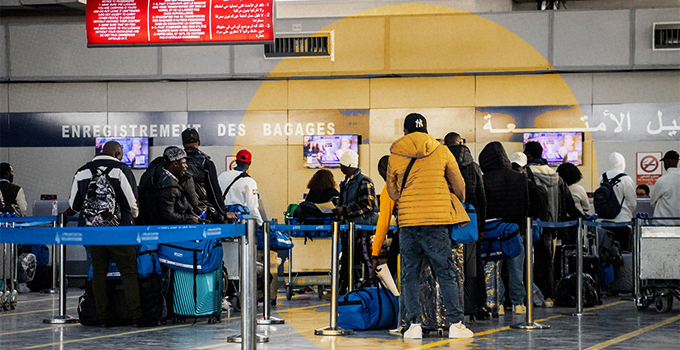
The same reflex to minimize the gravity of violations has also been apparent within the arena of international tribunals. During Tunisia’s examination by the Committee for the Elimination of Racial Discrimination at the end of November 2025 when an expert relayed allegations of torture and degrading treatment during interceptions and expulsions, Tunisia’s Secretary of State of Foreign Affairs responded by citing the Fundamental Law of 2018 against racial discrimination and a so-called strategy to sanction any infringement on the rights of others, without ever directly acknowledging the allegations.
In the context of its migration policy, the government’s alibi is consistent: expulsions are presented as “safe and dignified” returns rather than forced evictions, as Minister of Foreign Affairs Mohamed Ali Nafti affirmed before the Human Rights Council in February 2026.
Beyond this, independent investigations have been met with silence. Amnesty International shared its conclusions with Tunisian authorities before publishing its report, however, the organization had received no reply at the time of publication.
Tunisia’s National Guard and Interior Ministry also kept their silence when France 24 inquired about the encampments in Sfax.
TUNISIA WEAKENS ACCESS TO THE AFRICAN COURT
These four appeals have been made in the midst of an eroded procedural context. On March 7, 2025, the Tunisian Foreign Affairs Ministry confirmed that Tunisia had withdrawn its declaration accepting the African Court’s authority to receive appeals filed directly by individuals and NGOs granted observer status by the African Commission on Human and Peoples’ Rights.
Tunisia originally submitted its declaration, included under Article 34(6) African Court Protocol, in 2017. At the time, Tunisia was among a limited number of African nations to have signed it. Its withdrawal did not become effective until March 7, 2026, one year after Tunisia had notified the African Court of its decision.
The Committee for the Respect of Freedom and Human Rights in Tunisia (CRLDHT), the Tunisian Coalition Against the Death Penalty (CTCPM) and the Tunisian Human Rights League (LTDH) denounced the decision, calling it authoritarian, and also denounced Tunisia’s failure to uphold its constitutional and international commitments.
A coalition of 11 international organizations called upon the government to reverse its position, asserting that the country’s withdrawal restricts access to justice for victims of human rights violations and for human rights advocates in Tunisia. It also weakens the authority of the African Court, which is a pillar of the regional judicial system.
Tunisia’s decision is not an isolated occurrence. According to the same coalition, it is part of a series of measures that have gradually weakened the state of law since the election of President Kais Saied. In fact, in past years the African Court has reproached Tunisia on several occasions, especially in relation to the judiciary’s lack of independence and the government’s protracted state of emergency.
The approach adopted by the four individuals and their counsels is all the more significant in light of Tunisia’s withdrawal of its declaration. The four in question were able to file their complaints since they are based on events that transpired prior to the withdrawal, or because they have pursued procedural pathways that are distinct from direct appeal by an individual. But it also illustrates victims’ dwindling access to the African Court, as Tunisia closes doors to international remediation which it itself had opened.
A PROCEDURE WITH NO TIMEFRAME, AND SPECIFIC DEMANDS FROM THE COUNSEL
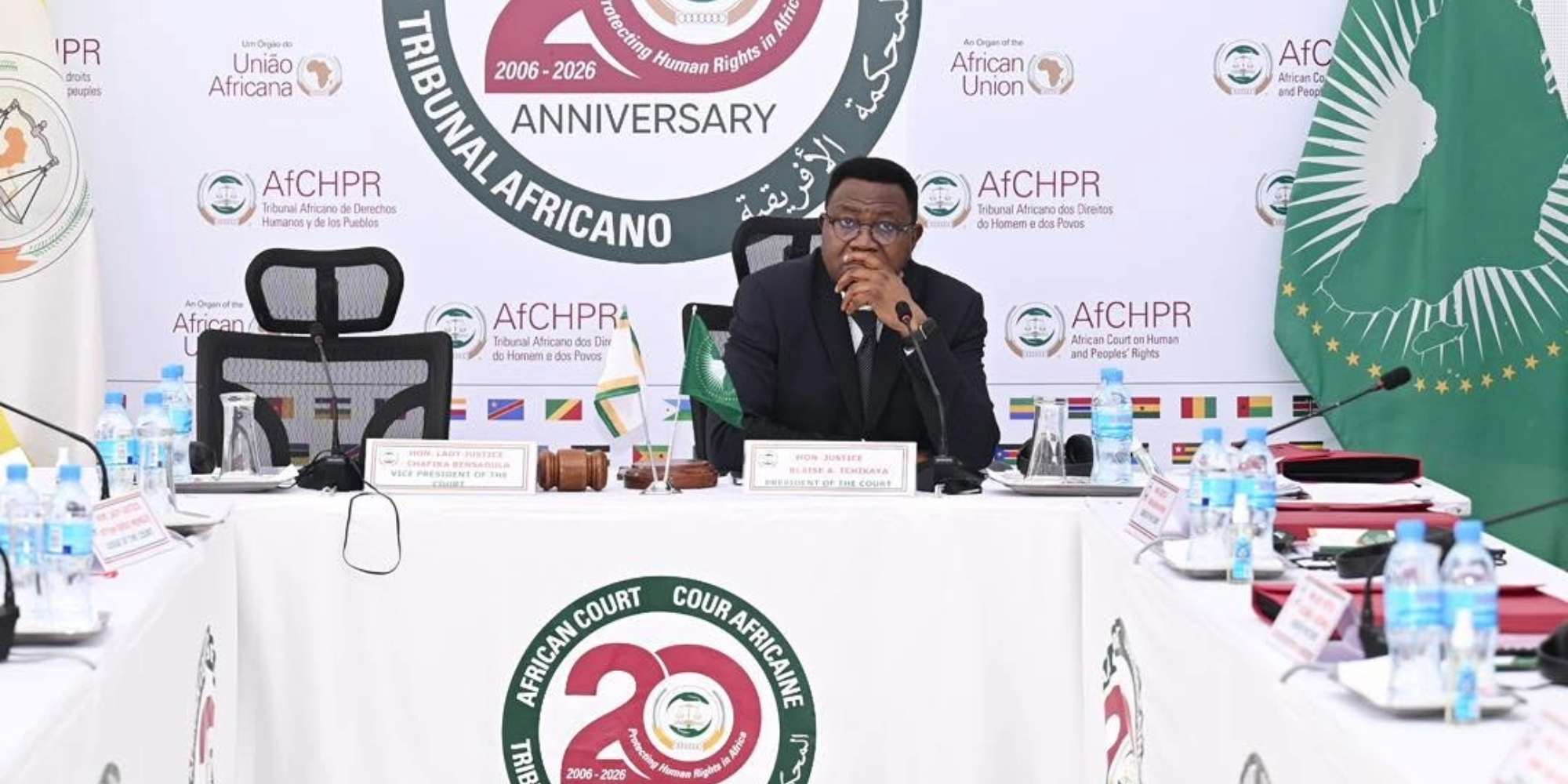
There is no timeline which dictates the rhythm of rulings carried out by the African Court. However, procedures follow a well-established order. First, the Court’s administration service transfers the filed appeal to the respondent State, which has 45 days to respond. The Court can grant or impose an extended period, generally one month. The State’s response is then transferred to the plaintiffs, in the same conditions. Once the exchanges are concluded, the Court announces the end of the written phase, then decides whether or not there will be defense speeches. Each step prolongs the timeline. “We don’t have word back from the Court,” Adelaide Massimi notes.
Beyond condemning Tunisia and demanding reparations for the four plaintiffs, lawyers are asking the Court to order structural reforms that will prevent such practices in the future.
This includes the creation of national legislation and administrative mechanisms consistent with the African Charter and international law in regard to refugees, surveillance mechanisms for detention centers that are open to independent institutions, as well as protective measures for victims of arbitrary detention and accountability for authorities involved.
They also demand an official apology from the Tunisian government to the end of moral reparations, as well as a detailed implementation report, to be submitted to the Court within six months of its decision, and then periodically from that point on.
“We hope that the violations of migrant rights by States which are considered to be countries of transit to Europe will at least receive a ruling by the Court,” Massimi asserts.
For her, the priority is for Tunisia to establish a migration policy that is founded on human rights, to put an end to all forms of persecution targeting civil society, and to uphold the African Charter and international law for rescues at sea.
“We hope for an end to impunity,” Belguith affirms. For now, it is up to the African Court to determine whether or not Tunisia bears an international responsibility in these violations. Whatever the verdict might be, a point of access has opened up. Other victims, other jurisdictions could follow, so long as these practices continue along Tunisia’s borders.


iThere are no comments
Add yours