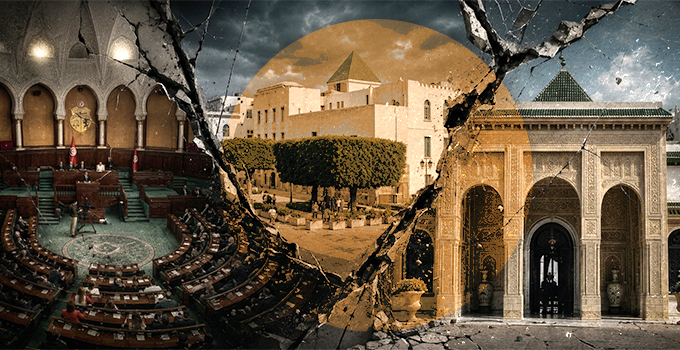
With every dilemma that arises, Tunisians are quick to lay blame on parliamentary deputies and, to a lesser extent, members of the National Committee of Regions and Districts. The latter, in turn, point a finger at members of government, especially in front of the camera. And yet all parties are fully aware that every nut and bolt of the system in place is controlled by President Kais Saied. Still, great pains are taken to avoid calling him out or embarrassing him in order to maintain a pretense of stability that is dragging the country into the unknown, one crisis at a time.
On December 2, 2025, Parliament held its second plenary session to vote on the remaining articles of the 2026 Finance Draft Law. This legislation encompassed articles pertaining to recruitment that were added and approved by deputies, including the recruitment of indirect workers of Mechanism 16, and the recruitment of those wait listed to become medical assistants through the Health Ministry. Also under examination were complementary articles such as Article 27 on the creation of interest-free financing without the requirement of collateral as a means of supporting project developers and small businesses.
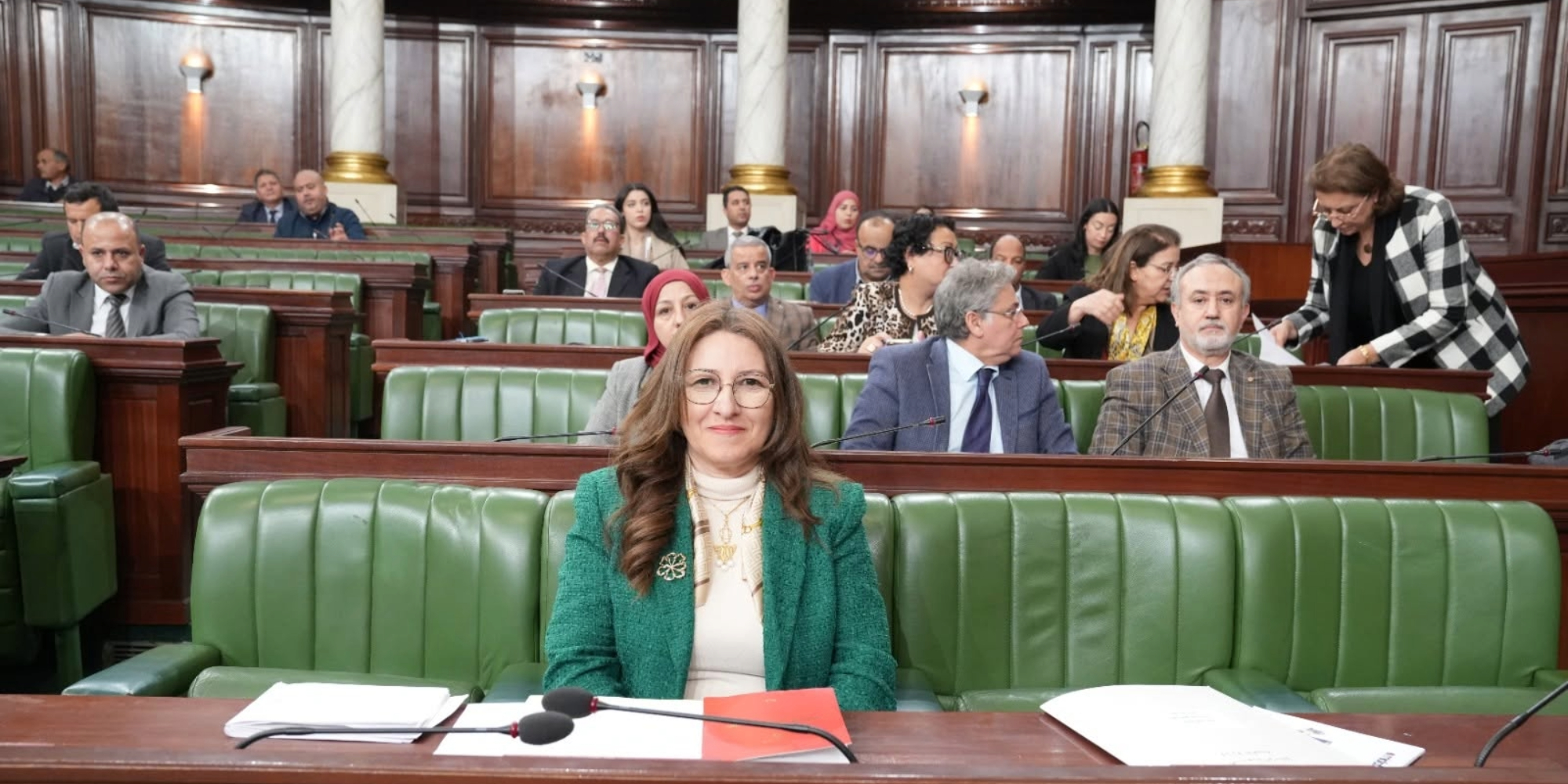
This article in particular spurred a vehement reaction from Finance Minister Michket Slama Khaldi. Speaking into the microphone during the plenary, Slama Khaldi commented on the articles added by deputies and approved by a majority vote:
You are approving illegal proposals. If you continue along this route, the finance law will neither be implemented nor applied, regardless of what might be said about it.
This declaration marked the beginning of a clear fracture between the government and Parliament. Even more so because of criticism expressed by parliamentarians regarding ministers—in particular Justice Minister Leila Jaffel—during question sessions in November 2025. This rupture deepened when the government suspended its parliamentary activities for one month beginning in May 2026, under the pretext of shifting its focus onto preparing the country’s development plan.
During this time, President Kais Saied reduced the number of meetings held with members of government, with the exception of a few ministers. These meetings had once been a frequent occurrence for the Head of State, especially throughout 2024.
PARLIAMENT, SHUNNED BY THE GOVERNMENT
Towards the beginning of May, the government decided to suspend the presence of its members and general directors in Parliament. This measure was explained by the need to prepare the country’s 2026-2030 development plan amidst an explosive social context marked by inflation and an alarming drop in purchasing power.
The Constitution confers upon the Assembly of the Representatives of the People and the National Council of Regions and Districts the right to invite “the government or one of its members to a dialogue regarding the policies in place and results achieved or underway.” The same article also grants parliamentarians the right to address written or verbal questions to members of government.
And yet it has been months since the ministers serving under Prime Minister Sarra Zaafrani have attended parliamentary sessions on different subjects requiring debate and responses from the government. They have also abstained from answering written inquiries submitted by deputies. These inquiries remain outstanding for an extended period of time, sometimes up to a year, according to remarks previously made by Deputy Abdessalam Dahmani of the “Let the people triumph” bloc. On June 24, this bloc published a statement announcing its refusal to work with the current government concerning “any correspondence or initiative transmitted to Parliament” effective immediately.
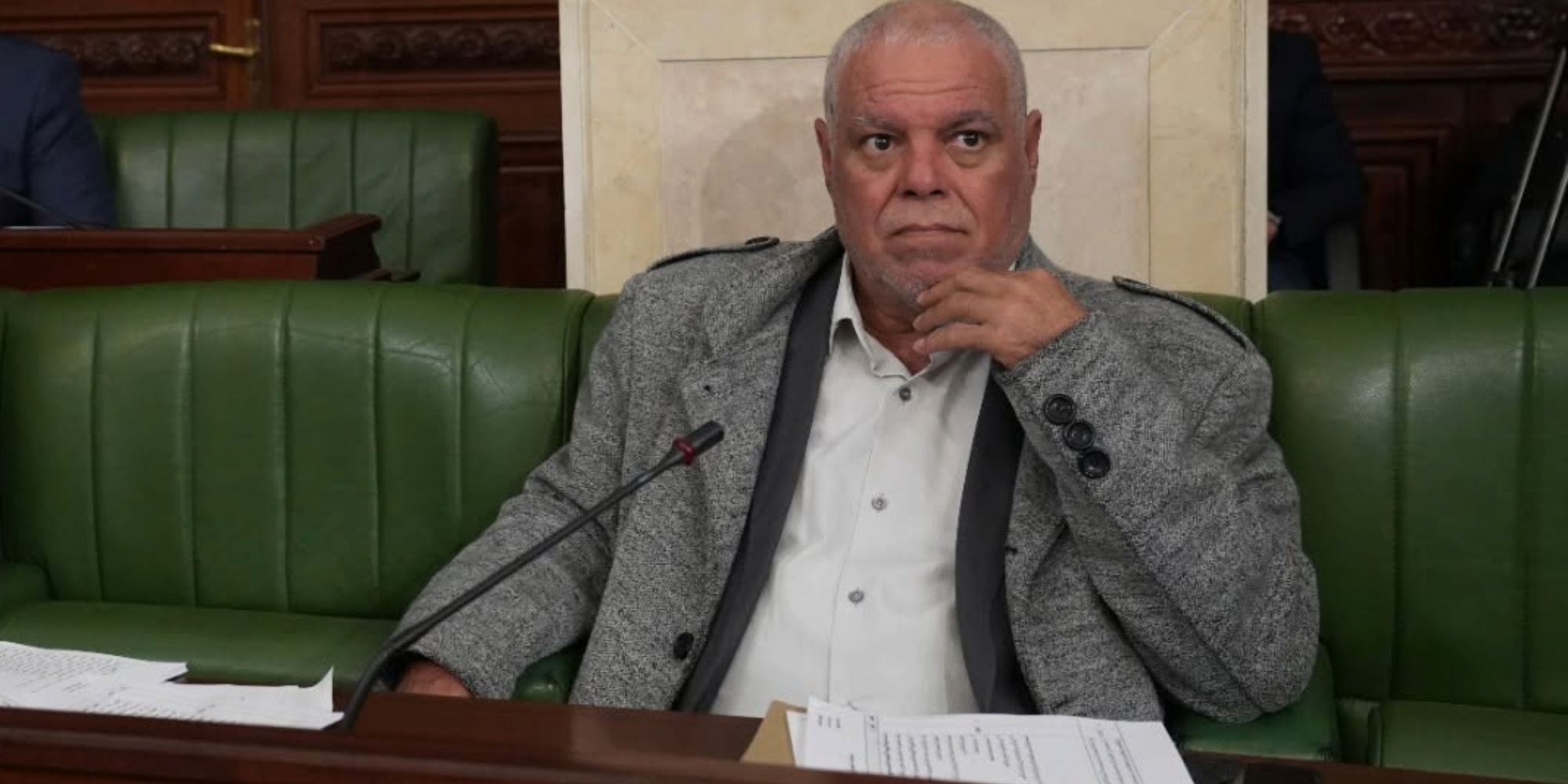
Interviewed by Nawaat, Deputy Mohamed Ali notes that the Finance Minister’s attitude during the recent debate on the Finance Law captured the lack of communication between the government and Parliament. This attitude, he observes, reflects the government’s perception of legislative power, given that the debate concerned a legislative text and required government action. According to Mohamed Ali:
The ministers stopped coming to Parliament, even to hear their own proposals, like during the debate last Monday on the cooperation agreement for air transport between Tunisia, the Sultanate of Oman and Kuwait. The Transport Minister was absent, and we have noticed that this was not an isolated case. As is the case for nearly all draft laws, ministers are absent from debates. The delegation is often composed of general directors and ministerial staff, but the minister is not present. Ministers are supposed to attend debates when they propose a draft law. Nor do they come when texts are submitted by parliamentarians and require the presence of ministers. This situation is not limited to proposals relating to rights and liberties, but extends to those which relate to social issues.
In February 2024, deputies submitted a proposal to modify Decree 54 of 2022. This proposal was held up for a year within the Assembly of the Representatives before being submitted to the General Legislation Commission. The Commission held sessions with the authors of the proposal, however, these hearings were interrupted due to the absence of government representatives, as one of the proposal’s authors, Deputy Thabet El-Abed, previously reported to Nawaat. The same occurred with a new draft law concerning associations. Government ministries, including the Justice Ministry, have refused to attend debate sessions with the Commission on Rights and Liberties. This pushed Thabet El-Abed, who serves as president of the Commission, to refuse to sign the final deliberations report on this draft law, despite pressure from the President of the ARP to move it to plenary, El-Abed told Nawaat.
THE GOVERNMENT’S SILENCE
The strategy of abstention adopted by the ministers of Sarra Zaafrani’s government has been the origin of a nearly insurrectional movement against the laws approved by Parliament in plenary and published in the Official Gazette. In this context, unemployed university graduates continue to protest, calling on the government to enact regulatory measures for Law 18 of 2025 concerning their professional recruitment. Law 18 was published in the Official Gazette in December 2025 but has yet to take effect.
On this subject, parliamentary deputy Mohamed Ali remarks that “the government has adopted a principle that it does not apply, namely that laws must be built upon the notion of a social state. However, its approach to handling laws and articles in terms of the social dimension shows the contrary. For example, articles of the Finance Law with a social dimension were not followed by any application text. Beyond this, no regulatory decree was published alongside Law 18 concerning the exceptional recruitment of university graduates facing long-term unemployment. Which renders its application impossible. Owing to the government’s negligence, our role in Parliament is no longer limited to legislation in sectors like the social sector; today, we are leading another combat to pressure the government to publish implementing decrees.”
Apparently, the Finance Minister was serious when she declared that the government refused to apply certain articles of the Finance Law, notably Article 92 concerning the recruitment of individuals on wait lists to become medical assistants. The fact that no application text had been published to bring this article into effect prompted deputies to write to the Prime Minister on July 10.
The government’s boycott of parliamentary sessions on draft laws has produced a domino effect, ultimately resulting in the non-application of these laws. As Mohamed Ali explains to Nawaat:
In theory, every law is to be debated by deputies and concerned parties, as well as by concerned members of government, including ministers, prior to approval. It is important that real communication take place in order to avoid a sterile dialogue and to the end of achieving a result. When the executive authority challenges a draft law and its viability with parliamentarians, this creates an opportunity for exchange and enables deputies to make minor modifications to certain articles of the text. In practice, however, members of government do not attend these debates and, when voting takes place, they give their opinion on the law’s application. For example: Law 9 of 2025 concerning the regulation of work contracts and the banning of sub-contracting. This law has not been implemented because the concerned ministers do not have a regulatory text enabling them to execute it. Even if the articles of certain laws are not inapplicable, which is the case when the executive power makes a concerted effort to find simple solutions for those who are supposed to benefit from such a law.
Article 69 of the Tunisian Constitution of 2022 stipulates that “legislative or amendment proposals presented by deputies are not admissible if they pose a threat to the State’s financial stability.” In fact, the government uses this article, twisting its meaning, in order to justify non-compliance with amended articles or entire laws, under the pretext of a lack of financial means for their implementation. In reality, however, the main reason that laws or articles approved by Parliament cannot be implemented is ministers’ refusal to attend sessions dedicated to examining these proposals.
Hichem Ajbouni, Secretary General of the Democratic Current Party (Attayar), is unequivocal on this point. As he told Nawaat: “The president is the one who defines policies and transmits them to Parliament, in compliance with the Constitution that he himself drafted, however, the latter is not respected. We are living under an authoritarian regime. The Presidency has not issued a single comment during the present crisis. What is more, Saied has not summoned the ministers concerned by the water and electricity crisis. Plus, the government is boycotting Parliament. An unprecedented decision that renders laws proposed or adopted by deputies null and void, since the government is not designated by Parliament. For this reason, ministers ignore parliamentary deputies.”
A CHILL SPREADS BETWEEN THE TWO PALACES
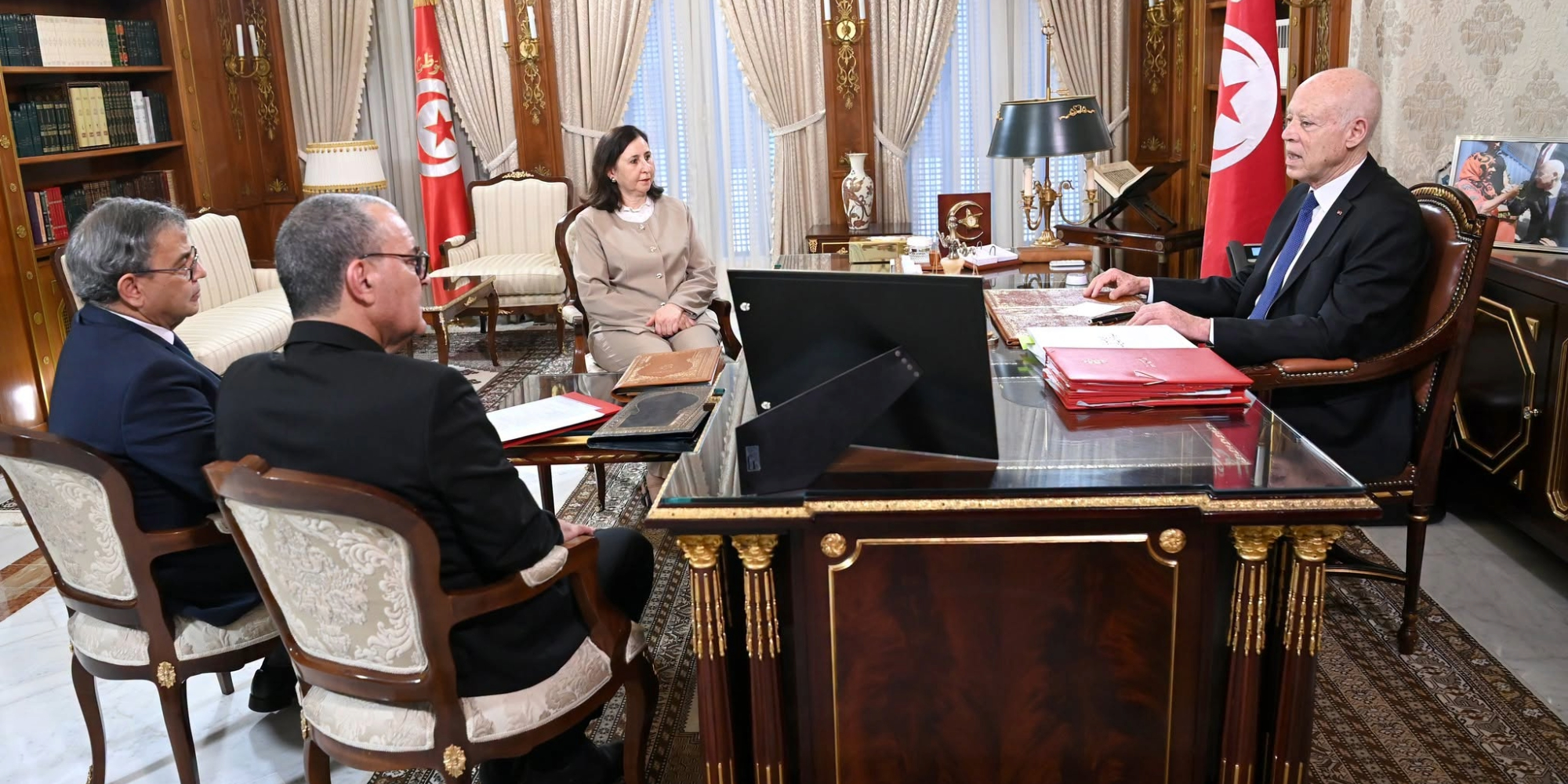
Following the President’s activities as per the Presidency’s official website and Facebook page, we can see that Saied’s last meeting with Justice Minister Leila Jaffel at the Carthage Palace was on January 8, 2025. He last met with her three days later at the seat of government, La Kasbah, for a public meeting also attended by former Prime Minister Kamel Madouri, former Finance Minister Sihem Boughdiri Nemsia and Social Affairs Minister Issam Lahmar. Reputed to be the minister most seen alongside the president, Jaffel’s sudden absence has nourished speculations about what might have put her in the President’s disfavor. Such speculations have neither been confirmed nor denied.
The Justice Minister is not the only official noticeably absent from the President’s office. Environment Minister Habib Abid, for example, has hardly appeared at the palace, and his rare meetings with the President have addressed prickly environmental issues such as the Chemical Group in Gabes. Their last meeting—in which the Ministers of Health and Industry were also present to discuss the pollution crisis in Gabes—took place in September 2025. This year, Kais Saied has not met with Habib Abid to discuss other crises, even with the approach of the summer season and the knowledge that a significant number of Tunisian beaches are contaminated by pollution. Indeed, a list published in 2026 includes a total of 49 beaches where swimming has been banned due to pollution in surrounding coastal regions. This number has doubled since 2025.
Despite water and electricity stoppages, the Ministers of Industry and Agriculture have not appeared at the Carthage Palace in over three months. Confronted with any new crisis of comparable magnitude, the President has acquired the habit of calling upon one or another minister to preach to in front of the camera, as if to wash his hands clean and shove responsibility onto the member of government or senior official in question, an individual who Saied himself appointed.
Mohamed Abbou affirms that the way state affairs are currently handled is unprecedented, and that Tunisia today resembles the country under the reign of Sadok Bey. He elaborates:
In reality, there are no institutions. There is only one person who wants to run everything, but who is unable to run anything correctly. His relations with certain ministers are indeed tense, however, there is something curious about the situation with the Justice Minister, for example. After the President, it is she who has caused the most problems in terms of human rights. Evidently, there is a disconnect between the Minister and the President, given the fact that they have not seen each other for a long time, which raises important questions. Responsibility falls upon the highest authority, the one who chose this system. The President is looking for a scapegoat, and the truth is that he holds power that nobody before him has held and, accordingly, should assume his responsibilities instead of placing the blame on someone else. During the current electricity crisis, for instance, the stoppages occurred due to technical reasons, far from being associated with any sort of conspiracy. And the STEG is not responsible for the government’s energy policies, since the President dismissed the Energy Minister and has not replaced her.
Aside from a few meetings with the Council of Ministers and the National Security Council, the President’s public activities have included a limited number of meetings with members of government. Instead, his activities have centered around meetings with foreign ambassadors, marking the beginning or end of their missions in Tunisia, and on-site visits to different regions. Along these lines, Mohamed Ali observes: “When the Head of State makes field visits, he declares that the situation is dire and cannot continue. And he is responsible for ensuring the Constitution’s application, since the country’s political system is a presidential one.”
Under an autocratic regime, it can seem illusory to search for an appropriate balance between the authority who monopolizes decision-making power and those who have accepted to obey him. The President treats his civil servants as simple subordinates, transforming them on whim into scapegoats to be tossed to the lions of popular anger or else dismissed during periods of difficulty and crisis. It is a scenario which reveals an incontestable rupture between the Presidency, the government and Parliament.

iThere are no comments
Add yours