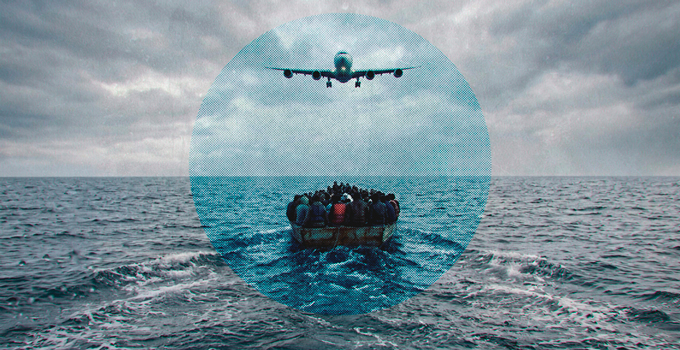
The image is alarming, capturing the magnitude of the most recent tragedy; a row of tombs enclosing the bodies of those from Ben Guerdane who perished in the wreck. The death toll, now confirmed, is a heavy one: of the two dozen or so passengers aboard the vessel that sank off the shore of Zarzis, there was but one survivor. Search operations carried out by the National Guard, the Navy, and Civil Defense ended on August 26 as the last body was fished out of the sea.
These deaths add to the hundreds of other deaths and disappearances of persons who have attempted to cross over to Italy. The Central Mediterranean migratory route towards Europe remains one of the deadliest in the world. The number of deaths and disappearances has increased significantly in 2026 since the previous year. As of April, the International Organization for Migration (IOM) had already recorded about 765 deaths for the year, or 460 more than the number recorded for the same period in 2025, constituting an increase of 150%.
This trend has not discouraged irregular migration. Although the number of Tunisians attempting to cross the Mediterranean has decreased over the years, hundreds remain undeterred in their ambition to leave the country.
SHARP DECLINE IN DEPARTURES
Since the migration spike in 2023, the number of arrivals to Italian shores has dropped significantly, including among Tunisian nationals. This trend has been confirmed by statistics from the Italian Interior Ministry (Viminale) and the UN Refugee Agency (UNHCR).
According to Viminale, 17,495 migrants arrived to Italy by sea between January 1 and August 15, 2026, representing a 55% decrease from the 38,861arrivals over the same period in 2025. In 2024, that number was 37,819.
Monthly arrivals have remained low throughout 2026: 1,457 in January, 2,510 in February, 2,150 in March, 2,459 in April, 3,054 in May, 2,758 in June and 2,179 in July. The UNHCR confirmed the same trend in statistics recorded through the month of July: 16,567 arrivals between January and July 2026 in comparison with 36,545 over the same period in 2025, also a 55% decrease.
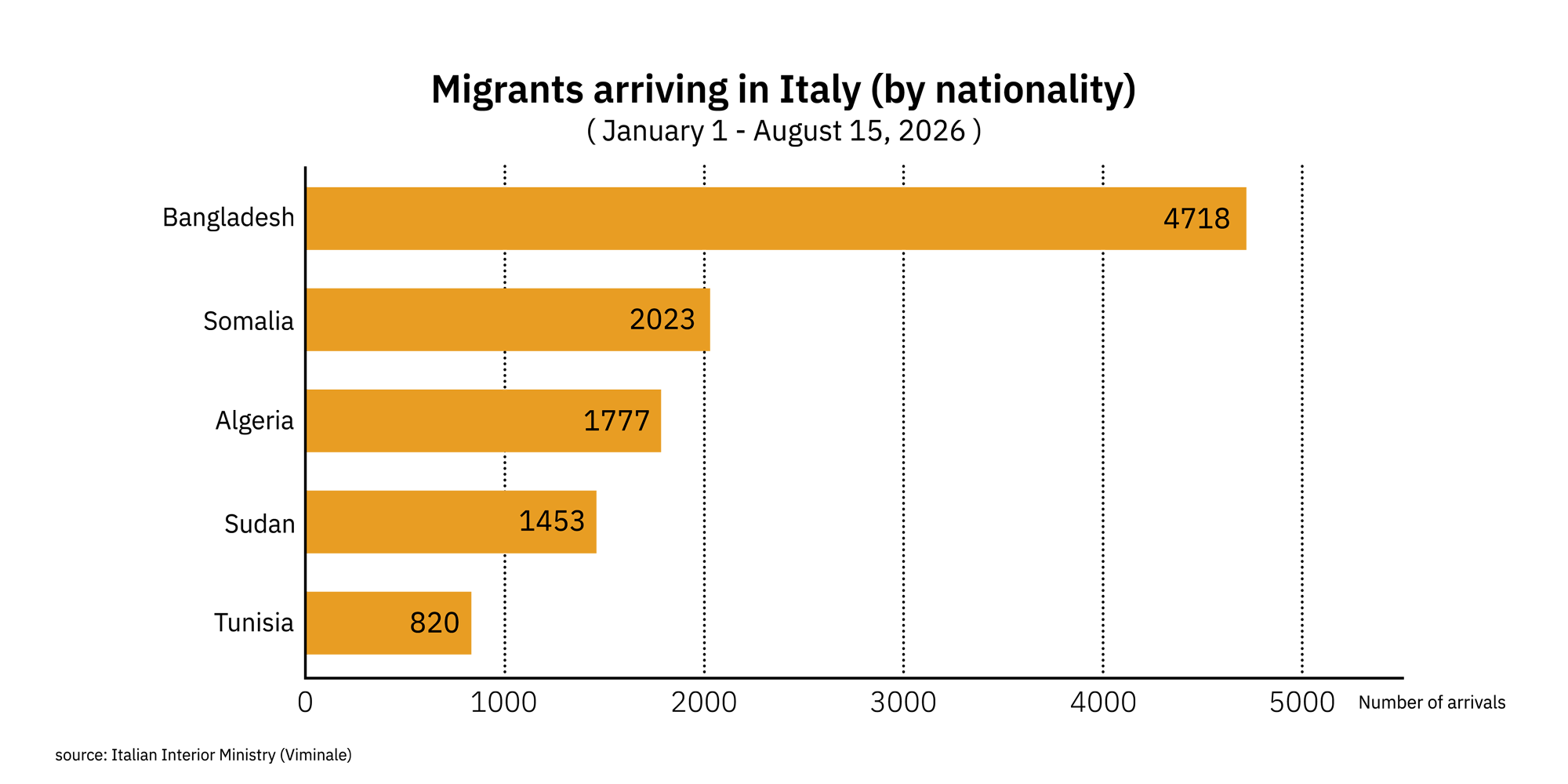
In terms of arrivals by nationality, Viminale recorded 820 Tunisians debarking on Italian shores between January 1 and August 15, 2026, or approximately 4.7% of the 17,495 migrants who arrived by sea during that period. Tunisia ranks number eight on the list of countries of origin for migrants, far behind Bangladesh (4,718), Somalia (2,023), Algeria (1,777) and Sudan (1,453).
For the period of January through July, the UNHCR reported the arrival of 752 Tunisian nationals (6% of arrivals in July). Tunisia also ranks number eight according to these statistics, behind Bangladesh (4,594), Somalia (1,923), Algeria (1,656), Sudan (1,423), Pakistan (1,265), Egypt (1,064) and Eritrea (900).
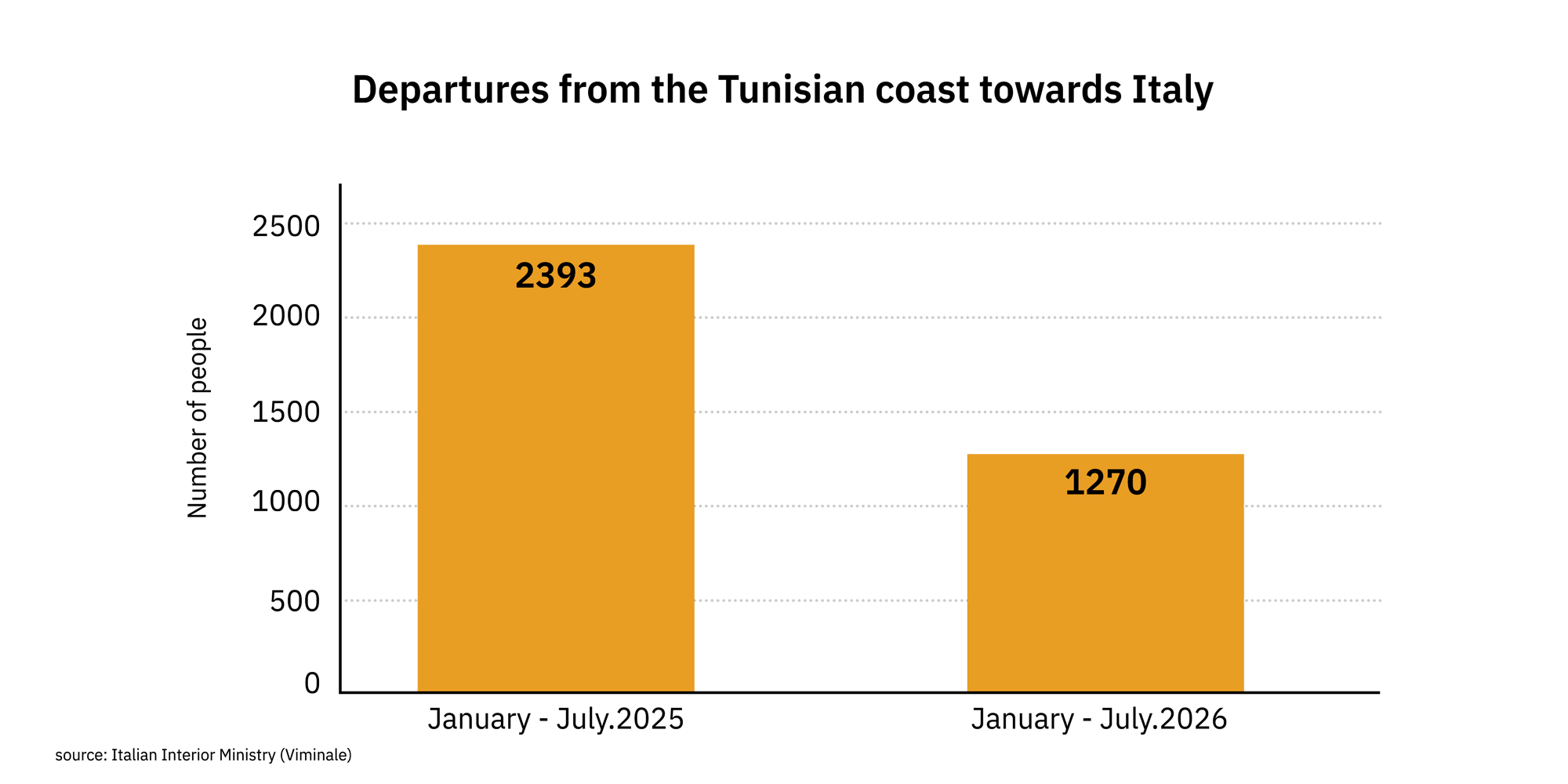
In terms of countries of embarkation, the HCR reports that 1,270 persons left the Tunisian coast for Italy between January and July 2026, about half of the 2,393 who left over the same period in 2025.
In July 2026, Tunisia constituted 7% of embarkations, far behind Libya (66%) and Algeria (26%). Between January and July, Libya represented the main point of departure with 13,367 embarkations in 2026 (compared with 32,690 in 2025), followed by Algeria which saw a significant increase in departures—1,854 up from 614 in 2025.
The HCR highlights two demographic characteristics for July 2026: unaccompanied minors represented 21% of all arrivals by sea (mainly from Somalia, Eritrea and Bangladesh), and women only 4% (primarily from Somalia, Algeria and Eritrea). This trend was also reflected in the profile of Tunisian nationals arriving to Italy, a majority of whom were adult males.
Viminale also noted a decrease in the number of unaccompanied minors among migrants of all nationalities: 3,312 between January 1 and August 10, 2026 in comparison with 6,849 over the same period in 2025 and 5,001 in 2024. These statistics do not differentiate according to nationality and therefore do not shed light on the number of Tunisian minors who may have arrived in Italy during these periods.
TIGHTENED SECURITY MEASURES
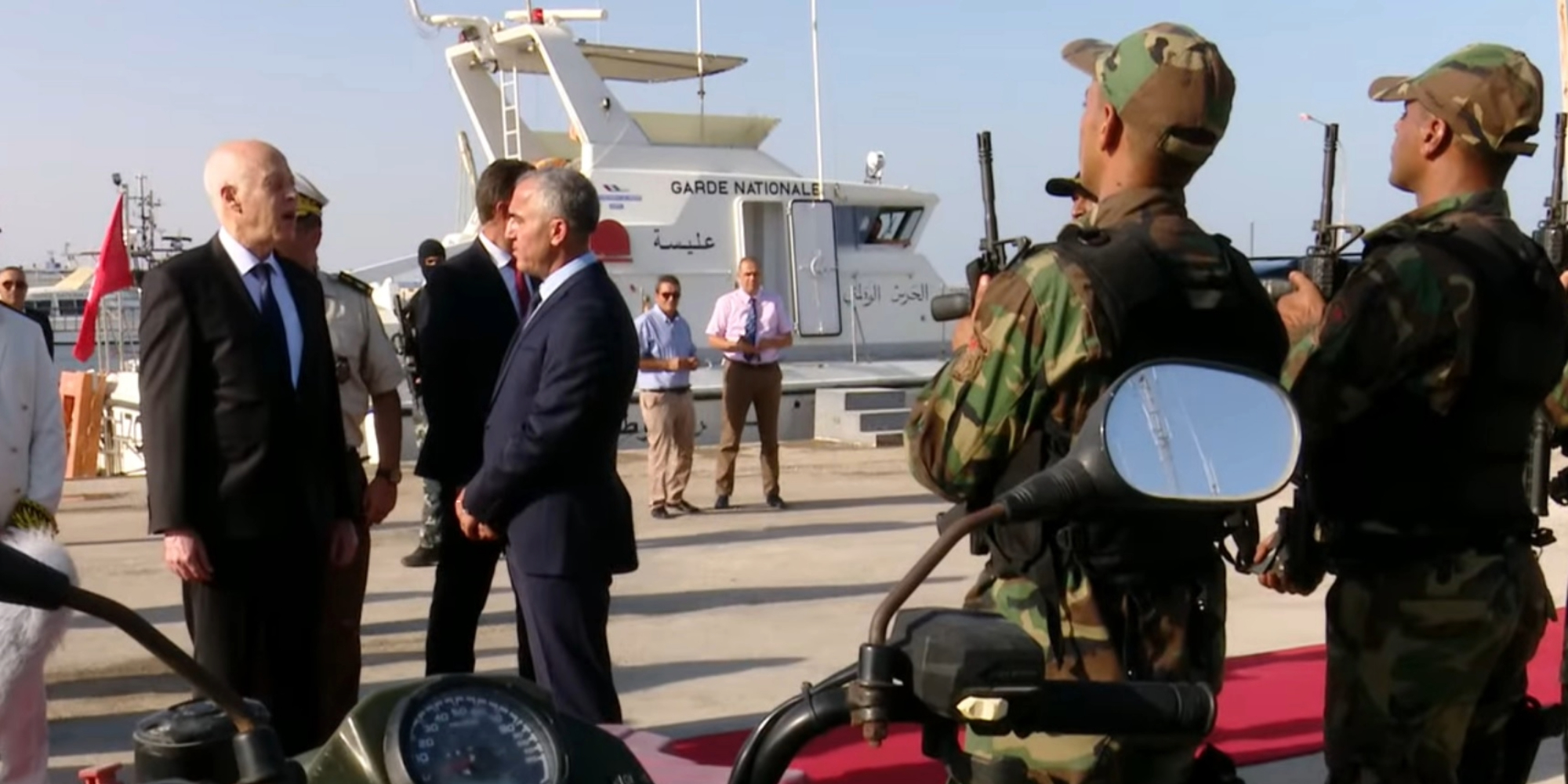
In part, the drop in arrivals is a result of stricter controls on departures from the Tunisian coast. Since the adoption of the 2023 protocol agreement between the European Union and Tunisia—signed in the presence of the President of the Italian Council, Giorgia Meloni—Tunisian authorities have strengthened security measures at sea and along the coast. Support for these measures is provided by the European Border Management Programme (BMP) to the tune of 130 million euros.
This downward trend in the number of migrants arriving to Italy has become a key argument in Meloni’s campaign. In Tunisia, the agreement has not only been denounced by opponents of the regime and human rights organizations, but has also become the object of criticism within the presidential camp itself. Supporters of president Kais Saied have become increasingly skeptical about European pressure and the question of national sovereignty.
What, more precisely, accounts for the decline? “Maritime surveillance currently uses several levels of controls, with more than three zones covering different distances along the coast. It also relies on more information sharing with Italy, notably through the use of drones and European radars that monitor the Tunisian coast,” explains Romdhane Ben Amor, civil society activist and migration expert, during an interview with Nawaat.

The extension of the Tunisian zone for maritime search and rescue (SAR) also participates in these measures. “On land, authorities have increased controls around primary departure areas such as Sfax and Mahdia, with blockades at city entrances, following the model of measures that have been implemented in Kerkennah,” Ben Amor adds.
A decrease in the number of departures thus seems less a spontaneous phenomenon than it is the result of increased pressure applied along the entire migration chain, from the gathering of those intent on making the crossing, to interception at sea.
MIGRANTS ADAPT THEIR STRATEGIES
Tighter migration controls do not mean that people will simply cease their attempts to leave the country. Stricter measures also push those intent on leaving to modify their practices. Tunisian migrants are pursuing a more autonomous approach, pooling their skills and resources and, in some cases, directly purchasing the vessels and motors necessary to make the trek.
However, this autonomy is challenged by growing financial and logistical obstacles. The cost of crossing the Mediterranean is rising, as is the risk of confiscation of materials by authorities. Beyond this is the fear of a double failure: either being intercepted at sea before reaching Italy, or being repatriated after arriving, Ben Amor points out.
“This pressure could also produce a paradoxical effect. According to some actors, a sense that the authorities are ineffectual, or a period of internal instability could favor attempts to mobilize simultaneous mass departures to the end of saturating control measures and creating a fait accompli in the destination country, such as the movements we have witnessed at the borders of Ceuta and Melilla,” he predicts.
PRESSURES CONTINUE AFTER ARRIVAL
Migration controls do not stop at maritime borders. Repatriation operations in Italy, as well as Germany and France, are carried out regularly.
While arrivals may be decreasing, returns are certainly not. According to Viminale, 5,414 migrants of all nationalities were repatriated from Italy between January 1 and August 13, 2026, including 4,647 forced returns and 767 accompanied voluntary returns. During the same period in 2025 and 2024, Italy recorded 4,040 and 3,436 repatriations respectively.
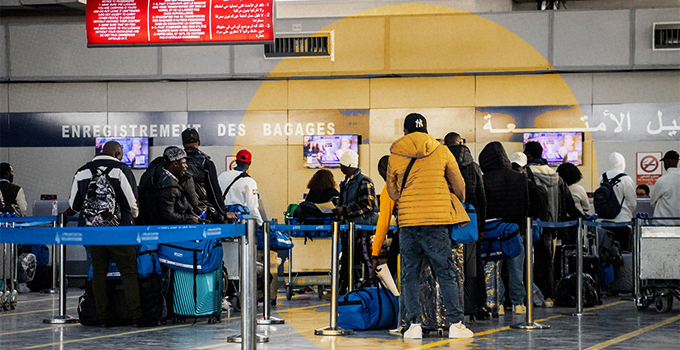
A recent report by the Garante nazionale dei diritti delle persone private della libertà personale (Italy’s independent authority tasked with monitoring forced repatriation) centers on the expulsion of Tunisian migrants from Italy. Published on February 18, 2026, the report indicates that 2,959 individuals were repatriated accompanied by police escort in 2025 (down from 3,538 in 2024), including 1,443 directly from pre-removal detention centers (CPR).
Tunisia is the primary country of origin for repatriated migrants in Italy: 600 Tunisian nationals were forcibly repatriated in 2025 (versus 1,849 in 2024), compared with 532 Egyptians, 323 Albanians, 250 Nigerians and 213 Moroccans.
The Garante attributes this decrease in repatriations not to an easing up of expulsion operations, but to the fact that less Tunisians are actually arriving in Italy.
The report, which makes the explicit reference to “rimpatri forzati” (forced repatriation), squarely contradicts President Kais Saied’s repeated denial of the existence of a forced expulsion agreement between Tunisia and European countries. Tunisian authorities prefer the term “voluntary returns.”
Beyond statistics and differences in terminology, concerns remain around the conditions in which these returns are prepared and executed. The recent death of a Tunisian migrant in an Italian detention center is a dramatic illustration of this point.
The tragic death of Dhaoui Lassoued has revived the debate around Italy’s holding centers.
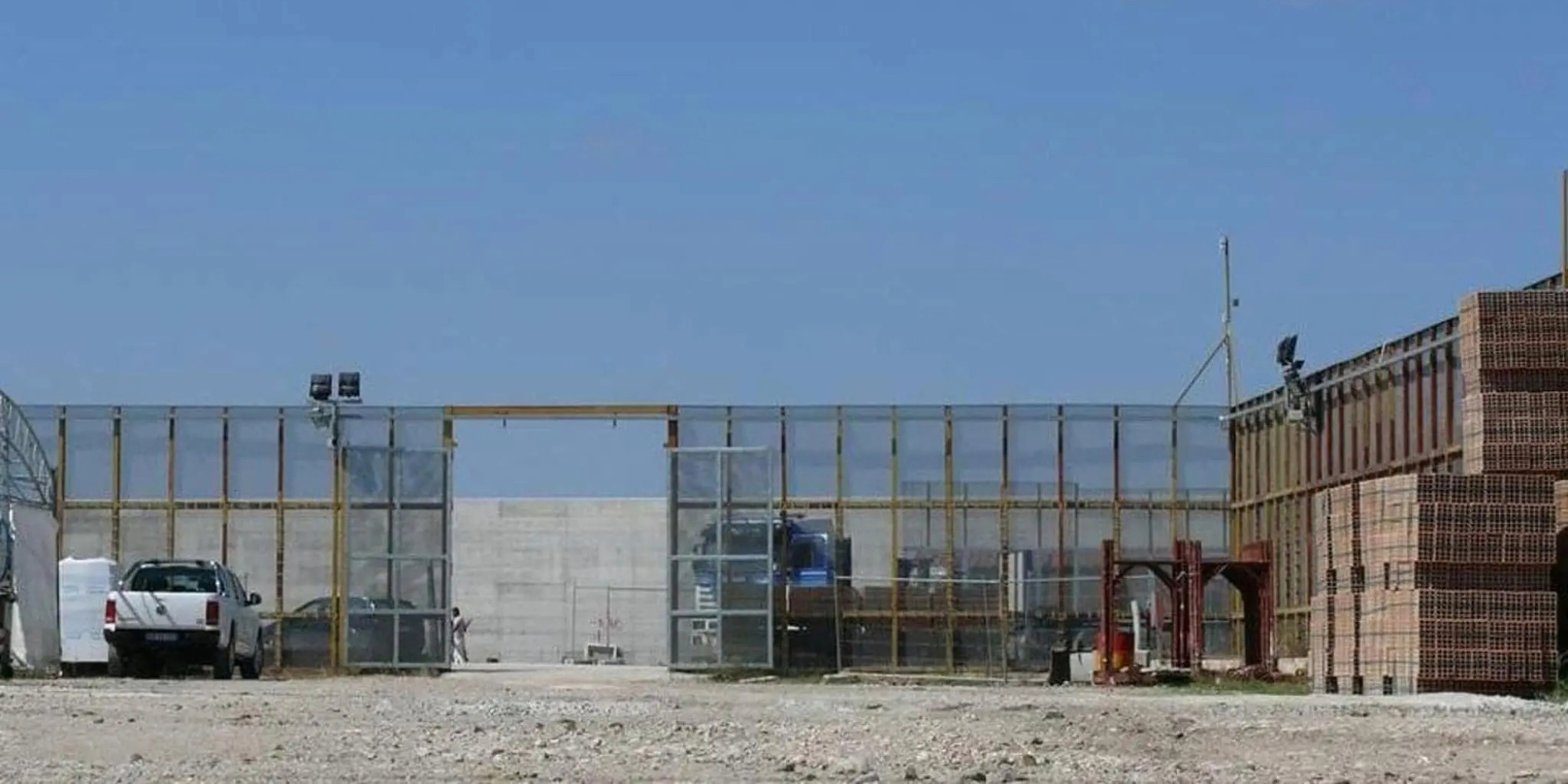
On August 10, 2026, Dhaoui Lassoued, a 30-year-old Tunisian migrant from Ben Guerdane, died after falling from the roof of the Palazzo San Gervasio pre-removal detention center (CPR) in Italy. Although the courts have yet to determine whether the incident was the result of an accident or suicide, Lassoued’s lawyer affirms that the young man suffered from psychiatric issues and should never have been held within this structure.
The incident galvanized violent upheaval within the holding center, where detainees denounced unsanitary conditions and lack of access to medical care. Parliamentary deputies and human rights activists are demanding the closure of these establishments. In Tunisia, the incident provoked public outrage. The victim’s family was not informed of his death until 11 days after the incident, raising serious questions about the tracking of Tunisian nationals held overseas.
With reinforced cooperation underway for the return of migrants, Tunisian authorities are promoting legal migration. A new agreement with Italy announced in April 2026, “Thamm Plus,” aims to facilitate the employment of young Tunisians across different sectors. However, this trajectory is limited: the 2024 agreement only provided for the entry of 2,000 workers, with the visa-issuing process sometimes taking up to 12 months.
This legal route does not suffice to explain the drop in irregular departures from Tunisia.
The trend should thus not be interpreted as signaling the end of irregular migration, but rather as revealing the phenomenon’s transformation: stricter controls, the displacement of migration routes, the adaptation of migrants and networks, the strengthening of return mechanisms. Although Tunisia previously occupied a central role in crossings to Italy in 2023 and 2024, Libya has now become the main point of embarkation for migrants following the Central Mediterranean route.
Statistics show that less Tunisians are leaving to reach Italy’s shores, a trend lauded in official discourse. And yet the Mediterranean continues to swallow whole the dreams and aspirations of so many to leave the country—from Ben Guerdane, to Zarzis, and other points of departure along the Sea’s southern shore.




iThere are no comments
Add yours