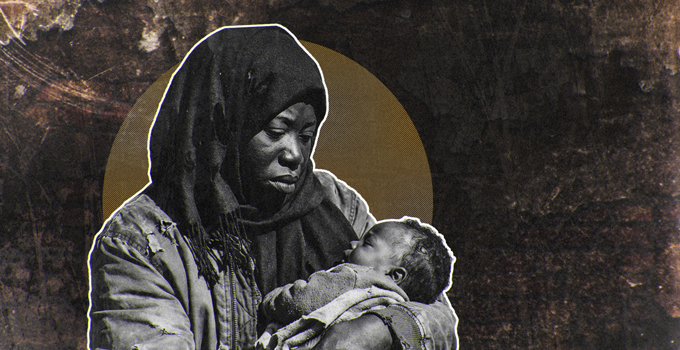
It is pouring rain in Tunis on January 16. Four individuals stand outside the Al Qods mosque on Rue de Palestine, soliciting the charity of passers-by after Friday prayer: one elderly woman, two handicapped individuals, and a young sub-Saharan woman holding a baby.
The door of the mosque opens. Men come out in waves, a prayer rug rolled under their arms. Many pass by without looking. Gaze fixed straight ahead, hurried steps. Only a few slow down, hold out a coin, and promptly move on without a word. Words of thanks uttered by Kadiatou (pseudonym) are drowned out by street noise.
Kadiatou, from Guinea, is 19 years old. In her arms, her eleven-month-old daughter observes, smiles. Two passers-by stop, speak to her softly as if to comfort her. The young woman remains seated. She begs in order to survive.
Upon arriving in Tunisia in 2023, she lived in an encampment in Sfax. Then she became pregnant. Her partner is also Guinean. Together, they decided to head to Tunis. “I thought that it would be better for the baby in the capital,” she tells us. Her delivery at Mongi Slim Hospital in La Marsa was without incident, Kadiatou informs us.
Many migrant women, however, are not so lucky. “We have seen births take place along migration routes, at the borders, during expulsions, and even at sea and in olive tree groves,” says Romdhane Ben Amor, spokesman for the Tunisian Forum for Economic and Social Rights (FTDES). The fear of being arrested or expelled pushes some women to give birth in precarious shelters or at home, exposing mothers and infants to serious health risks.
According to the World Organization Against Torture (OMCT), more and more women living in makeshift camps are giving birth outside of hospitals, in unsanitary conditions and without adequate obstetric and neonatal care, and without urgent care in case of complications. The report “Routes de la torture : Violations des droits humains subies par les personnes en déplacement” [Routes of Torture: Human Rights Violations Endured by Displaced Persons] which covers November 2024 – April 2025 documents these violations in Tunisia.
A SYSTEM OF DIFFERENTIAL TREATMENT
The OMCT reports that between November 2024 and April 2025, around ten migrant women gave birth each week at the Sfax Hospital. Out of 360 women accompanied by a humanitarian organization, 62.5% received prenatal care, highlighting the magnitude of the challenge.
This increase in births is perceived by President Kais Saied and his supporters as a threat by conspirators whose objective is to “change Tunisia’s demographic composition” and “its Arab-Muslim identity.” According to this discourse, these conspirators are helping a “horde” of sub-Saharan migrants to enter into the country.

Such rhetoric has fed into racism couched in a pro-natalist language, reinforced whenever the country’s so-called demographic “threat” is evoked in the media.
On January 8, Imen Jelassi, presenter on the show Rendez-vous 9 on Attessia, called to stop migrants from giving birth in Tunisia. Her remarks provoked outcry among human rights activists in the country.
What Jelassi has failed to mention is pinpointed in the OMCT’s report: for many migrants, their pregnancy is unwanted and commonly the result of sexual abuse, including among adolescents. The numerous requests by these young women and girls for the voluntary termination of their pregnancy is proof.
In this context, the OMCT reveals “limited access to contraception, information and support in relation to reproductive health.” A situation exacerbated by the discriminatory attitudes and behaviors of certain healthcare workers.
In theory, every person residing in Tunisia—not only citizens—has the right to health. In practice, this right is often not guaranteed for migrant women and largely depends on the goodwill of medical personnel.
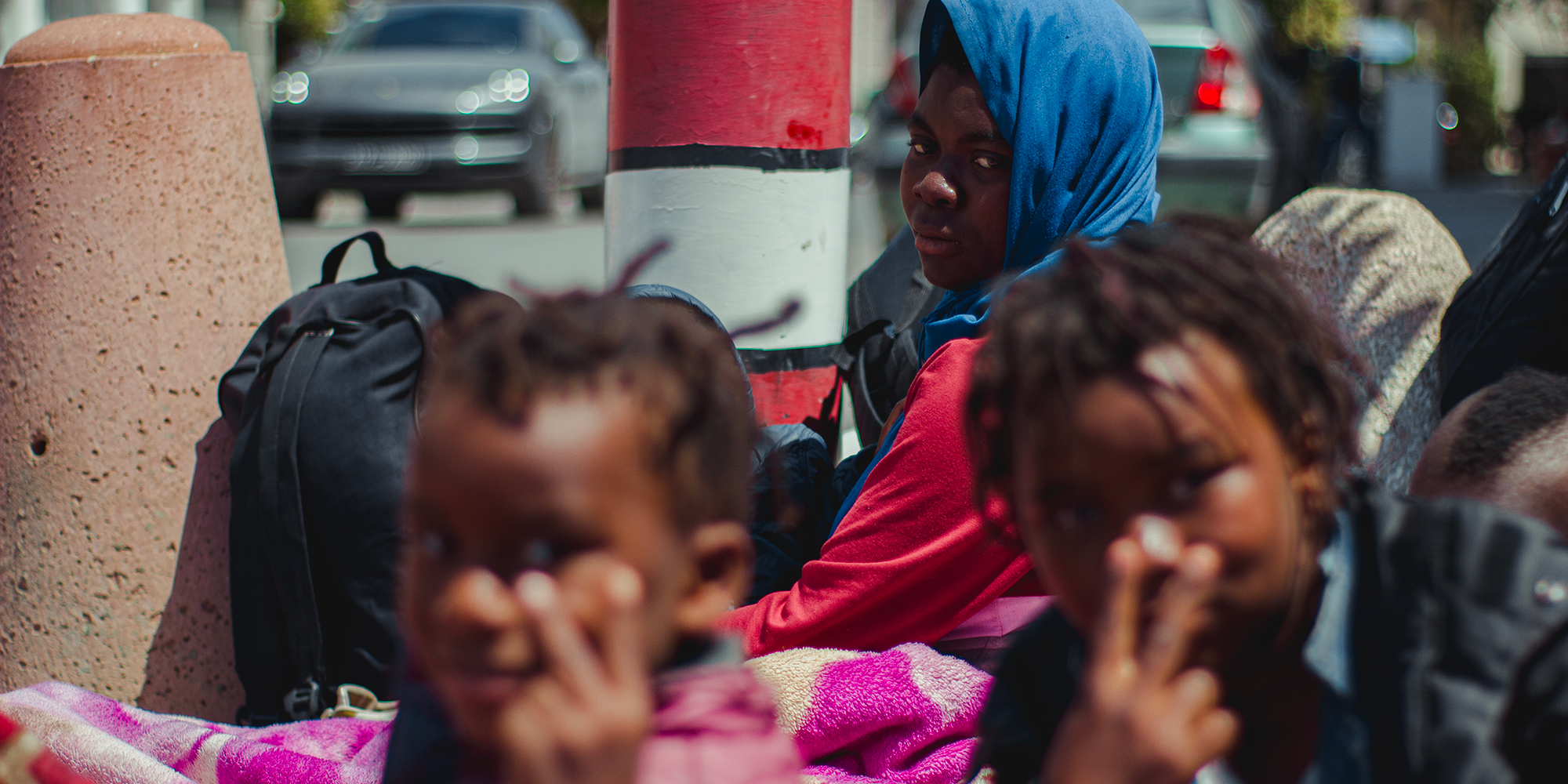
Racism, cultural and language barriers, administrative complications and lack of training for healthcare professionals to serve this population are some of the obstacles that limit their access to care.
The result is differential, discriminatory treatment: prolonged wait times, hasty consultations, priority given to Tunisian citizens in the event of treatment shortages (especially for HIV), and a higher cost of care, the OMCT reports.
BETWEEN BUREAUCRACY, RACISM, AND MISUNDERSTANDING
Access to abortion requires identity documents, which many migrant women and girls do not have. Moreover, the National Office of Family and Population (ONFP) which is supposed to ensure access to abortion, organizes care according to place of residence. However, this can mean transfers from one center to another and prolonged delays.
The ONFP does not cover surgical abortions by curettage which are recommended after eight weeks of pregnancy and are not free without health insurance. For migrant women requiring this sort of medical intervention, civil society organizations must step in to direct them to a private clinic or public hospital, the OMCT notes.

Abortion was not an option for Kadiatou at the encampment in Sfax. She never received any prenatal care while she was pregnant, and, although she suffers from typhoid, explains that she was “afraid” to go to the hospital.
But some illnesses can have dangerous consequences for mother and child. Organizations that support migrant women in access to healthcare have noted an increase in the number of individuals living with HIV, including children, and in the number of cases of Hepatitis B and C, all of which have a high risk of transmission from mother to child.
“For women migrants living in urban centers, maternity care in hospitals remains generally accessible. However, access to prenatal care is becoming more difficult, compromising the prevention and management of maternal and neonatal complications, which are not covered by the Basic Healthcare Centers (CSB),” the OMCT’s report reads.
Giving birth comes with its own set of obstacles. Associated costs range from 200 to 1,000 dinars, and can be more depending on the type of medical intervention required and type of delivery, possible complications, recourse to a C-section and the length of postpartum hospitalization.
The OMCT documents cases in which hospitals kept women up to ten days and refused to deliver the medical birth certificate necessary to register the child’s birth. In these types of situations, hospital authorities contact civil society organizations or UN agencies to settle the patient’s bills.

Access to postpartum care is also extremely limited, exposing mothers and newborns to serious complications such as hemorrhaging and infections.
Deliveries outside of hospitals make it more difficult to vaccinate newborns, who are often extremely vulnerable in the context of precarious and unsanitary living conditions.
CHILDREN IN DANGER
Due to her illness, Kadiatou does not breastfeed her baby, and does not receive any healthcare. Her daughter’s diet consists of semolina, and, as Kadiatou tells us, she is often sick—especially now that winter is here. She lacks clothing to keep the little one warm. Ever since her papers were stolen, Kadiatou hasn’t been able to seek care in any medical establishment.
Access to basic healthcare and forensic procedures requires valid identity documents such as a birth certificate, national ID card or passport. Without these papers, patients—Tunisian or otherwise—are refused care and medical attention in public health institutions.
According to a humanitarian organization which provides healthcare support for migrants, out of 512 individuals accompanied during the period examined, 310 did not have any form of identity documents (OMCT). Without such proof of identity, it is harder to integrate newborns into the national calendar and thus keep them on the vaccination schedule.
Kadiatou was directed to the police in order to register her daughter, but has not gone for fear of being arrested. And because she does not have a valid ID, the baby has not received any vaccinations.
Lacking sufficient financial resources, Kadiatou cannot seek care at a private healthcare facility. Her partner works in construction and receives 25 dinars a day. After giving birth to her daughter, Kadiatou gave up her work as a housekeeper.
“Daycare is 120 dinars. I can’t afford this, so I had to stop working to take care of my baby,” she tells us. And so the young woman depends on the charity of passers-by to cover her basic needs, including the cost of rent.
LEFT TO FEND FOR THEMSELVES
Were it not for the criminalization of providing assistance to migrants, Kadiatou and other women would have the possibility of benefiting from the support of civil society. Instead, they turn to the UN Refugee Agency (HCR), the International Organization for Migration (IOM) and Médecins du Monde, the only organizations still able to offer assistance to these populations.
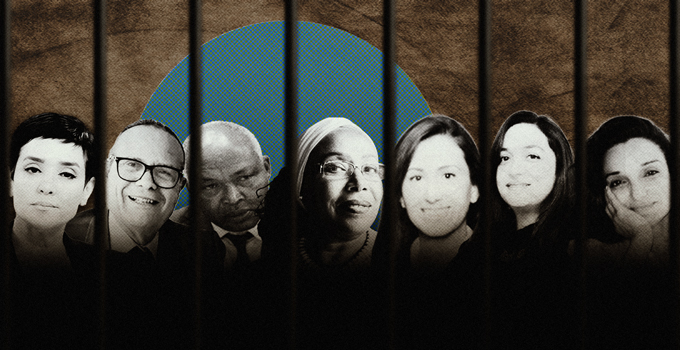
Nevertheless, some women—especially those living in underserved areas or the makeshift camps of El Amra and Jebeniana—face challenges in accessing these structures, the OMCT reports. The OMCT indicates that these organizations’ limited budgets constitute another major obstacle.
The journeys travelled by these women in order to arrive in Tunisia were extremely difficult. Kadiatou, whose land route took her through Algeria, prefers not to go into detail: “So much violence; it’s traumatizing.”
The violence was repeated during the expulsion operations carried out by Tunisian security forces. “There are numerous accounts of violations endured by women, including different types of rape to which they were exposed,” explains Romdhane Ben Amor. This violence was perpetrated by traffickers, other migrants and security forces.
Those who remain face prejudice of all kinds. “They are the victims of stigmatization relating to their situation: they are seen as carriers of disease, responsible for the rise in births or perceived as sexual objects. Unfortunately, these stigmatizations exist in Tunisian popular culture,” Ben Amor observes.
Exhausted by their situation, some women consider leaving Tunisia. Returning home thus becomes an option. Kadiatou does not dream of going back, but has resigned herself to the idea. “Tunisia is becoming too difficult. To work, to live,” she says in a weary voice. In order to save enough money for the trip home, she begs.
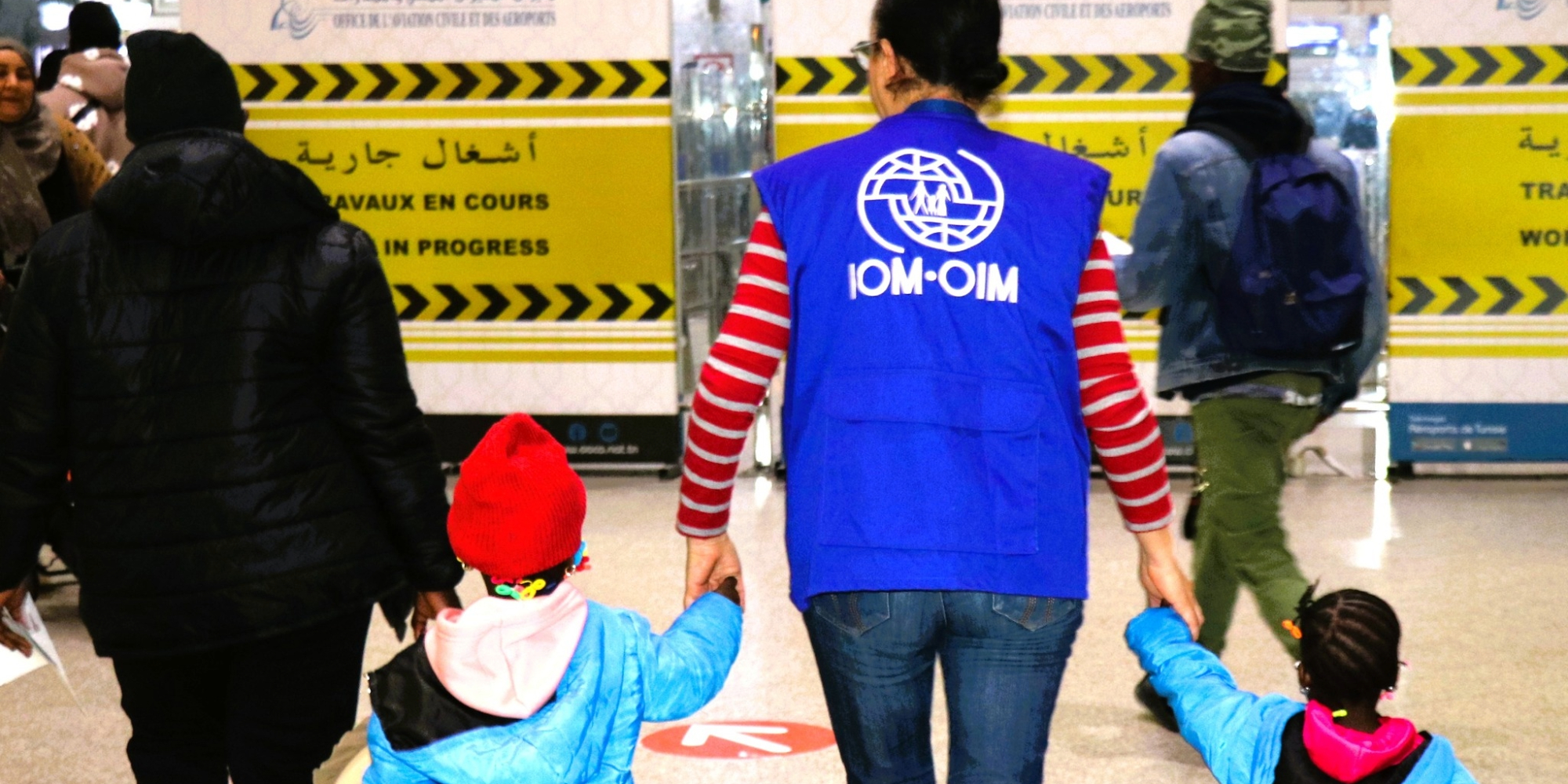
This time, she will not take the same route of terror. Instead, she is waiting for the IOM and its “voluntary return” program. For Kadiatou, it is a leap into the unknown. Financed by the European Union and implemented in partnership with the Tunisian Red Crescent, the program promises reintegration assistance.
The return trip is not a choice, but what remains when there are no other options. When the police hunt you down. When Europe closes its borders. When even the sea, once the ultimate horizon, becomes inaccessible. “Even leaving by sea is now difficult,” she murmurs.
The road ahead is unclear. Kadiatou’s future—and even more so that of her daughter—remains uncertain. “I hope that she will grow up where it will be better for her, wherever that may be. But not here,” she says simply.
Deprived of care, ignored by public authorities, stigmatized by society, these mothers and their children live on the fringes in Tunisia. Their survival, fragile and precarious, hangs by a thread.
In July 2023, the fate of Fati and Marie—whose image was diffused worldwide—was a tragic example of this reality: mother and daughter died of thirst after being pushed out by Tunisian authorities toward the Libyan border. Fati and Marie are just one story among so many others that tell of the deplorable situation that migrant mothers face in Tunisia.

iThere are no comments
Add yours