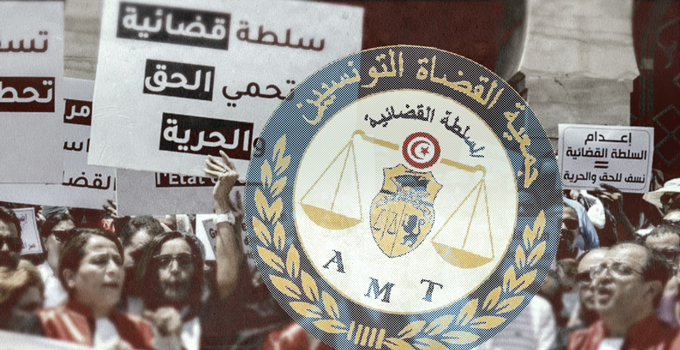
During the elections congress of February 2026, the Association of Tunisian Magistrates (AMT) renewed its confidence in judge Anas Hmaidi. Hmaidi will continue his term as president of the association as it fights for a judiciary authority that is independent from the executive. The AMT’s elections took place despite restrictions imposed upon its work and the threat of the suspension of its activities. Nevertheless, the message of the congress was resounding, as magistrates expressed their commitment to pursuing the fight and defending the independence of the justice system in the face of repression and intimidation.
Today, an attack upon the AMT seeks to weaken its mobilization against the government’s attempts to silence and intimidate independent magistrates. The offensive began three years ago with the dismissal of dozens of judges, followed by the freezing of the High Judicial Council and its replacement with a provisional council which itself quickly became inoperative due to its vacant seats. Beyond this, the judiciary has endured the arbitrary transfer of judges by the Ministry of Justice as well as interference in their professional careers. Finally, criminal charges were brought against Anas Hmaidi, followed by attempts to suspend the AMT’s elections congress which took place on February 7 and 8.
SYSTEMATIC HARASSMENT
The message conveyed by Tunisian judges during the AMT’s elective congress was unequivocal, affirming their dedication to preserving the association’s independence and renewing confidence in its leadership. The latter vowed not to succumb to the tactics of repression, harassment and arbitrary transfers by the Ministry of Justice which have targeted judges, and reiterated its demand for the judicial authority’s independence from the executive. It called for the election of a high judicial council, the only structure capable of guaranteeing a baseline of independence for judges and dissuading the Ministry of Justice from interfering in their careers. This message foiled all of the government’s attempts to subjugate the AMT, which experienced a similar scenario in 2005 under the dictatorship of the Ben Ali regime, when a putsch toppled its legitimate executive bureau.
Judicial Vacancy: The Kais Saied System
16/05/2025

Several weeks before its congress took place, the AMT received a series of formal notices from Tunisia’s Secretary General accusing the association of irregularities in its administrative and financial management. These notices were not sent by a bailiff, as required by law. In a statement, the AMT argued that these practices constituted “a manipulation of regulatory deadlines specified under Decree 88, with the objective of validating an administrative decision to suspend the association’s activities before its fifteenth elections congress, in order to punish the association for its positions in favor of an independent justice”. The association characterized these measures as “a threat to judges’ right to assemble and to express themselves in defense of the independence of the justice,” as its president faced criminal proceedings.
In a statement, the AMT indicates that on January 7, 2026—the same day that the nomination period for the elections congress opened—it received a new notice from the Office of the President concerning the presumed irregularities, indicating that the deadline to respond coincided with the day the congress was to begin. According to the statement:
The multiplication of formal notices issued by the Office of the President evoking unfounded accusations of irregularities, and the opening of a criminal case against the president of the association at the same moment when it announced its elections congress, reveal the desired objective: namely, to prevent the congress from taking place and to thereby freeze the association’s activities.
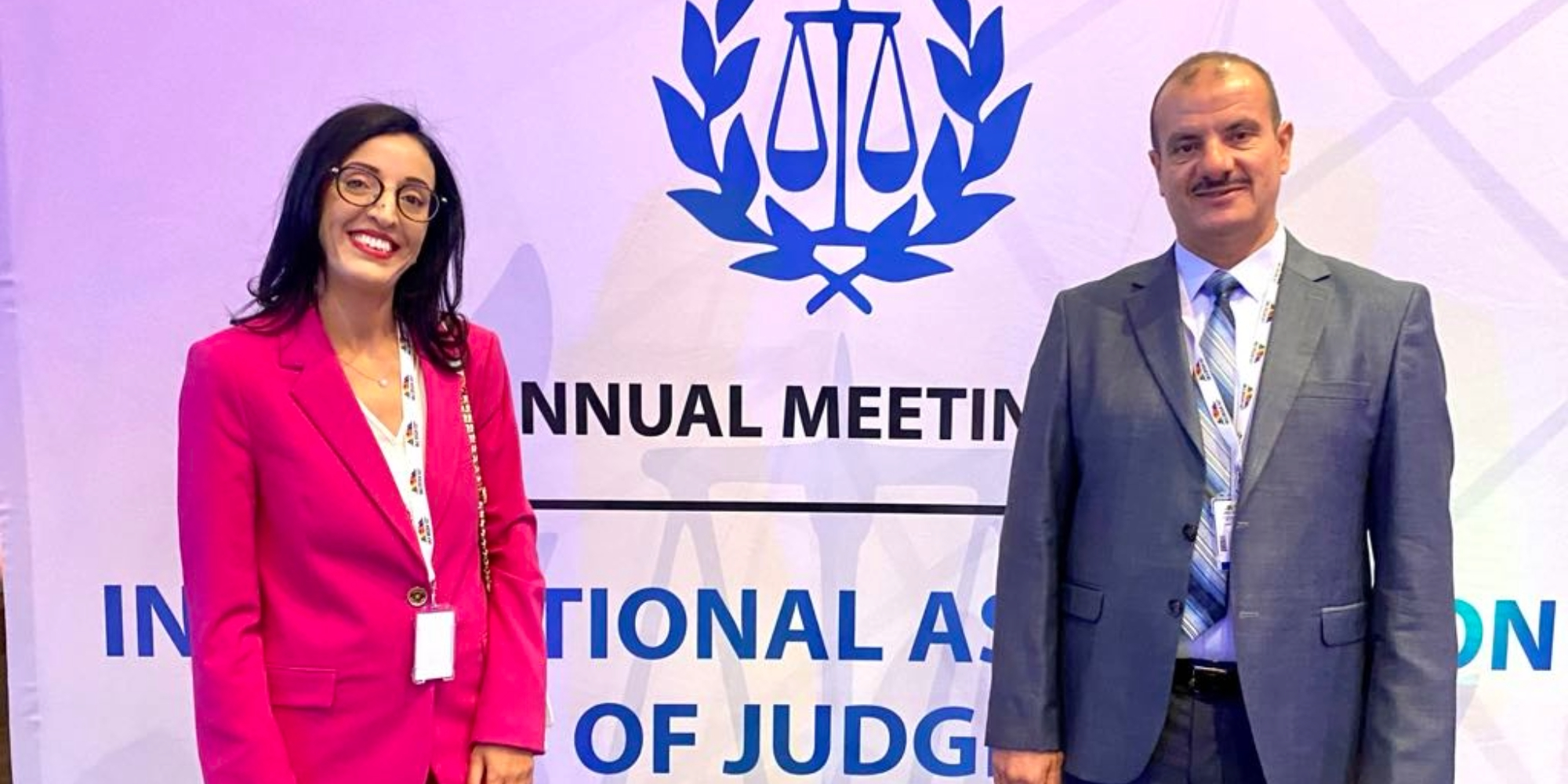
These attempts did not prevent the congress from taking place as planned, enabling the AMT to renew confidence in its leadership and course of action. Omar Oueslati, judge and member of the association, explains:
As member of the Association of Tunisian Magistrates since 2001 and member of its steering committee since 2005, I consider the reelection of President Anas Hmaidi for a new term to constitute clear recognition of his continued efforts and his combat for an independent justice, as well as a confirmation of the historical role that the association has played as the main support structure for judges’ commitments before and after the revolution.
For Oueslati, the unanimous support of magistrates for this option during their fifteenth congress reaffirmed the association’s role as an essential partner in any serious reform which aims to strengthen the justice and achieve its independence in accordance with universal and constitutional values. However, he acknowledges the extremely difficult circumstances which mark the landscape today, as judges and their association face growing pressure in the absence of a real High Judicial Council to guarantee their independence and oversee their professional careers without interference by the executive.

This retaliation campaign which aims to hinder the work of the AMT commenced with the opening of a new criminal case against its president, to the end of “increasing pressure on him as punishment for having fully assumed his responsibilities during this difficult period, and for not having remained silent with regard to all of the violations committed against the independence of the justice and of judges, and against the fundamental principles of a fair trial and the associated rights and liberties,” reads a statement published by the AMT.
The International Magistrates Union (UIM) considers that allegations against judge Anas Hmaidi concern positions taken and statements made in the context of his duties as president of a professional union of magistrates which seek to defend an independent justice and state of law. In a statement, the UIM furthermore argues that “carrying out criminal proceedings on the basis of what has been expressed in the context of associative work seriously undermines not only magistrates’ right to assemble, but also institutional guarantees for the independence of the judiciary authority.”
TUNISIA WITHOUT A HIGH JUDICIAL COUNCIL
The approach of restricting the AMT’s activities through formal notices, the opening of a criminal case against the association’s president, and attempts to intimidate magistrates, illustrates the the government’s vision according to which magistrates must “join the battle for national liberation” and serve as an instrument to subdue dissident voices within society. This conception echoes the systematic harassment endured by independent judges under the Ben Ali regime. After having dismissed 57 judges and replaced the High Judicial Council with another body under the government’s thumb, the Ministry of Justice launched a campaign of arbitrary transfers targeting a number of judges, which it effected through unilateral decisions and without consulting the High Judicial Council. For the AMT, this action constitutes “an extension of direct, unlimited, authoritarian interference by the Minister of Justice in what appears to be continual partial transfers to the end of removing court chairpersons, transferring them arbitrarily and appointing others without any guarantee of an objective and independent evaluation of performance or of fair and transparent competition for judicial responsibilities.”
The association notes that this approach, adopted when the government first announced that it would undertake exceptional measures, has nothing to do with justice reform, as initially presented. Instead, it is couched within an “authoritarian agenda which aims to establish a judicial authority that is wholly at the service of the political authority by removing all guarantees of a judge’s personal independence and stripping away structural and institutional independence through the creation of a council that is under the government’s thumb,” the AMT affirmed in a statement.

AMT president Anas Hmaidi remarks that “the judicial situation in Tunisia reflects a crisis that began three years ago and results from the absence of the High Judicial Council ever since it was dissolved and replaced by a provisional structure as per a decision by Kais Saied. The work of this provisional council has been frozen due to its vacant positions.”

As Hmaidi explained in his opening speech for the congress, this unprecedented situation in Tunisian history has enabled the Ministry of Justice to set up an ersatz of the Provisional Judicial Council, to dictate management of judges’ careers and to manipulate them through transfers, memos, promotions or the attribution of judicial responsibilities on the basis of allegiance and submission rather than competence, integrity, impartiality and independence.
JUDGES, ANOTHER TARGET OF THE GOVERNMENT
The harassment to which the AMT has been subjected recalls pressures applied to other Tunisian associations, including the Tunisian Association of Women Democrats, the Tunisian Forum of Economic and Social Rights, Association Nawaat and Aswat Nisaa among others. All of them have come under pressure of arbitrary measures and judicial harassment which aim to hinder their work. Decisions from above to suspend the activities of these associations for one month and the so-called irregularities that prompt such decisions are never clearly explained.
These measures confirm a general trend among decision-makers to want to restrict civil society which acted as a counterbalance and revealed abusive practices and the strategy of imprisonment that the government has implemented across the board.
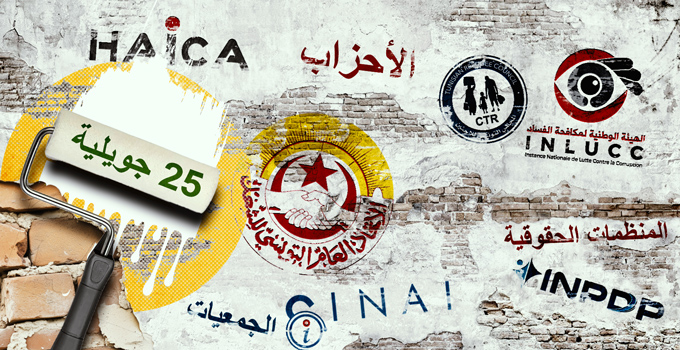
Attacks against the AMT cannot be dissociated from the general context in which dozens of organizations and associations, in the capital and in regions throughout the country, have been subjected to harassment, prosecution and decisions to suspend their activities for fixed periods of time. This method generally entails keeping tabs on the leading figures of targeted associations, then carrying out lengthy financial and administrative audits that allegedly expose irregularities and violations and ultimately result in decisions to suspend the association’s activities. A nearly identical scenario has played out for a number of associations.
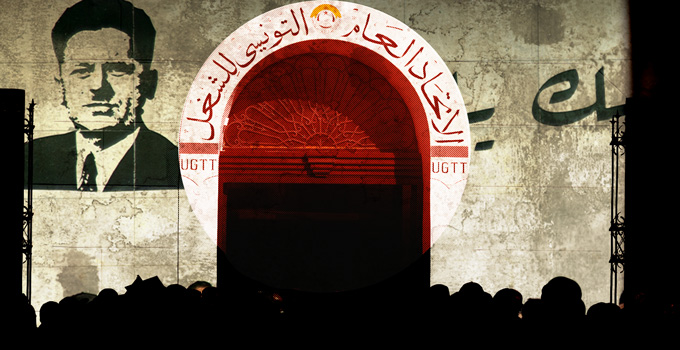
This arbitrary method adopted by the government corresponds with what Kais Saied proposed as early as 2012, when the attack on UGTT headquarters prompted the question of dissolving the Leagues for the Protection of the Revolution. A law professor at the time, Saied proposed that the issue of associations be handled by the justice and not by governmental decisions. A suggestion which corresponds with what his government is doing today, now that he is president and holds absolute power: formal notices, decisions to suspend the activities of different associations, and a trial as the final solution.
This is what associations are up against today, as the saga of imposed restrictions and suspended activities continues. It all begins with demonization, then testing the waters, followed by mild sanctions preceding the final dissolution. As if attempting to disguise authoritarianism’s tactics targeting independent associations with judicial or administrative decisions could fool observers. But all of this is plain to see, and is no longer fooling any one.

In spite of all the harassment campaigns and attempts to muzzle dissidents, the will to resist and to fight remains, to different degrees, among the different intermediary structures embodied by associations, independent media, political forces and youth movements, in the face of clear determination to eliminate them. Some combat openly against mediocrity in all arenas and on all platforms, while others, more resigned to the situation, act with excessive caution and abstain from expressing themselves beyond what is published in their statements.
The government, within its strategy of repression, depends entirely upon state institutions that are supposed, in theory, to remain neutral. To the end of suppressing dissidents, it uses laws and decrees originally conceived to guarantee a minimum of rights and liberties and to prevent abuses. In this way, we have found ourselves in today’s alarming situation, with a justice and police system operating at the service of the government, associative and political activists and journalists in prison or embroiled in political trials, associations facing the threat of the suspension of their activities, and citizens, once again, reluctant to express their opinions for fear of retaliation from the government. Such arbitrary measures adopted by authorities in order to intimidate and silence society have in fact inspired a spirit of solidarity and determination to resist the prevailing mediocrity, arbitrary use of power and dictatorship.

iThere are no comments
Add yours