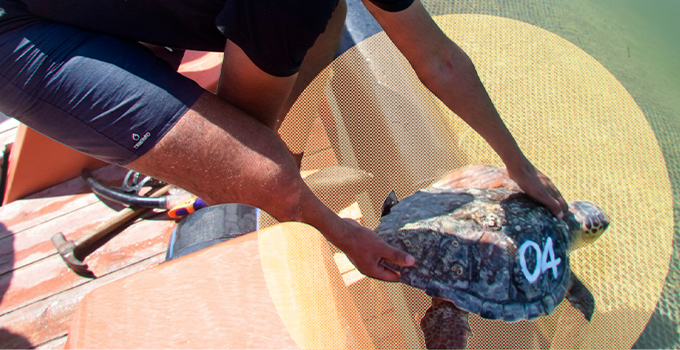
Sea turtles have always served as an indicator of balances within the marine ecosystem thanks to the important data they provide researchers. Unfortunately, this particularity has not enabled these animals to live and reproduce peacefully along Tunisia’s coasts. Over-fishing, pollution, and popularly-held beliefs associated with black magic about the curative quality of sea turtle meat against certain fatal diseases, have put this animal in danger of extinction. And although activists and environmental associations have worked hard to raise awareness around the issue, most sea turtle species are endangered.
Hedia could never have imagined that her struggle with leukemia would lead to such painful choices. During a long and grueling treatment process, she oscillated between moments of hope and periods of relapse. She rigorously followed the prescribed treatment protocol and exams and waited for improvements. Over time, however, her confidence began to diminish. Medication no longer produced the desired effects, and as scientific certainty proved incapable of relieving her anguish, Hedia, like many others, decided to explore other options. Her search for a cure pushed beyond the limits of science, where mystery is invoked to offer a solution.
All that remained for her to try were the old recipes ever-popular among the working-class in the region of Ghannouch (Gabes). And so Hedia was advised to eat sea turtle meat, which, she was told, is “good for cancer.” At first, the idea seemed strange, but in the absence of alternatives, quickly became a feasible option. With some hesitation and a great deal of hope, Hedia decided to try it. She is not an isolated case. Such practices are adopted by many for whom medication proves ineffective, and who thus pin their hopes on finding a solution in superstition. As Hedia tells Nawaat:
In 2023, I bought sea turtle meat for about 50 dinars from an intermediary who is in contact with certain fishermen. Only once, I ate just a small amount. But then I learned from an environmental association the risk of poisoning associated with consuming this meat regularly, and I immediately stopped eating it.
Zahira, originally from the region of Nahal in Gabes, shares her story with Nawaat: “Three years ago, I decided to buy sea turtle meat after having heard that it could remedy my husband’s sterility, especially because medication had not succeeded in solving our problem.” She continues, “I obtained this meat from a fisherman who was selling it under the table for 100 dinars a kilo.” The temptation, she admits, was strong, especially within her family and social entourage. Among working-class populations, traditions and popular beliefs play an important role in confronting incurable diseases.
TOXIC MEAT SOLD ILLEGALLY
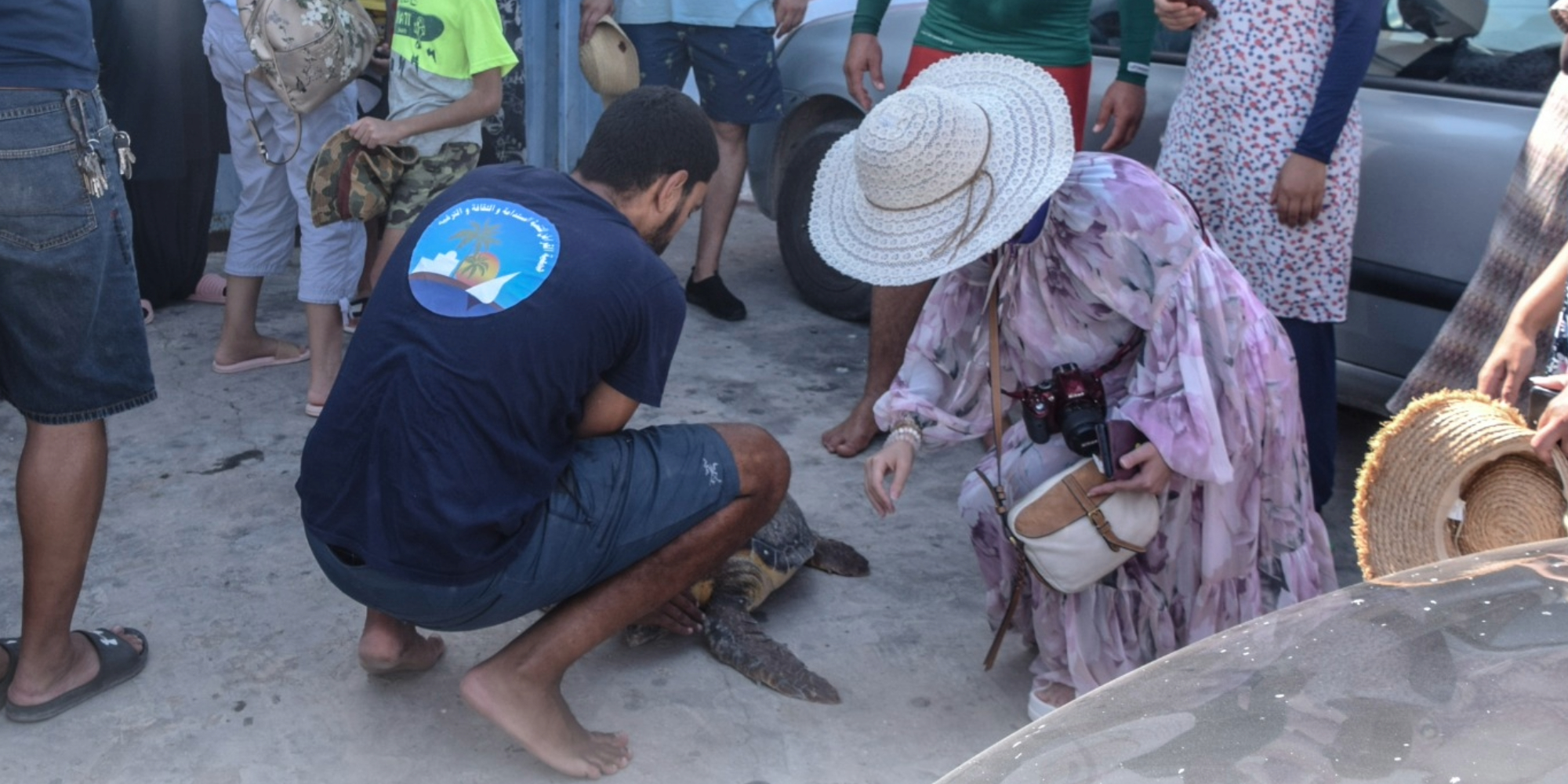
Behind these isolated cases spans a vast network of illegal practices. Several sources concur that—unbeknownst to control structures—some sea turtles washed up onto beaches along the Gulf of Gabes are slaughtered and sold on the black market, instead of being turned over to associations or the competent authorities. These practices fuel deeply-entrenched beliefs that turtles constitute a “remedy” for incurable diseases, and the trade of these marine species generates significant financial profits. But even without this danger to their survival, sea turtles already face a double (human and environmental) threat that encompasses pollution, overfishing, bycatch and climate change…
Chettaoui Alaya, president of the Coastal Fishing Union of the delegation of Ghannouch and member of the Council for the Development of Traditional Coastal Fishing, affirms that, “the slaughter and sale of sea turtles have not completely stopped, although they have decreased in past years.” In an interview with Nawaat, Alaya indicates that “individuals who are neither fishermen nor sailors head to the beach and slit the throats of dead turtles. They exploit popular beliefs about the virtues of sea turtles in curing sterility in order to sell their meat for exorbitant prices that can reach 110-120 dinars per kilo.” In his words,
Although the efforts of associations working to protect turtles and environmental mobilizations might have helped to reduce this phenomenon over the past couple of years, these cases are few and far between.
The Association for the Protection of Wetlands of Southern Tunisia surveyed cases in which turtle meat was consumed for the same reasons described above. In an interview with Nawaat, Abdenasser Ghlis, the association’s fieldwork coordinator, explains that these networks exploit the population’s ignorance about the risks associated with consuming turtle meat. “Turtle fishing today is essentially accidental,” he notes. “However, we have witnessed cases of deliberate slaughter, especially because certain traders take advantage of the distress of individuals suffering from illness, which means that these practices not only threaten humans, but also put terrible pressure on sea turtles.”
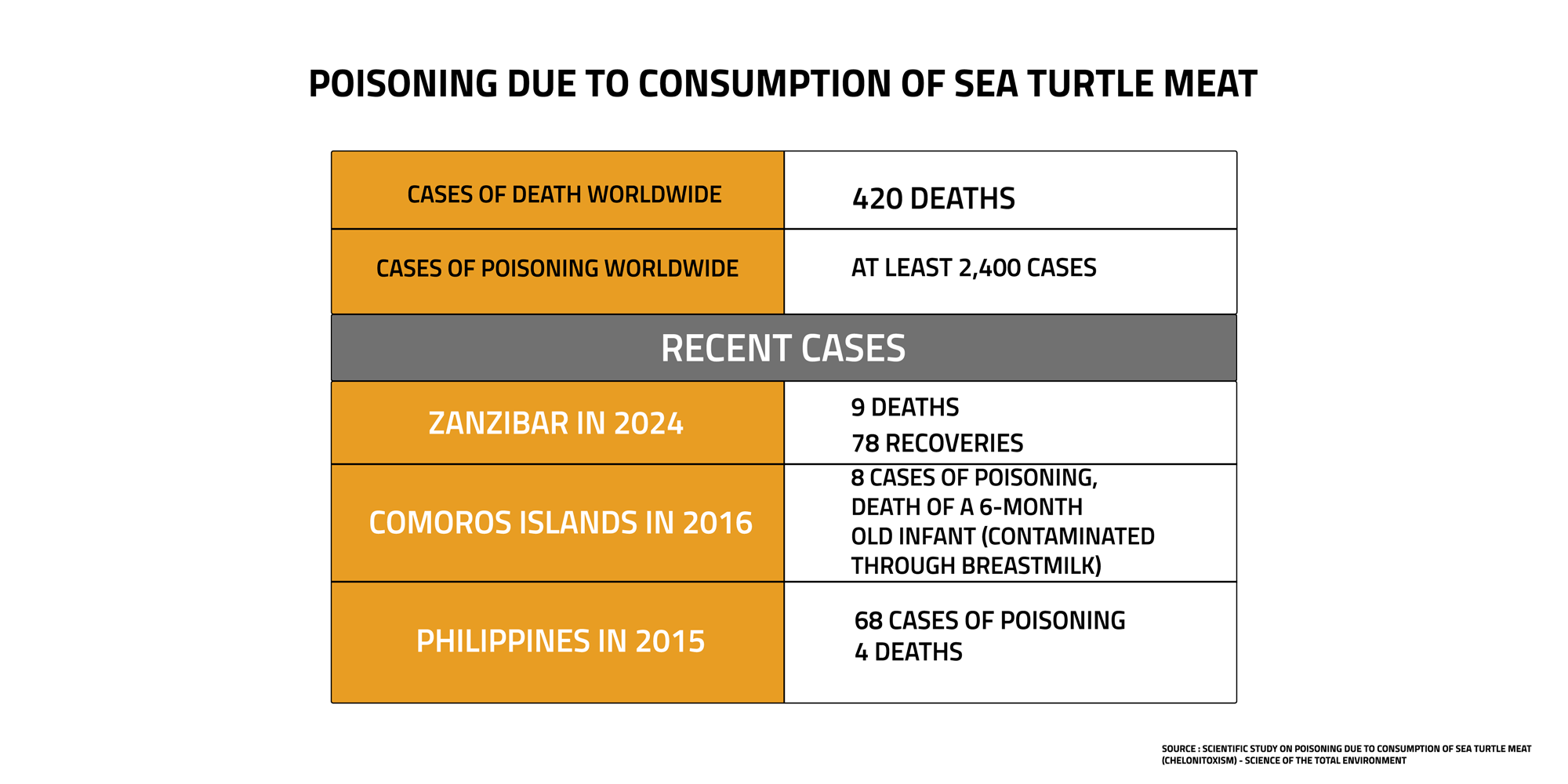
International scientific studies have revealed that turtle meat contains pollutants and heavy metals which accumulate in the human body. Consuming turtle meat is associated with what is called chelonitoxism, a type of food poisoning that can be fatal and for which there is no specific remedy. The studies in question surveyed more than 62 cases of poisoning worldwide, which resulted in 2,400 cases of illness and 420 deaths after the individuals in question consumed sea turtle meat. Among these cases, nine people died in 2024 and 78 others were hospitalized in Zanzibar after ingesting sea turtle meat. Similar cases were reported in the Comoros and Philippines, where one case of death was that of an infant who ingested the toxins through breastmilk1.
This data shows that the toxins which accumulate in the body of a sea turtle due to pollution in the marine food chain do not disappear, even after the meat is cooked. This means that consuming sea turtle meat is dangerous for human health. A fact which clearly refutes beliefs relayed by certain networks that promote the supposed “therapeutic virtues” of this meat, which in reality can cause poisoning and death.
Sea turtles are an accurate ecological indicator of the marine ecosystem owing to their complex life cycle and longevity. However, scientific studies show that the survival rate for young turtles is very low, with few reaching the age of maturity (20 to 30 years). Only one out of every 1,000 sea turtles born reaches a reproductive age. This means that the slightest decline in their population today will have consequences to bear several decades from now due to the length of their regeneration cycle.
This biological fragility makes sea turtles especially vulnerable to a number of human violations, in particular those caused by fishing equipment and accelerated climate change, both of which alter their marine habitats.
BETWEEN FISHING NETS AND CLIMATE CHANGE
Awareness campaigns and growing recognition among fishermen of sea turtles’ ecological importance are not the only explanation for a decline in the killing of this species. Hamed Mallat is an environmental monitor at the natural coastal reserve of Kerkennah, member of the Association Kraten for Sustainable Development, Culture, and Recreation, and an oceanology researcher specializing in the study and protection of sea turtles. As Mallat explains to Nawaat,
Economic pressure, such as the increasing cost of fishing equipment and decreasing fishing resources, in addition to the ravages of unauthorized fishing, have led some fishermen to consider rescuing a sea turtle caught in their nets as a burden; saving this animal damages the nets and thus strips the fisherman of his livelihood, and so the turtle chokes to death.
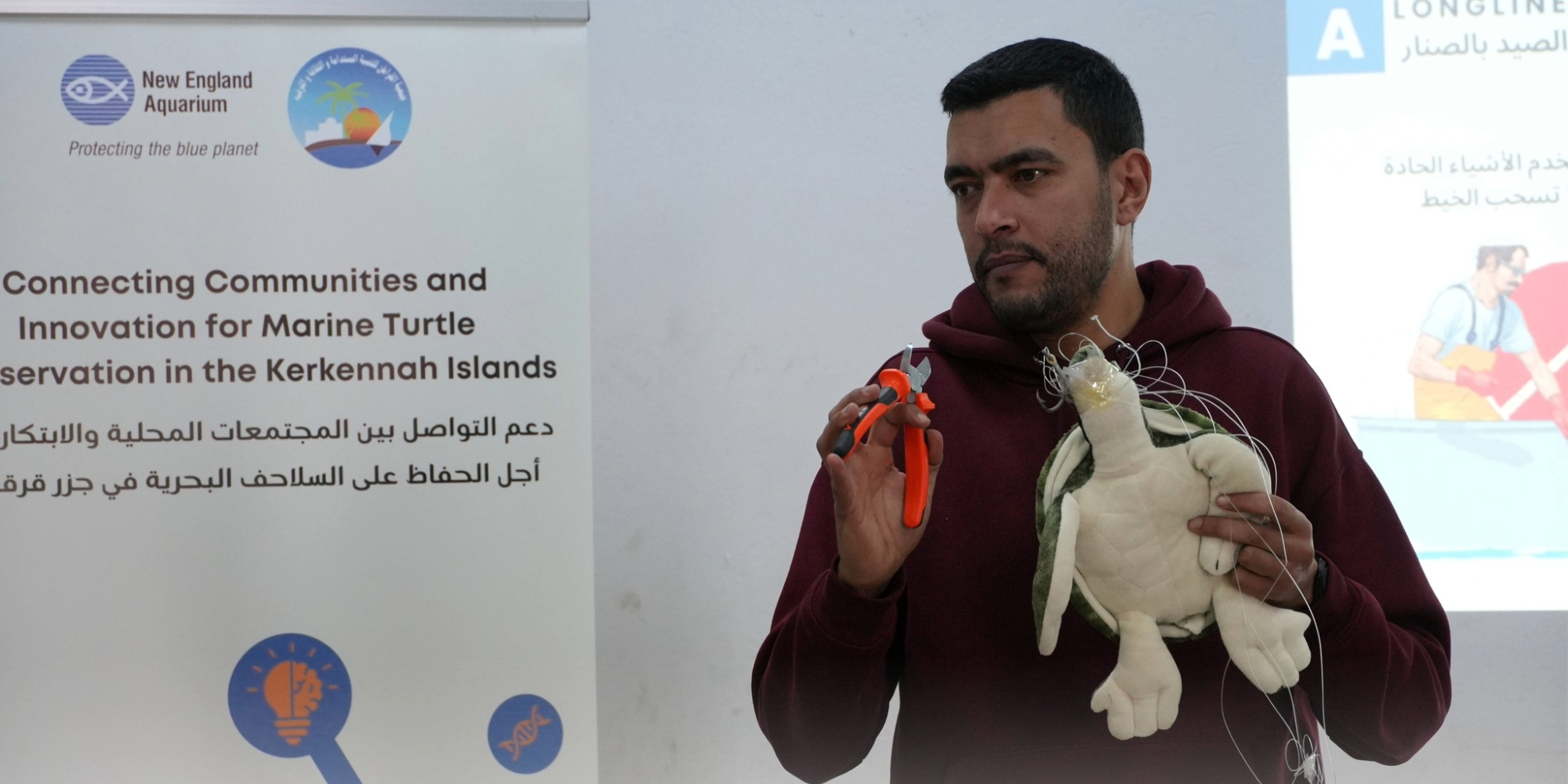
Sea turtles breathe through their lungs, like humans, which makes them vulnerable to suffocation if they become caught in fishing nets or marine litter. This phenomenon is particularly frequent in small coastal villages, where some fishermen use traditional fishing practices near the shore. The turtles thus find themselves trapped, unable to come to the surface to breathe, a scenario which often results in their death, as the Association Kraten in Kerkennah reports.
Climate change directly affects sea turtles’ biological life cycle, since increased temperatures within nests during the incubation period for turtle eggs plays an important role in determining the sex of the babies. Studies show that low temperatures (below approximately 27.7ºC) produce males, while high temperatures (above 31ºC) produce a large number of females.
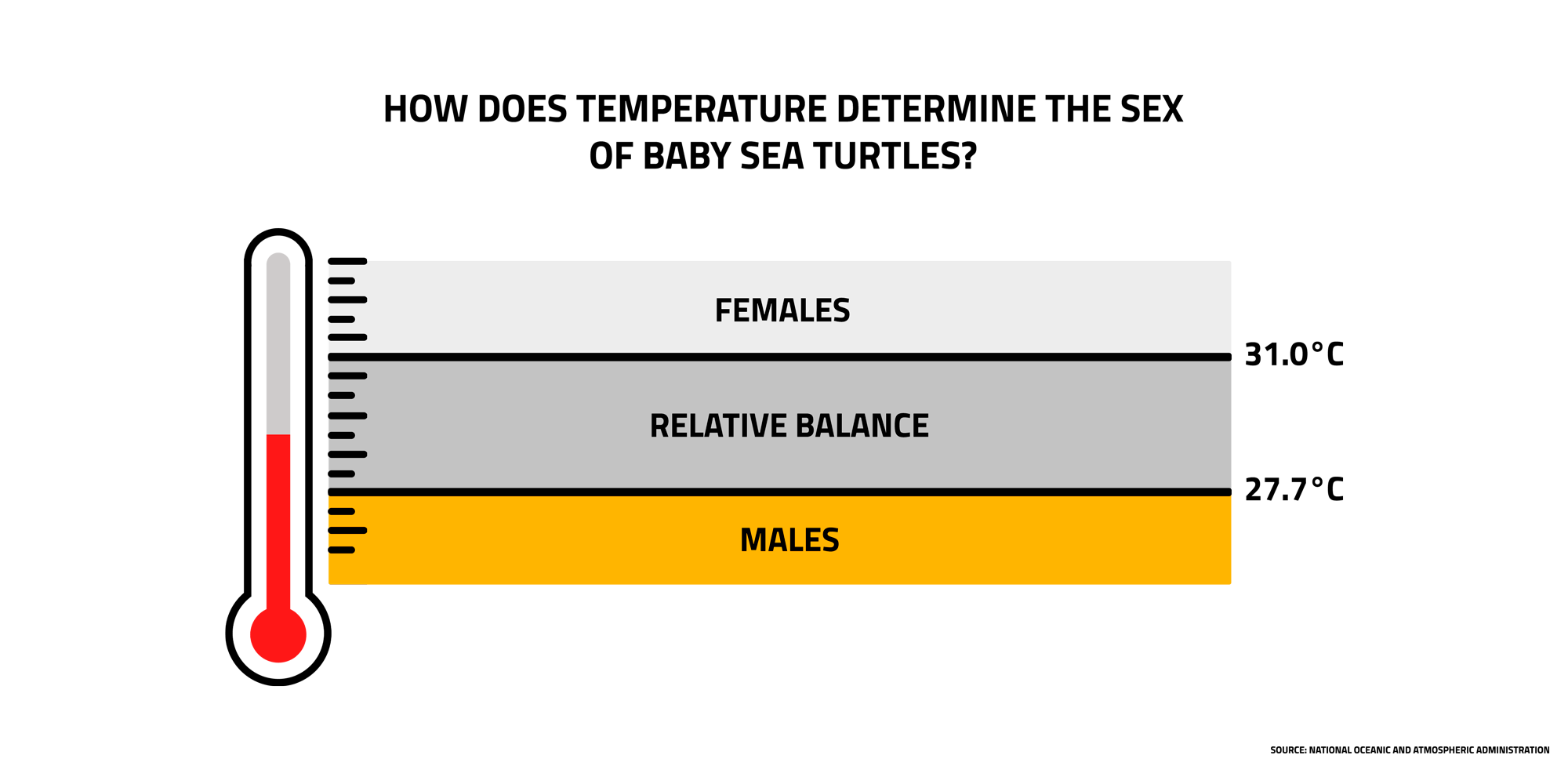
With ever-increasing temperatures due to climate change, nesting sites throughout the world are producing a net majority of female turtles. One recent study revealed that 57 out of 64 sites worldwide display ratios in which females significantly outnumber males, in some cases by more than 90%. An imbalance which constitutes a real threat for this species’ survival, since in the long-term it could cause a shortage of males capable of reproducing, which would in turn weaken the reproductive capacity of sea turtles and threaten their demographic equilibrium.
As a result of this double threat, the decline in sea turtle populations produces an ecological imbalance, with the proliferation of certain invasive species such as the blue crab, jelly fish, and what is locally known as “Daech of the sea.” Sea turtles eat these organisms and thus help to limit their proliferation. The absence of sea turtles consequently results in excessive proliferation, which affects fishing resources and coastal ecosystems, the livelihood of fishermen, as well as the recreational use of beaches (swimming) in the summertime, says Mallat.

A scientific study (published 2023 in the periodical Animals) by professor Imed Jribi and researchers at the University of Sfax in collaboration with the National Museum of Natural History of Paris, indicates that bycatch constitutes one of the greatest threats for sea turtles in Tunisia. Based on 483 interviews with fishermen at 19 ports, the study estimates that approximately 11,740 turtles (the majority of which are released back into the sea) are captured each year in Tunisia, mainly by trawling nets. These nets have the biggest impact on sea turtles owing to their intensive use. The results of the study show the magnitude of the pressure on these species from their contact with different fishing equipment2.
The Gulf of Gabes represents one of the most important sea turtle habitats in the Mediterranean, where a growing number of turtles arrive from different regions in search of abundant food and moderate temperatures. There are essentially three species of sea turtles in Tunisia and the Mediterranean: the loggerhead (Caretta caretta) and green sea turtle (Chelonia mydas) are the most widespread across the region. The third species is the leatherback (Dermochelys coriacea), considered to be the largest in the world and only rarely observed in the Mediterranean. The leatherback comes from the Atlantic Ocean, and neither remains nor nests in the Mediterranean where it passes through in migratory waves searching for food, explains Imed Jribi, member of the group of experts on sea turtles in the Mediterranean and president of the North African Network for the Conservation of Marine Turtles.
DOUBLE POLLUTION: LIGHT AND PLASTIC
Aside from popular beliefs and bycatch, pollution has a major impact on sea turtles. First of all: light pollution. Professor Jridi explains in his study3 that this form of pollution constitutes a real threat for loggerhead turtles on the beaches of Chebba, in the governorate of Mahdia. The artificial light produced by streetlights and nearby homes disorients baby turtles when they leave their nest at night, as they are drawn towards the light instead of making their way towards the sea. This puts them at greater risk of dehydration, exhaustion, exposure to predators and road accidents, in addition to other threats such as the occupation of beaches (due to urban spread and intensive human activities) which serve as important nesting places.
The same study highlights a significant difference among beaches. At the Essir beach in Chebba, for example, where artificial light is extremely intense, it was observed that all baby turtles deviated from their natural route and were exposed to greater danger. In contrast, on the beach of Sidi Messaoud which has less light exposure, only 21% were reported to have wandered off their natural route, with none slaughtered. In its conclusions, the study emphasizes the need for targeted protective measures, such as the blocking or removal of unnecessary lighting, the use of red-light lamps and a campaign to raise awareness about protecting nesting sites.
Secondly, plastic litter and so-called “ghost nets”—which are left behind by fishermen and remain in the sea—constitute another danger, since they become veritable death traps for marine species, especially turtles and fish in the Gulf of Gabes.
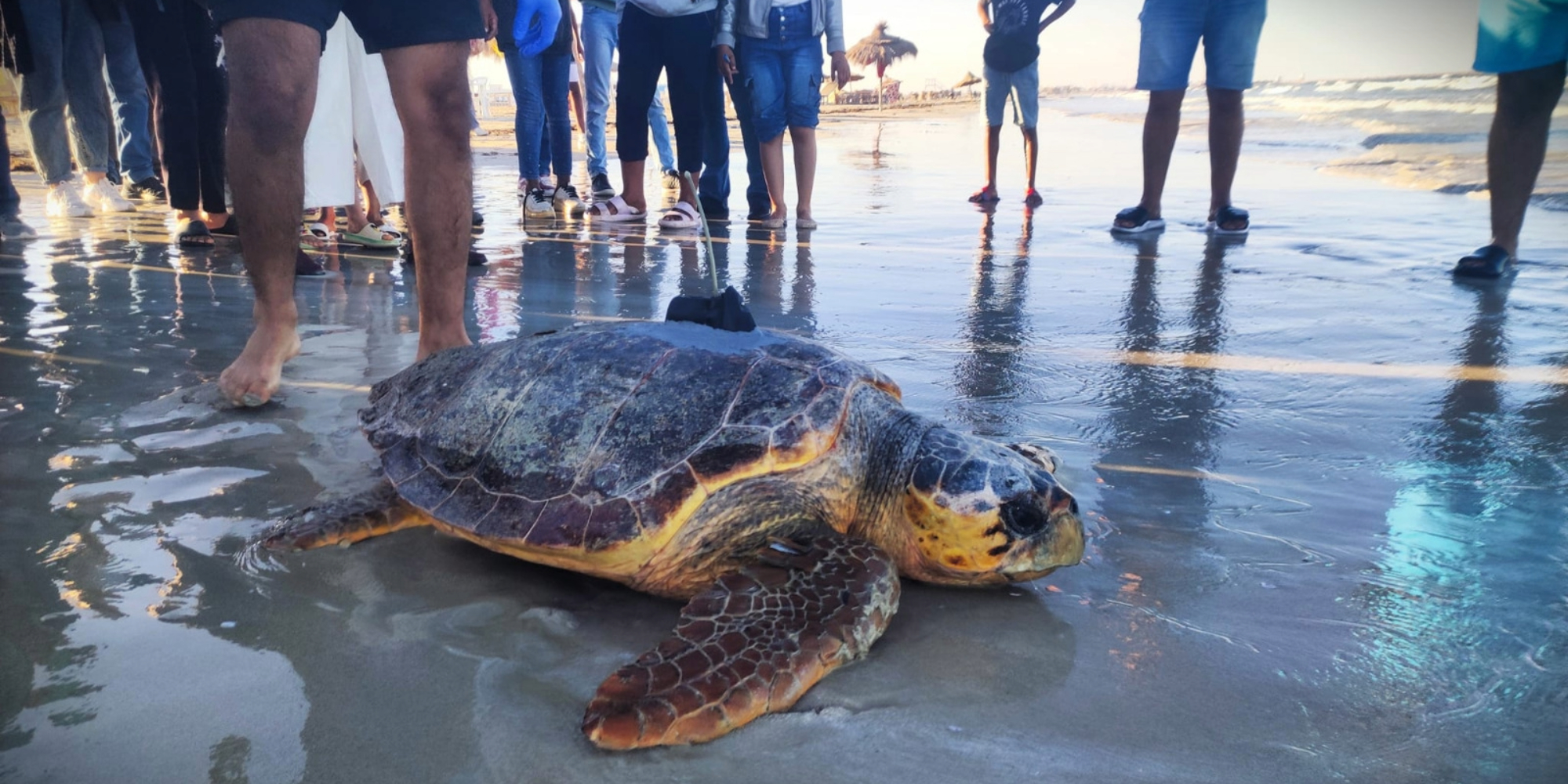
Sea turtles serve as indicators that enable researchers to monitor the marine ecosystem; studying their movement and behaviors allows for an understanding of the balances that exist within the food chain. This is why researchers use tracking devices to observe their routes, feeding zones and migration. It also enables them to identify areas of light and plastic pollution, and to determine environmental pressures. This data is an essential tool in elaborating effective protection strategies and supporting rescue and rehabilitation efforts.
While there exist a number of national laws and international conventions which classify sea turtles as protected species, the gap between legal texts and their application on the ground is inarguable as a result of disincentive measures that are ineffectual. Indeed, the capture, killing and selling of sea turtles are banned under laws protecting marine resources and biodiversity and within the context of Tunisia’s international agreements. But in spite of all the prerogatives granted to law enforcement agencies to track violations and combat illegal fishing, and in spite of awareness-raising efforts and interventions by environmental associations, the violations continue, our sources affirm.
They are ready to jump onto their boat to rescue a sea turtle caught in a fishing net. Young members of the association Notre Grand Bleu in Monastir are the pride of the region. Their cause: to preserve marine and coastal life in the Mediterranean, and also the human activities that depend upon it, hand in hand with fishermen and the local population.
As part of this investigation, we submitted an official request to the Interior Ministry for information on the number of violations relating to fishing and the capture of sea turtles, and on their situation along the Tunisian coast, particularly the Gulf of Gabes. We have yet to receive a response. The Ministry of Agriculture, Water Resources and Fishing similarly chose to abstain from answering our questions without providing any explanation, as the communications officer informed Nawaat. The authorities’ silence with regard to this issue raises questions around the efficacy of plans elaborated by the government to protect this endangered marine animal.
INNOVATIVE EXPERIMENTS FOR THE REHABILITATION OF SEA TURTLES
In terms of rescue efforts, Tunisia is considered to be relatively advanced in the treatment and rehabilitation of injured sea turtles, in comparison with a number of other countries south of the Mediterranean. Tunisia is home to specialized centers like the one in Monastir run by the Institute of Marine Sciences and Technology and another at the University of Sciences of Sfax. Both specialize in the rehabilitation of turtles before they are released back into their natural habitat. However, given the discrepancy between legal frameworks and their application, on-the-ground initiatives have sprung up to bridge the gap by implementing more effective mechanisms for direct intervention to protect and save sea turtles.
On the island of Kerkennah, the AKDDCL has developed an unprecedented experiment: a floating platform for the rehabilitation of injured sea turtles located near the Island of Gremdi in the region of Al-Ataya. This structure is designed to minimize the period of time between the discovery of an injured turtle and its care by enabling its direct transport to a site where it can be treated at sea, without having to wait to be transferred to land. Medical exams and treatment are carried out on site under the supervision of specialists and veterinary doctors, before the turtles are returned to their natural environment. The initiative is singular in the Mediterranean, where the majority of actions depend on land sites, as Hamed Mallat, an active member of the association, informs us.
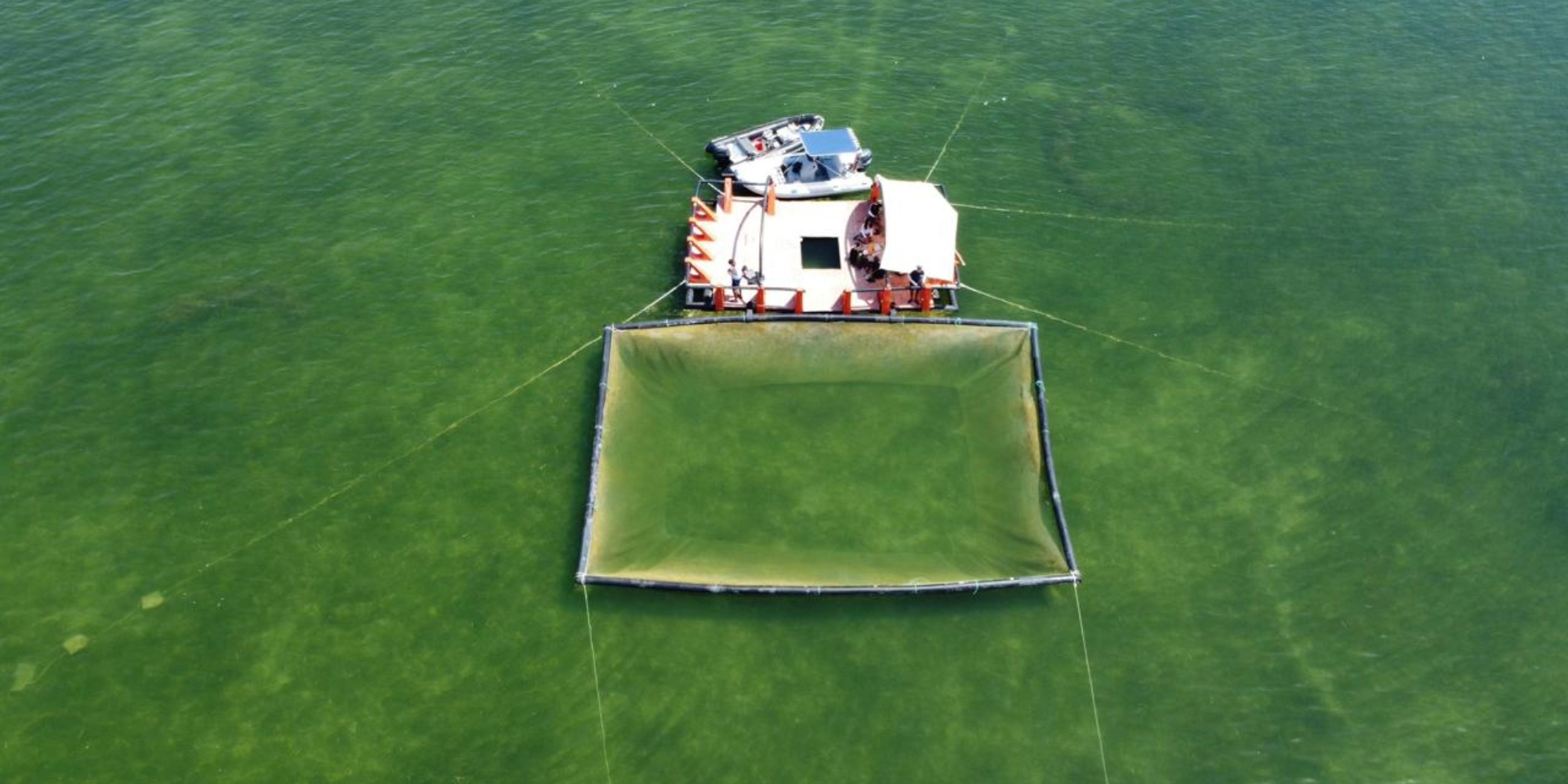
Mallat reports that the number of turtles that have been saved directly at sea over the past two years is 332, plus some 18 others in 2024 and 19 in 2025 on the floating platform dedicated to their care and rehabilitation. In the Gulf of Gabes, 12 sea turtles were released back into the sea after receiving care over the last year thanks to these initiatives, Abdenasser Ghlis tells Nawaat.
These initiatives have emerged within a broader perspective which aims to strengthen the preservation of marine biodiversity in Tunisia. Similar experiments have been developed in Monastir, notably in the archipelago of Kuriat, which is one of the country’s main turtle nesting sites. These islands have benefited from programs designed to protect nests and monitor sea turtles, using a participatory approach that combines scientific research and civil society. Such experiments are proof that it is possible to build successful models which function to preserve sea turtles, despite growing environmental challenges and pressure from human activities.
Beyond concrete results at the local level, these initiatives face a larger challenge, since the protection of sea turtles is a cross-border issue within a common (Mediterranean) space. Moreover, environmental commitments intermix with tremendous economic challenges, reducing the impact of rescue efforts beyond the local level.
INFLUENCE OF LARGE TRANSPORT COMPANIES HINDERS APPLICATION OF THE LAW
Laws and international conventions are essential to the protection of marine ecosystems. Most notably, the Barcelona Convention for the Protection of the Mediterranean Sea aims to reduce pollution and preserve biodiversity in the region. However, the effects of such legal frameworks remain limited on the ground due interference by international influences and conflicts of interest among industrialized countries and shipping companies.
Interviewed by Nawaat, French lawyer and international expert in environmental law Christian Huglo remarks that “protecting the marine environment in the Mediterranean is challenged by real difficulties in applying the law.” He explains that renewal of the Mediterranean’s waters takes about a century, “which means that all pollution, even accidental, has a long-lasting impact.” Huglo underlines the limited powers of the International Maritime Organization and the influence of maritime transport lobbies in defining the rules of the game, which, he explains, “weaken the efficacy of the laws and partially empty them of their substance.”
Ultimately, the factors which threaten the survival of sea turtles are not disparate, but indeed constitute an ensemble of overlapping pressures, from persistent local practices to cross-border economic activities that are difficult to control. Confronted with such obstacles, the protection of these species has become a true test of the global environmental system’s capacity to truly impose its rules, and not merely wave them around in the face of an equation that is anything but equal.
- General Environmental Sciences, vol. 954, 1 December 2024. International study on cases of poisoning due to the consumption of sea turtle meat and their effects on human health. ↩︎
- Meetings with fishermen: a low-cost tool for evaluating the impact of fishing on vulnerable sea turtles in Tunisia and identifying mitigating measures. Maissa Louhichi, Alexandre Gérard, Imed Jribi (2023). Study. Laboratoire BIOME, School of Sciences, University of Sfax, Tunisia, in collaboration with PatriNat, National Museum of Natural History, Paris, France. ↩︎
- Impact of light pollution on hawksbill sea turtle nesting in Chebba, School of Sciences, University of Sfax, Tunisia. 31 October 2025. ↩︎



iThere are no comments
Add yours