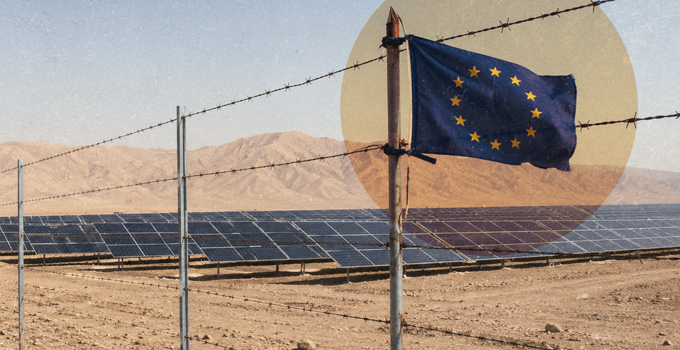
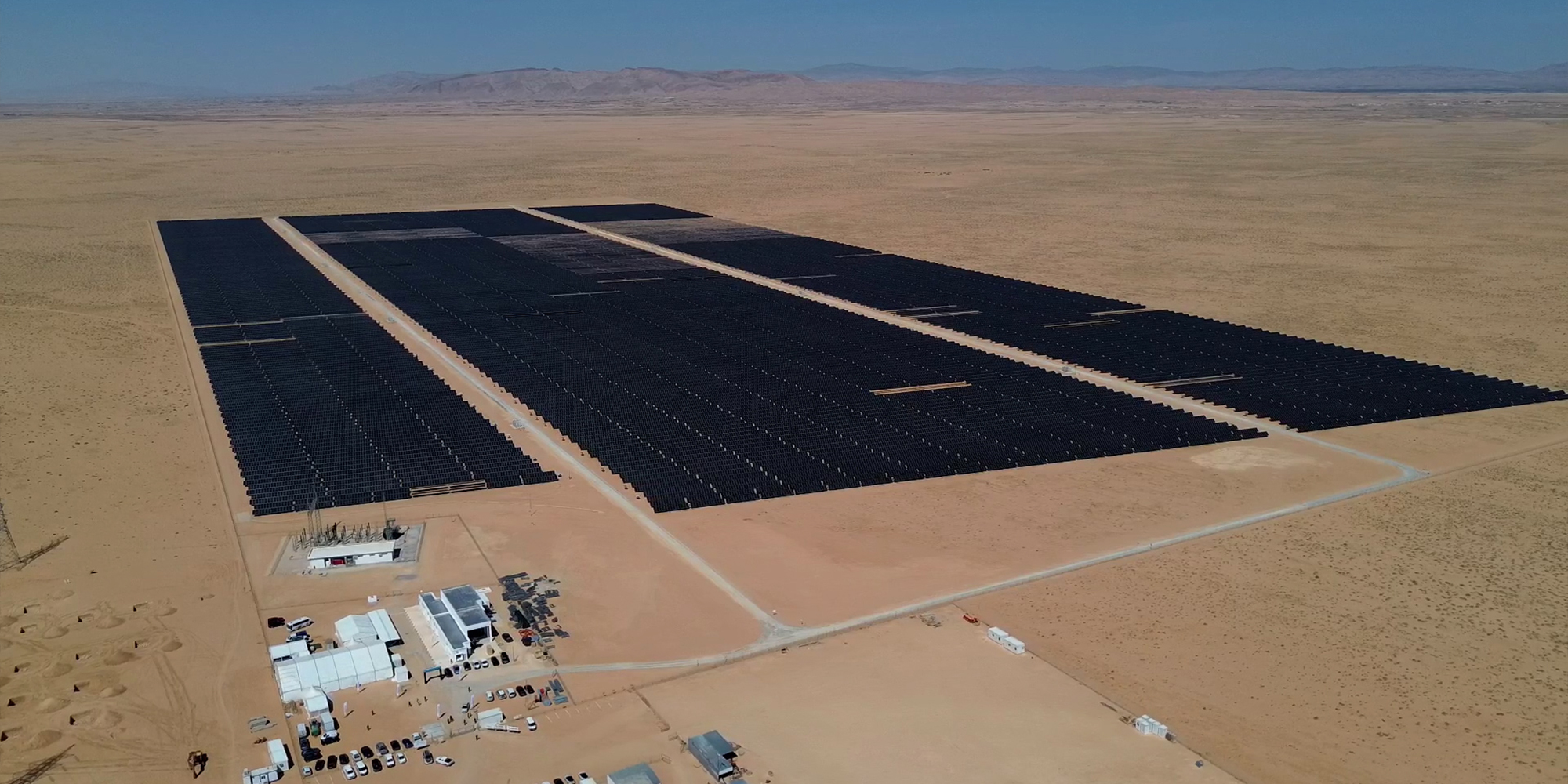
In April 2026, Tunisian parliament approved five concession agreements for the production of solar energy with a total capacity of approximately 598 megawatts and an investment cost of about 1.64 billion dinars. The agreements were rejected by several deputies who saw them as a flagrant threat to the country’s energy sovereignty. Ultimately, however, Parliament approved the project, classified as an “urgent proposal” by the presidency of the Republic. In this investigation, we attempt to discern, objectively and through different texts and videos, what motivates these agreements and who is to reap the benefits.
In central and southern Tunisia, land is not defined by property borders or numbers displayed on investment maps. Here, land is a living space and place for production, where steppes and pasturelands stretch across vast landscapes, where herds move according to the rhythm of the rains and the changing seasons. Around this ecosystem which hangs on to a tenuous balance between land, water and climate, socio-economic activities center around the breeding and selling of sheep and the products derived from them. Today, things have started to change, and there is growing concern around the proliferation of renewable energy and green hydrogen projects: what happens when vast pasture- and agricultural lands are transformed into energy production sites? What is the cost of this transformation for land and water resources? Who are the real beneficiaries? And to what extent is it consistent with the ideal of energy sovereignty, given the government’s policy of opening up to foreign investment?
This investigation coincides with the government’s commitment to an energy transition, presented as a “green” transition and strategic option to remedy the country’s energy deficit, and to support a low carbon economy. Our goal is to analyze and understand the economic, environmental and social implications of these projects.
Changing Land Use and Local Ways of Life
In the region of Menzel-Habib (Gabes governorate) which is one of the areas included in the projects for electricity production using renewable energy, farmer Ezzedine Jamaï gives voice to fears about the repercussions that could affect the local way of life. As he explains, “the lands chosen for these facilities are neither empty nor unexploited, but in fact private pasturelands that have been essential to a number of activities for decades.” Jamaï cites, for instance: grazing, seasonal agriculture dependent upon the rains, and the movement of herds from one steppe to another.
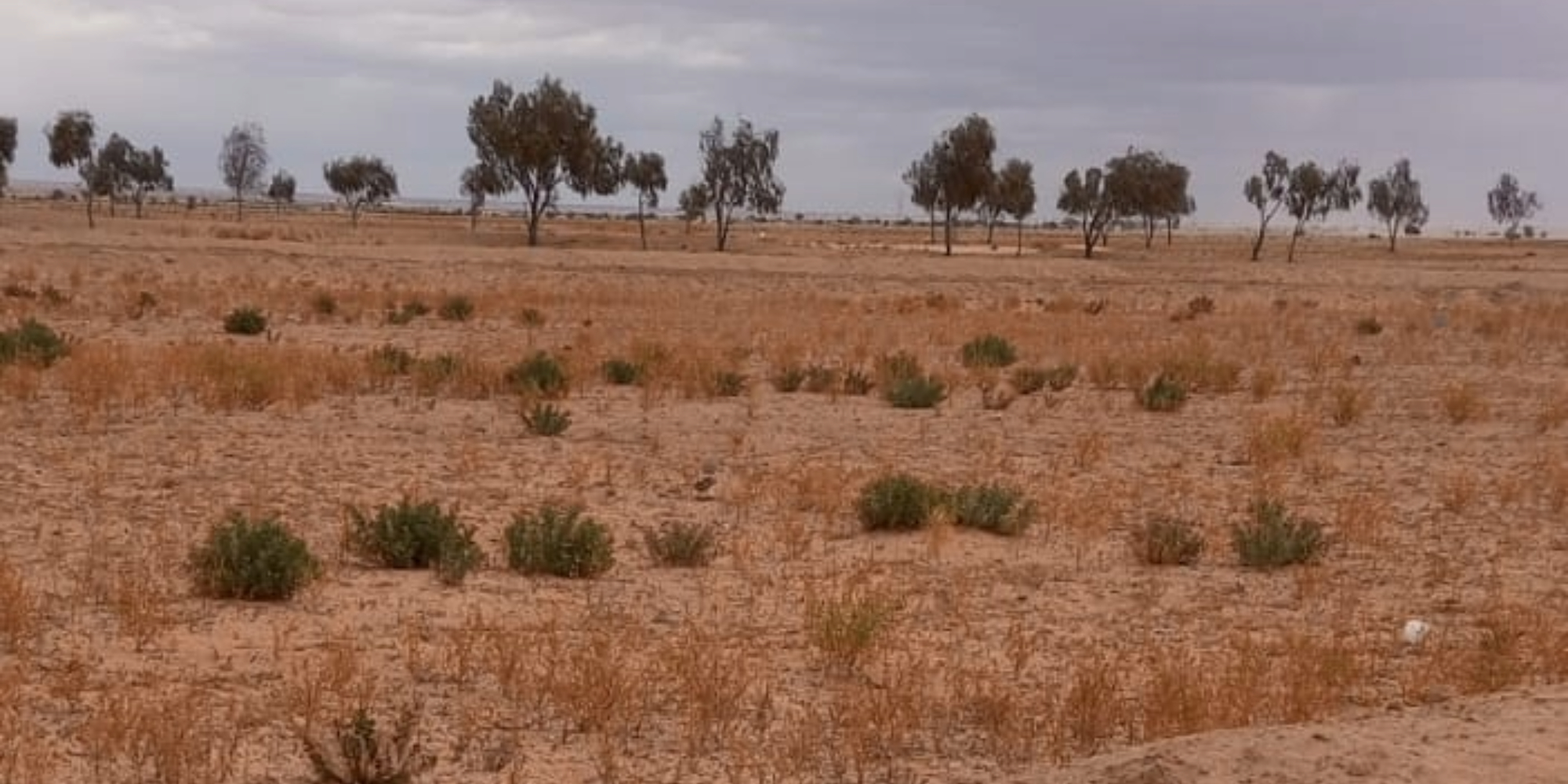
The issue has been of growing importance since April 2026 when the Tunisian parliament approved five concession agreements for the production of electricity using solar (photovoltaic) energy. These projects are spread across the governorates of Sidi Bouzid, Gafsa and Gabes, and represent a total capacity of about 598 megawatts and an estimated investment cost of approximately 1.64 billion dinars. The contracts cover a period of 20 to 25 years during which the companies selected build and operate their facilities, and sell the entirety of what they produce to the Tunisian Electric and Gas Company (STEG). In the event of failure to fulfill contract terms1, facilities are to be turned over to the Tunisian government or else dismantled.
However, the awarding of concessions—which is limited to three foreign companies—raises a number of questions, first of all in relation to official discourse that is saturated by slogans extolling national sovereignty. Next, regarding the concrete implementation of this orientation, not least of all because it is part of a policy that has been presented as the foundation of the energy transition and of reducing the country’s dependence on energy imports.
These choices were announced amidst mounting pressures on the energy sector. In 2025, Tunisia’s energy deficit reached about 6.3 million tons of oil equivalent, while expenditures on energy subsidies rose from 550 million dinars in 2011 to 7,112 million dinars in 2025, constituting 9% of the state budget. Moreover, the country’s production of natural gas only covers 23% of domestic consumption according to the statistics of the National Observatory of Energy and Mines.
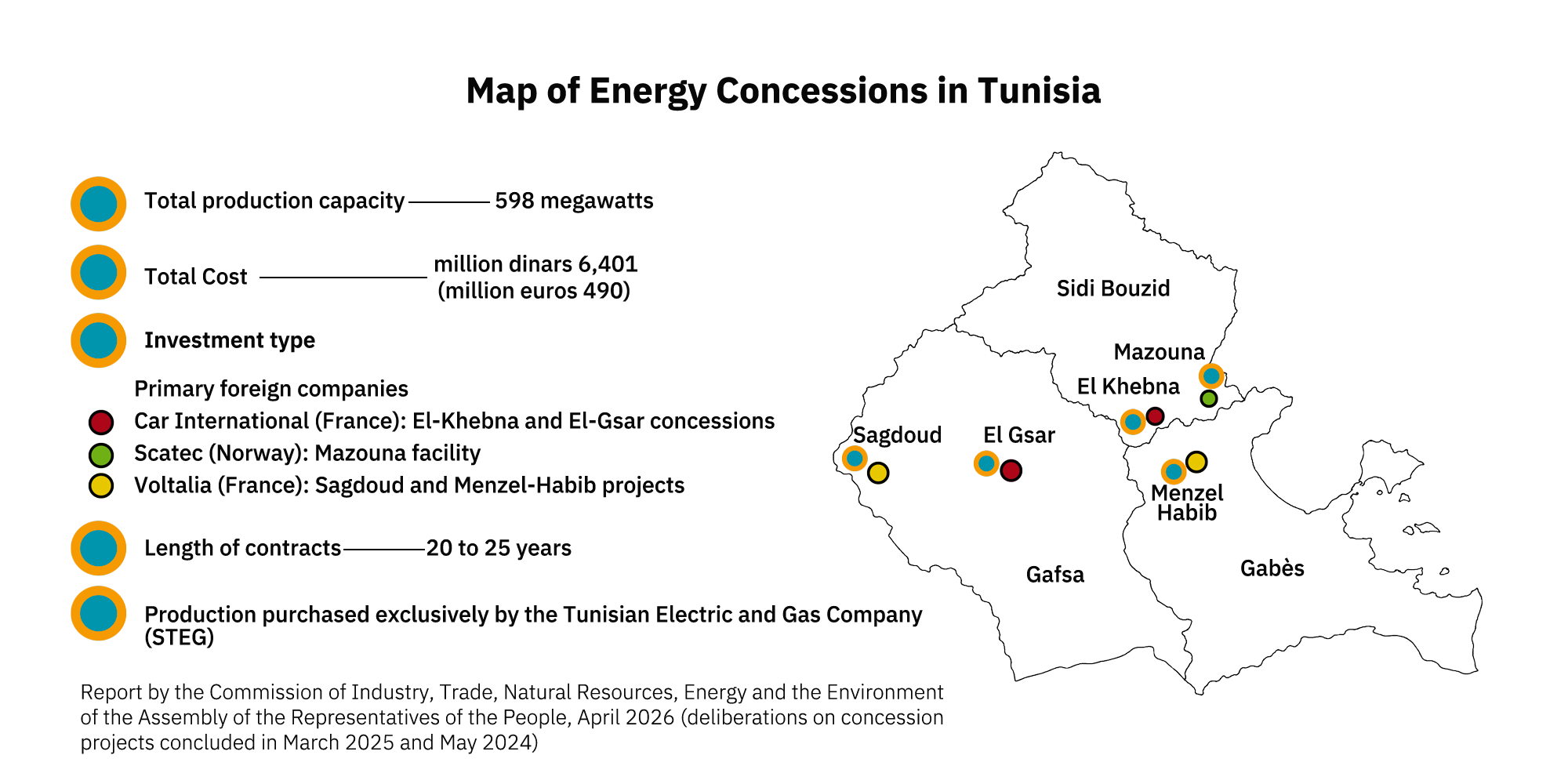
These projects are presented in official discourse as a necessary response to sectoral issues. However, the expansion of energy infrastructure in pasturelands and agricultural areas has already begun to arouse concerns regarding the changes that can impact the ways in which land is used and its economic functions.
Along these lines, Ezzedine Jamaï observes that “the local way of life has undergone gradual changes over past years due to decreased rain levels, climate change and decreased plant cover, in addition to the withdrawal of support for pastoral activities.” He adds that “these changes, while significant, have remained within the population’s capacity to adapt. On the other hand, the installation of renewable energy projects constitutes a different sort of transformation, since it is not limited to changing modes of production, but affects the land’s very function, altering what it is used for.”
For Jamaï, the shrinking of pasturelands “not only has negative effects on agricultural production, but on the entire socio-economic system which includes breeders, merchants and craftsmen, in a context already burdened by significant environmental pressure.”
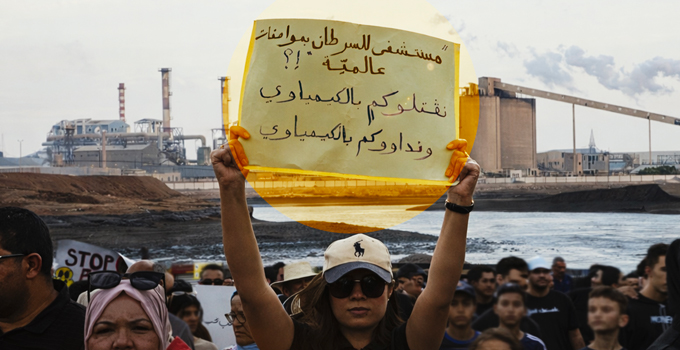
While not fundamentally opposed to renewable energy projects, Jamaï maintains that they should not be carried out at the expense of local balances or be transformed into spaces closed off to activities practiced by the local population. Here, he cites the industrial transformations that Gabes has endured over the past several decades; as a result of heavy industry, a city once built on agriculture and tourism has morphed into a heavily polluted industrial zone. He warns against the risk of similar disasters unfolding with new projects.
More globally, Leila Riaha, university lecturer, researcher and member of the group “Souverainté paysanne,” argues that “the problem with renewable energy projects is the resources that they require, and above all: land.” She explains that “these projects require vast spaces. Which makes the pasturelands of central and south Tunisia particularly attractive owing to their proximity to networks and infrastructure, in addition to the low cost of their development in comparison with desert or mountainous areas.”
Contrary to what is often said about these areas, notably that they are unexploited, “this land is anything but abandoned, and in fact represents the lever of Tunisia’s pastoral economy,” Riahi asserts. “However, the transformation of these zones into energy production sites means, in effect, that they will be surrounded by technical installations. This limits the movement of herds and restricts farmers’ access to their usual resources, in a context marked by growing environmental vulnerability and increasing demand for these resources.” Her arguments align with those elaborated by Ezzedine Jamaï in terms of consequences for local ways of living and a population’s relationship to the land.
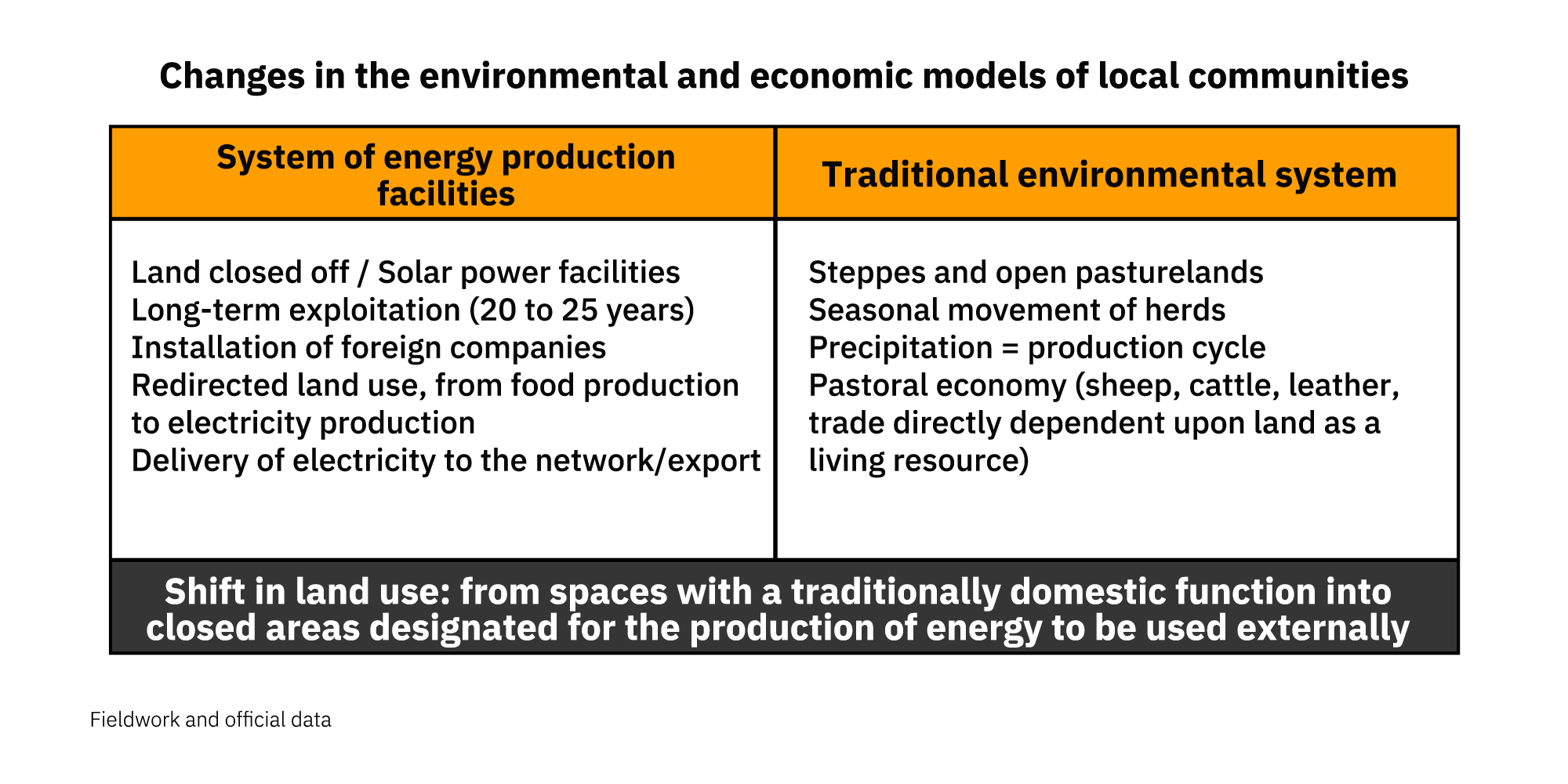
Continuing her analysis, Riahi notes that “the legal latitude granted to investment in renewable energy has facilitated access to agricultural and pasturelands, in the absence of a global vision that reconciles the requirements of the energy transition and the interests of local communities.” She adds that this policy “is inspired by a model that prioritizes export at the expense of satisfying domestic needs.”
Indeed, reforms made in recent years show how the energy sector has gradually been opened up to investments. This shift peaked when the government authorized the development of renewable energy projects for electricity production on agricultural lands; it did so without modifying the vocation of these lands as a means to accelerate investments. At the same time, it set to work restructuring the sector within a framework of concessions and long-term contracts.
The haste and disconnectedness from reality that characterize the implementation of these projects are exacerbated by the absence of adequate environmental and biological impact assessments. According to Riahi, projects are proposed without thorough studies examining their effects on biodiversity and fragile ecosystems, particularly in steppes and pasturelands. The latter play a vital role in combating desertification and in carbon sequestration in the soil, yet the lack of proper studies limits the possibility of assessing the projects’ real impacts on these ecosystems. She concludes:
The current model does not provide the conditions necessary for technological transfer or real industrial development, since the equipment used is almost entirely imported. Locally, impact remains limited to employment. Ultimately, natural resources are redirected to energy production that is mainly for export, and the cost is the inexorable shrinking of spaces dedicated to grazing and agriculture. This amplifies the imbalance between the energy transition and the preservation of the land’s economic and social functions.
Beyond this, there is debate around the type of economic model on which these projects are based, and the accompanying environmental discourse. With minimal local impact in terms of employment, industrialization and technological transfer while tremendous concessions are granted to foreign enterprises, the question that arises is whether the country is undertaking an equitable energy transition, or reproducing old relationships of dependency.
Tracing over, Then “Green Washing” The Colonial Model
Elyes Ben Ammar, member of the General Federation of Electricity and Gas which is affiliated with the UGTT, argues that the heart of the controversy around these concessions lies in the chosen model for their implementation. This model redefines the relationship between the government and the energy sector within the framework of concessions and long-term contracts. It was Law 12 of 2015 on electricity production using renewable energy, Ben Ammar explains, which paved the way for the private sector, and especially foreign investors, to start producing electricity using solar and wind energy through concessions. Contracted companies which operate under this framework are in charge of building and running production facilities, and sell the entirety of their production to the Tunisian Company of Electricity and Gas (STEG).
Ben Ammar argues that “this model reproduces the system of concessions that operated during the colonial era and was dismantled upon the country’s independence. After the suspension of French concessions, the STEG was created as a unified public structure. Which moved us from direct colonialism to contractual colonialism, then from simple concessions granted to foreign enterprises to long-term contracts concluded within the context of the energy transition.” The result, Ben Ammar insists, is fundamentally the same: “an external hold on strategic resources, exacerbated by the state’s gradual withdrawal from its role as producer.”
In an interview with Nawaat, Ben Ammar outlines his concerns regarding this contractual model:
The economic risks do not fall to the investor alone, but are essentially shared by the STEG, since the contracts concluded require the latter to purchase the entirety of electricity produced over a period of 20 to 25 years. Even when the domestic network does not need the entirety of what is produced.
Ben Ammar explains that this model also encompasses “the way in which energy policies are elaborated“, citing Tunisia’s growing recourse to foreign agencies and experts in order to elaborate sector-specific studies and strategies. He argues that an important part of the decision-making process in relation to energy issues thus takes place outside of national institutions or is based on one-size-fits-all conceptions and technical choices. For Ben Ammar, this limits the autonomy of the policymaking process in a highly strategic sector.
Moreover, although the purchase price for electricity within the context of these contracts is fixed, the data shows that its determining factors remain external, for instance, exchange rates for the dinar and fluctuations in industrial prices in Europe. Since the STEG’s revenues are calculated in dinars, there is an imbalance in how long-term risks are shared between the two parties.
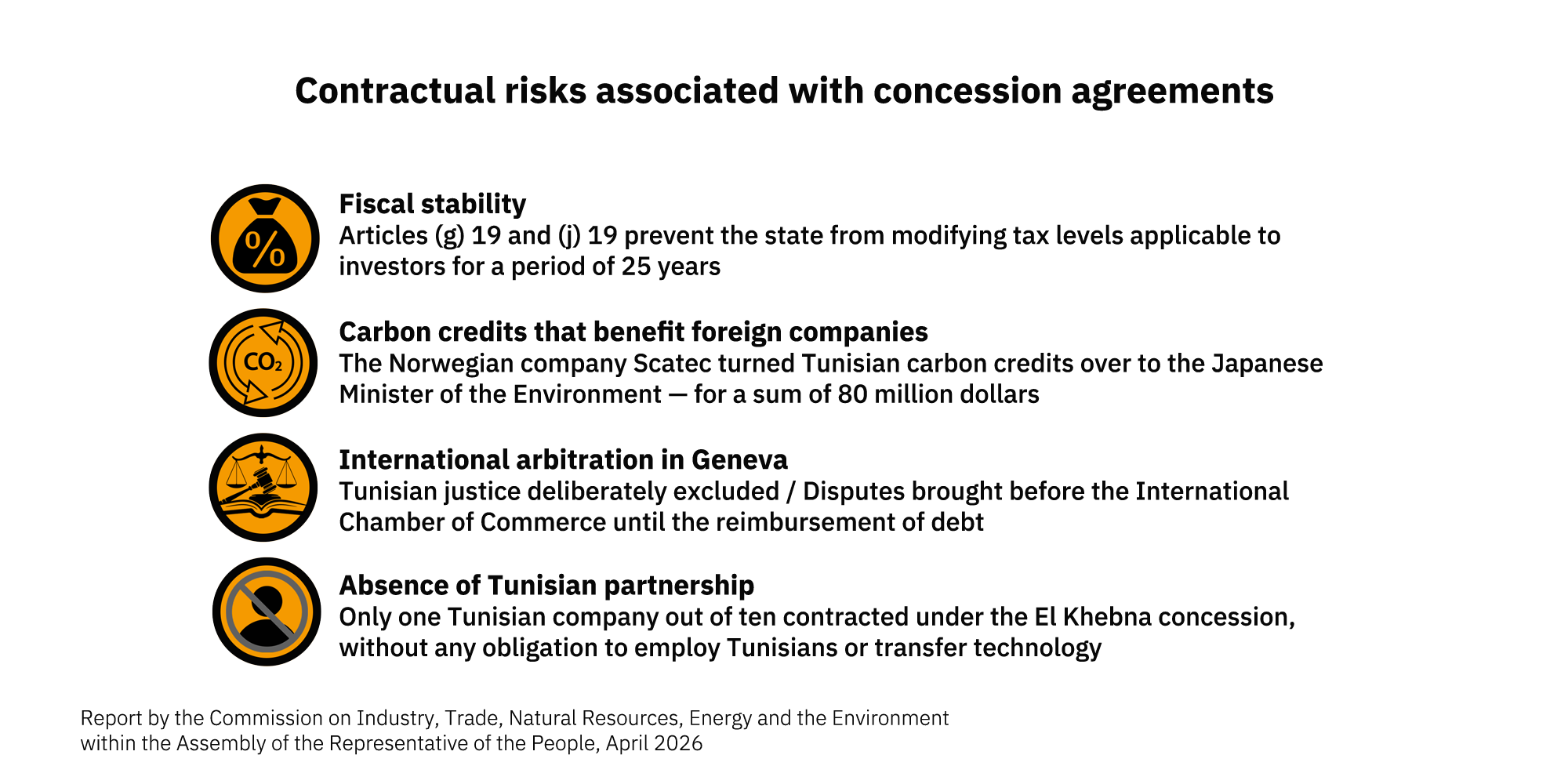
That imbalance is amplified by a series of guarantees granted to investors within the contract framework. These include a tax freeze which prevents any revisions to the tax regime for up to a period of 25 years, as well as recourse to international arbitration mechanisms based outside of Tunisia for dispute resolution. In effect, this means partially turning over contractual governance to legal systems outside the national jurisdiction. All of which favors the international nature of these contracts and ultimately limits the means of sovereign intervention.
According to the same data, a certain number of projects are carried out by international consortiums of foreign actors from across the renewable energy sector. One of these actors is Norwegian company Scatec which specializes in the development and exploitation of solar energy projects. Its name was cited in different reports when carbon credits2 were exported to foreign entities, namely the Japanese Minister of the Environment. A portion of the environmental value of certain projects was thus transferred overseas for an estimated cost of about 80 million dinars.
Local presence, on the other hand, remains limited: among the ten operators contracted under the concession, there is only one Tunisian company, and no clear guarantees in terms of technology transfer or promoting local employment.
A study published in November 2025 by the Work Group for Democratic Energy frames this transition within its historical context, beginning with economic liberalization and the structural reforms launched in Tunisia beginning at the end of the 1980’s. These reforms took legal form in 19963 when electricity production was opened to the private sector, and subsequently with the adoption of the Law of 2015. This process was not exclusive to Tunisia; it took place in a number of southern Mediterranean countries, driven by the recommendations of international financial institutions that called for liberalization and the state’s diminished role within the energy sector4.
The study concludes that what is presented today as a green energy transition does not constitute rupture with the old model, but merely a reconfiguration of it. Instead of revising the model of consumption, a portion of production is delocalized to southern Mediterranean countries rich in sun and land resources, in order to meet the needs of European markets. The study calls this process a form of “green washing” in which environmental impact and production contingencies are transferred to the South, while climatic and economic advantages are reaped in the North.
On the same question, Saber Ammar, member of the movement “Stop Pollution” and the Work Group for Democratic Energy, denounces a “manipulation of the notion of energy deficit within official discourse in order to justify concession projects.” This conception, Ammar argues, obscures the true nature of the issues behind the country’s energy imbalance. Contrary to common assumptions, most of the deficit is not due to electricity production, but rather to the consumption of oil derivatives. A fact which casts doubt upon the priorities of energy policies.
During an interview with Nawaat, Ammar breaks down the energy deficit, an estimated 11 billion dinars, as follows: about 7 billion dinars allocated to oil product imports used primarily for transport, and about 4 billion dinars allocated to natural gas. For him, this indicates that electricity production using renewable energy represents a partial solution, but does not get to the heart of the issue.

The debate around these concessions extends to other large strategic projects such as green hydrogen, which has been presented as the future of the energy transition oriented towards export. It also raises more and more questions around the resources that will be required for its production and benefits to be reaped domestically.
Green Hydrogen: Die of thirst in order to light up Europe!
Leila Riahi affirms that “the issue is even more complex because it is so closely tied to water, in a country already facing a severe shortage and growing pressures on agriculture and water supply.” She affirms that “using water as a resource in hydrogen production for export as a form of energy is going to deprive the country of a resource that is vital to its food security and agricultural production…” For Riahi, official discourse which associates green hydrogen with the energy transition serves to “partially conceal our pursuit of the same economic model based on the exportation of raw materials in a new form.” The latter imposes the composition of a new value chain—one that includes land, water, and local ecological heritage—“without developing national industrial systems capable of creating added value inside the country,” Riahi laments.
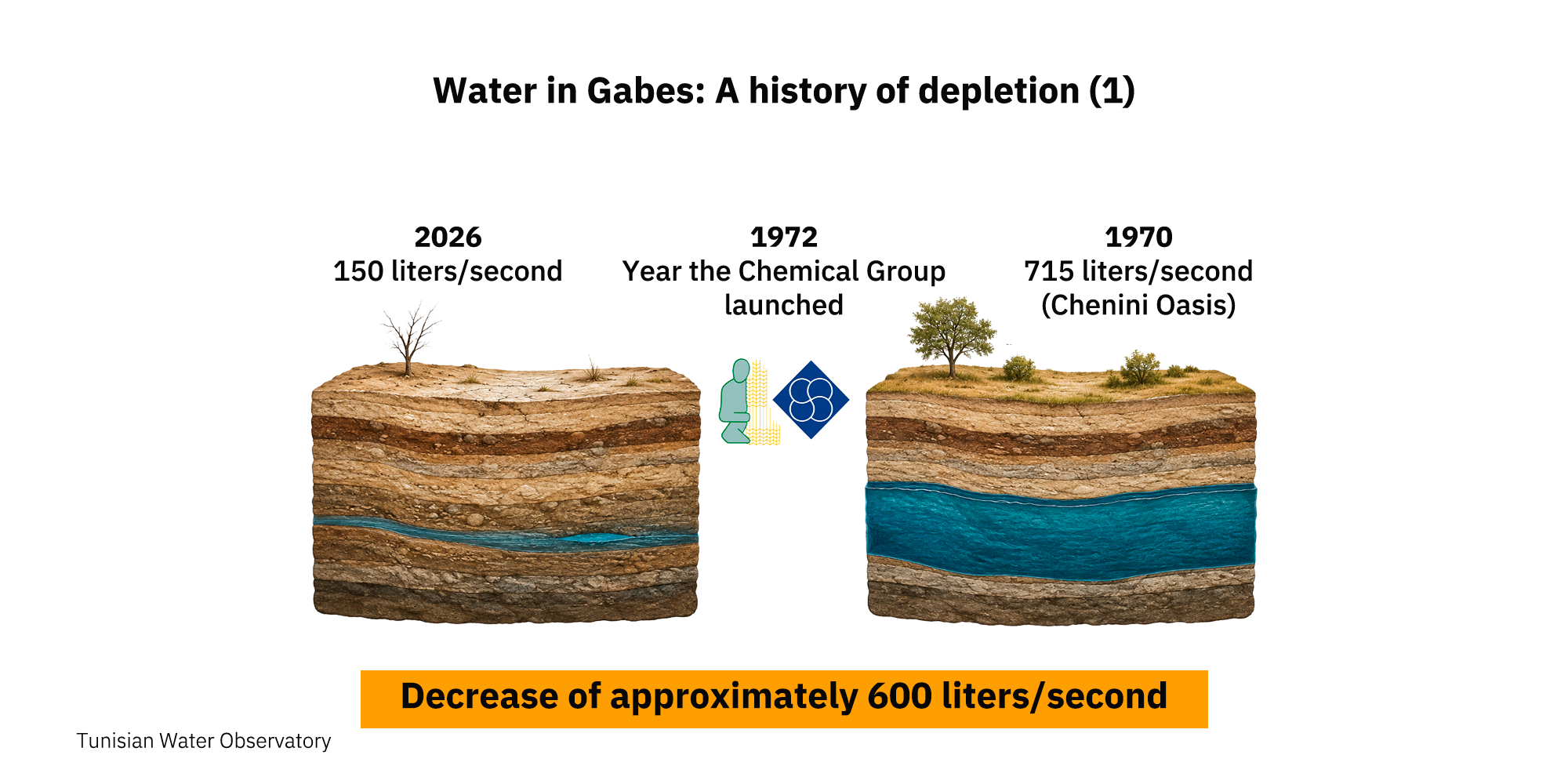
Statistics from the Tunisian Water Observatory on the water situation in the region of Gabes show the magnitude of mounting pressures on underground resources. Sample levels have decreased significantly from 715 liters per second in 1970 to about 150 liters a second today, in tandem with the expansion of industrial activities. These same indicators also reveal an increase in the cost of water use within the industrial cycle, as the needs of future energy projects continue to grow.
Through a simple calculation that draws from available technical data, we find that producing one kilogram of green hydrogen requires between 20 to 30 liters of treated water, on account of phases involved (electrolysis, purification and cooling down). According to this calculation, water consumption for the “H2 Notos” project, co-piloted by the companies Total Energies and Verbond, with a projected annual production capacity of 200,000 tons per year, ranges between four to six million meters cubed per year.
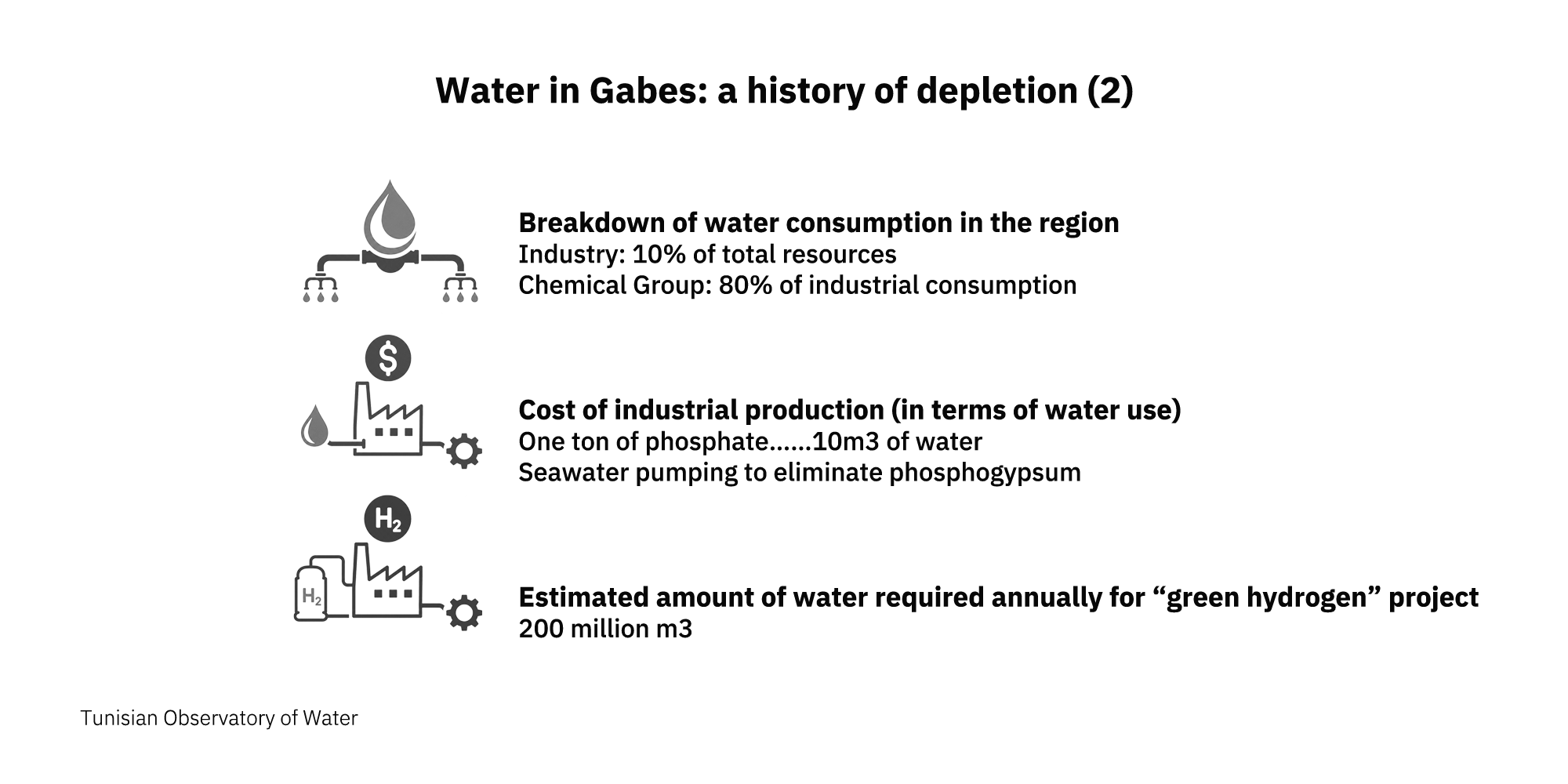
Extending this estimate to other projects planned in the “South H2” corridor which aims to export about 2.5 million tons annually to Europe, we find that the amount of water required is several hundred million meters cubed. This calculation is corroborated by the Tunisian Water Observatory, whose estimate is approximately 200 million meters cubed per year.
Practically speaking, this means that these projects will almost inevitably seek recourse to the desalination of seawater in order to meet their water needs. Which throws us right back into a vicious cycle: energy requires water, and desalination consumes energy, in a country that suffers from a severe water shortage.
Commenting on this point, Islam Zrelli, environmental activist and member of the “Stop Pollution” campaign in Gabes, argues that “banking on the desalination of sea water in order to satisfy the needs of these projects further complicates the situation.” Zrelli explains that this process demands extra energy consumption, with the added disadvantage of salt discharge that could exacerbate pressure on the fragile marine ecosystem in the Gulf of Gabes. The latter already suffers the consequences of an accumulation of industrial pollution.
Interviewed by Nawaat, Zrelli points out that even the infrastructure of these projects was largely conceived in response to European demands for clean energy, and to generate hard currencies. The so-called “South H2” corridor, he explains, is designed to transport green hydrogen produced in the south of the Mediterranean to Europe through a network of pipelines. This network spans from Tunisia to Italy, and then to Austria and Germany, with an annual capacity of up to about four million tons.
Zrelli warns against “the risk for the region of Menzel-Habib, which is supposed to be the site of a portion of the infrastructure for these projects, of ending up in a situation similar to that which it experienced in the 1970s.” He continues: “At that time, natural resources were exploited in the name of development, especially heavy industry, at the expense of local collectivities which bore the environmental and social costs of operations. This triggered a situation in which growing pressures pushed part of the population to emigrate or to look for economic alternatives outside of their region.”
For Zrelli, this evolution is symptomatic of an energy transition that has gone adrift: “Any transition that does not guarantee the preservation of water resources, does not serve local development and does not ensure that a significant portion of benefits be reflected upon production forces is an unstable transition. And still, we would call it a “green” transition.”
Along the same lines, studies published by the NGO ReCommon highlight that what is presented as a “green energy transition” in the southern Mediterranean in fact merely reproduces an inequitable division of resources. In this context, land and natural spaces in countries across the southern Mediterranean are used to produce energy with the primary objective of serving the needs of industrial Europe.
ReCommon considers that projects such as green hydrogen and large energy infrastructures constitute “false solutions” since they do not entail a substantial decrease in the use of fossil fuels, but rather ensure the transfer of the ecological impact of these activities to the south—in the guise of a “green transition.”
These “false solutions” have emerged as Europe finds itself in a state of flux following the war in Ukraine and the gas crisis. In order to alleviate the gas shortage, programs such as the European Green Deal5 and REPowerEU depend upon southern Mediterranean countries that are rich in sun and wind, especially in North Africa. They have rendered these countries strategic spaces for the production of electricity and green hydrogen.
In an exclusive interview with Nawaat, Elena Gerebizza, researcher and activist at ReCommon, highlights the existence of two parallel paths for green hydrogen projects in Tunisia: a pilot project driven by the Tunisian government in the governorate of Gabes, and another being discussed within the context of Tunisian and Italian cooperation. The latter is to be built in the region of El Hawaria, near the SERGAZ pumping station (providing gas infrastructure) and where the “Transmed” gas pipeline connects the country to Sicily. However, Gerebizza also criticizes “the absence of data reflecting the elaboration of independent impact studies on the environment and water prior to site selection, as well as the hidden cost of these projects for natural resources.”
All of this explains the acceleration of events in 2024 and 2025, when Tunisia and Italy engaged in a series of meetings and consultations in order to examine the project in question. Under the “Mattei Plan,” which integrates the issues of energy and immigration under a global Italian strategy, Italy’s ENI, Enel and Acea are also involved in the project, which was mentioned in an official report presented by the Italian government to Parliament in June 2025.
Over the course of our investigation, we reached out to the Ministry of Industry, Mines and Energy for an official response to several anomalies which surfaced in our research. An interview request was thus submitted to the Ministry, and we got in touch with the communications department which informed us that the Ministry refused to comment on concessions at that time.
Nawaat addressed a similar request to the Ministry of the Environment in order to investigate the environmental implications of these projects, however, we have yet to receive a reply.
Regardless, the data available indicate that the evolution of energy policies in Tunisia are following a European trend to redefine the priorities of the energy transition across the Mediterranean. It is clear that the priority is to guarantee the external provision of energy through liberal approaches that align with external conditions and financing.
This process is being implemented at the local level using a double approach that involves adapting to these trends and promoting discourse that glorifies sovereignty. Nevertheless, the gap remains wide between discourse and practice in the management of this strategic issue that has been “greenwashed.” For under a green surface remains the old policy of extracting and redirecting resources overseas. Today, in the name of biased cooperation, southern Mediterranean countries have been mobilized to produce energy solutions for crises in the North without reaping any advantages. The result: an unequal redistribution of resources, and growing pressure on local collectivities and future generations.
- Report by the Commission of Industry, Trade, Natural Resources, Energy and the Environment on draft laws 01, 02, 03, 04 and 05 of 2026 concerning the approval of agreements for electricity production by several photovoltaic power plants. Assembly of the Representatives of the People (ARP), April 2026. Available on the ARP official site: www.arp.tn ↩︎
- Carbon credits: units representing the equivalent of one ton of carbon dioxide reduced or eliminated. Used in carbon markets to offset emissions. ↩︎
- Law 27 of April 1, 1996 on the granting of concessions for electricity production within the private sector. ↩︎
- Study entitled “The energy transition in Tunisia: between privatization and energy sovereignty,” Work Group for Democratic Energy (EMLAD), November 2025. ↩︎
- European Commission, “The European Green Deal,” 2019. ↩︎


une analyse qui se respecte , toutefois avec le changement climatique et societal,les terres affectees à ces projets sont pratiquement à l abondon et la defense du modele sylvopastoral en danger…..est nuancée
An excellent comprehensive article of the true cost of solar