Conceived as a model to help society’s most vulnerable groups—including women, Tunisia’s law on social and solidarity economy has, in fact, had the opposite effect.
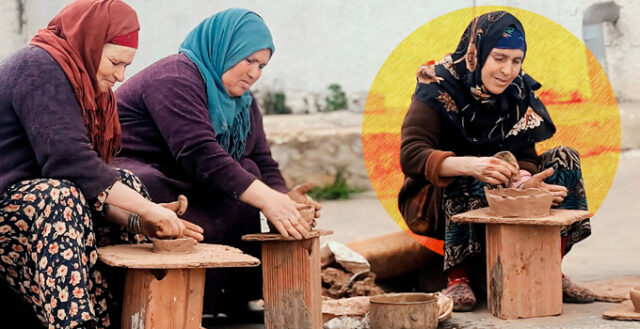
Conceived as a model to help society’s most vulnerable groups—including women, Tunisia’s law on social and solidarity economy has, in fact, had the opposite effect.
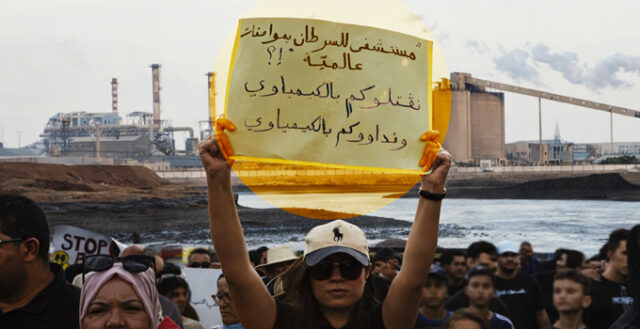
Women are the first victims of air pollution produced by the Tunisian Chemical Group in Gabes. Today, women of the region are at the forefront of an unprecedented social movement, fighting to ensure the future of their children and of generations to come. Special report.
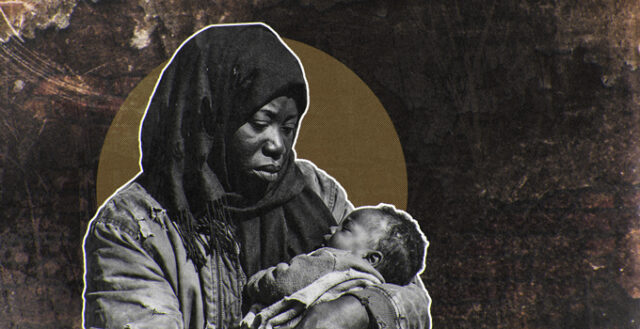
In Tunisia, migrant women give birth in precarious conditions, exposing their newborns to illness and malnutrition. Accused of contributing to a so-called “demographic change” within the country, they face administrative obstacles, racism and poverty. Their survival depends largely on the charity and limited assistance of international organizations.
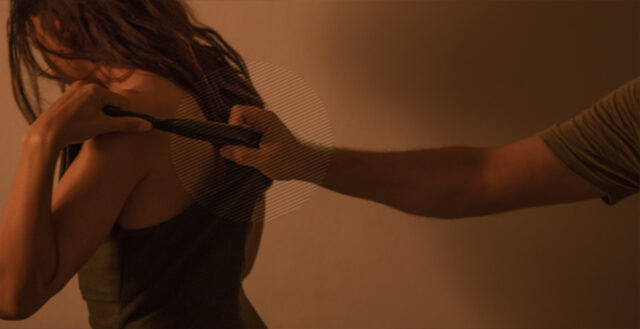
Hamida, now 63, spent years unable to name what she endured—rape perpetrated by her own husband. Her experience, unfortunately far from rare, highlights the deep-seated taboo around marital sexual violence in Tunisia, where cultural, religious, and legal norms continue to enforce the silent suffering of countless women.

Terrorized by wildfires and abandoned by the government, the women who inhabit Tunisia’s mountains and forests have not lost heart. Indeed, they are taking action—with joy and dedication—to rejuvenate the forests which are their entire world.

The women who use injectable drugs in Tunisia number in the thousands. Victims of violence, they turn to sex work where they are exposed to HIV infection. And yet they are ignored, rendered invisible by the Tunisian government and feminists alike, as one activist explains to Nawaat.

They are grassroots activists, journalists and politicians. They face the wrath of a regime which sets out to silence dissenting voices. And, like their male counterparts, these Tunisian women pay the price for their activism.

Sexual innuendos, fondling, inappropriate remarks…For some university students, the academic experience is tinged with this sort of abuse. Sexual harassment in Tunisia’s higher learning institutions is a widespread phenomenon that is both normalized but also “almost taboo.”

Every year, Nawaat—one of Tunisia’s rare independent media outlets, which publishes both a webzine and paper magazine—hosts its festival in the capital. The original theme chosen for this year’s edition was feminism, however, current events in Palestine pushed Nawaat’s editing team to expand the scope of the event in tribute to the spirit of resistance.

In 2017, President Beji Caid Essebsi rescinded a circular from 1973 prohibiting civil registrars from establishing marriage contracts between Tunisian women—inherently presumed to be Muslim—and non-Muslim men. Lauded by feminists, the decision has ultimately proved ineffective as notaries and municipal authorities continue to apply Islamic sharia in this context.

Violence against women has reached an alarming high. On average, one woman is killed by her husband every month. Law 58 of 2017 was adopted to prevent such violence. And yet five years later, the political will and resources necessary for its application are still MIA.

As the CEDAW Committee prepares to examine the situation for women’s rights in Tunisia, feminists fear the Convention’s demise. In 2011, Tunisia withdrew its reserves regarding the CEDAW. A political decision that was not followed by legislative reform.

Their names are Baya Zardi, Hanène Elleuch, Najla Ettounssia, Rania Toumi… What they share in common: a certain representation of beauty and knack for creating a buzz. And indeed, they devote themselves body and soul to this end—even when it sets them against other women.

The new electoral law unilaterally decreed by president Kais Saied spurred outcry among women’s rights advocates in Tunisia. In protest of the new legislation, a feminist movement formed of nine associations staged a sit-in before the Independent High Authority for Elections (ISIE). As these activists voice demands for absolute parity between men and women in the public sphere, the president’s backwards approach to equality threatens to reverse women’s political gains.

President Kais Saied marked National Women’s Day in Tunisia on August 13 by sending his wife to make a celebratory speech in which she sang her husband’s praises. That didn’t sit well with many Tunisians who reminded her that ‘first lady’ is not a recognized function in the country.

3.2% of Tunisia’s incarcerated population are women. Asma is one of them. In an interview with Nawaat, Asma opens up about the appalling conditions inside women’s prisons. For many inmates, violence, whether socio-economic or psychological, is a fact of their past and present. A study by Beity and Lawyers Without Borders sheds light on their experience in prison and beyond.

A notable achievement since Tunisia’s adoption of law-58 on the Elimination of Violence Against Women in 2017 is that it has broken the taboo on speaking about domestic violence. Yet, while spousal violence has received significant attention, it can be seen as representing the trees hiding the forest: family violence, and its multifaceted implications for women in their adulthood, remains a kind of family secret. It is time to shed light on this dimension of violence against women.

I was on my treadmill exercising and watching Nicki Minaj “killing it” in one of her concerts when I saw a notification on my Facebook stating that Tunisian President Kais Saied had just nominated Ms. Najla Bouden as the new Head of Government. This would make her the first to hold such a high position in Tunisia as well as the first in the Arab world. I was excited for only a few seconds. As a Tunisian woman and a feminist who founded the association “Aswat Nisaa” to enhance women’s political participation and advocate for gender sensitive public policies, this should have been a celebratory moment! But it wasn’t for me. Why—I asked myself—am I being a joy-killer here? Am I being a “bad feminist ”?
