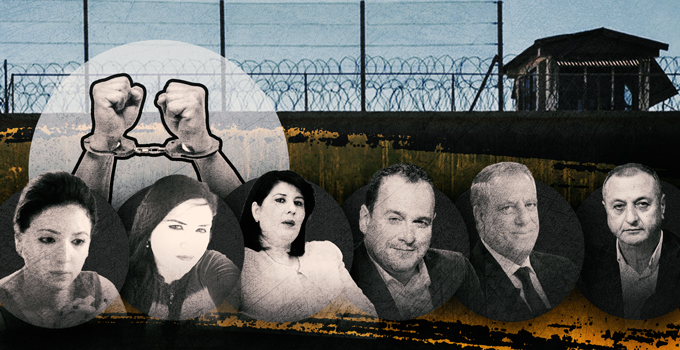
The particular trajectories of these Tunisians intersect with broader trends that have developed over the past few years: the use of Decree 54 on cybercrime, the multiplication of “conspiracy” files under the anti‑terrorism law, and an overarching strategy to weaken or neutralize intermediary bodies such as political parties and independent media. Examined collectively, these cases show how criticism, opposition activities or organization, and even private political discussions have come to be treated as security threats.
Introduction
Since the presidential power grab of 25 July 2021, Tunisia’s executive authority has tightened control over parliament, the judiciary, and oversight institutions, while systematically portraying political parties, NGOs, and journalists as obstacles to popular sovereignty. Official discourse has framed critics as corrupt elites or foreign agents, creating a climate in which legal tools—Decree 54, penal code provisions on insulting the president and conspiracy, and anti‑terrorism and money‑laundering legislation—are used to police expression and political activity.
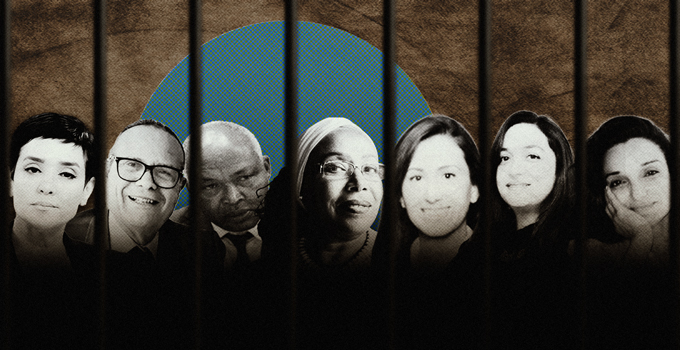
Major political trials, including the so‑called “plot to undermine national security,” are conducted under partial media blackouts and with remote hearings, raising questions about transparency and the right to a fair defense. Against this backdrop, the six profiles below trace the path from practicing one’s profession or engaging in peaceful opposition activities, to arrest, prosecution and, in several cases, heavy prison sentences.
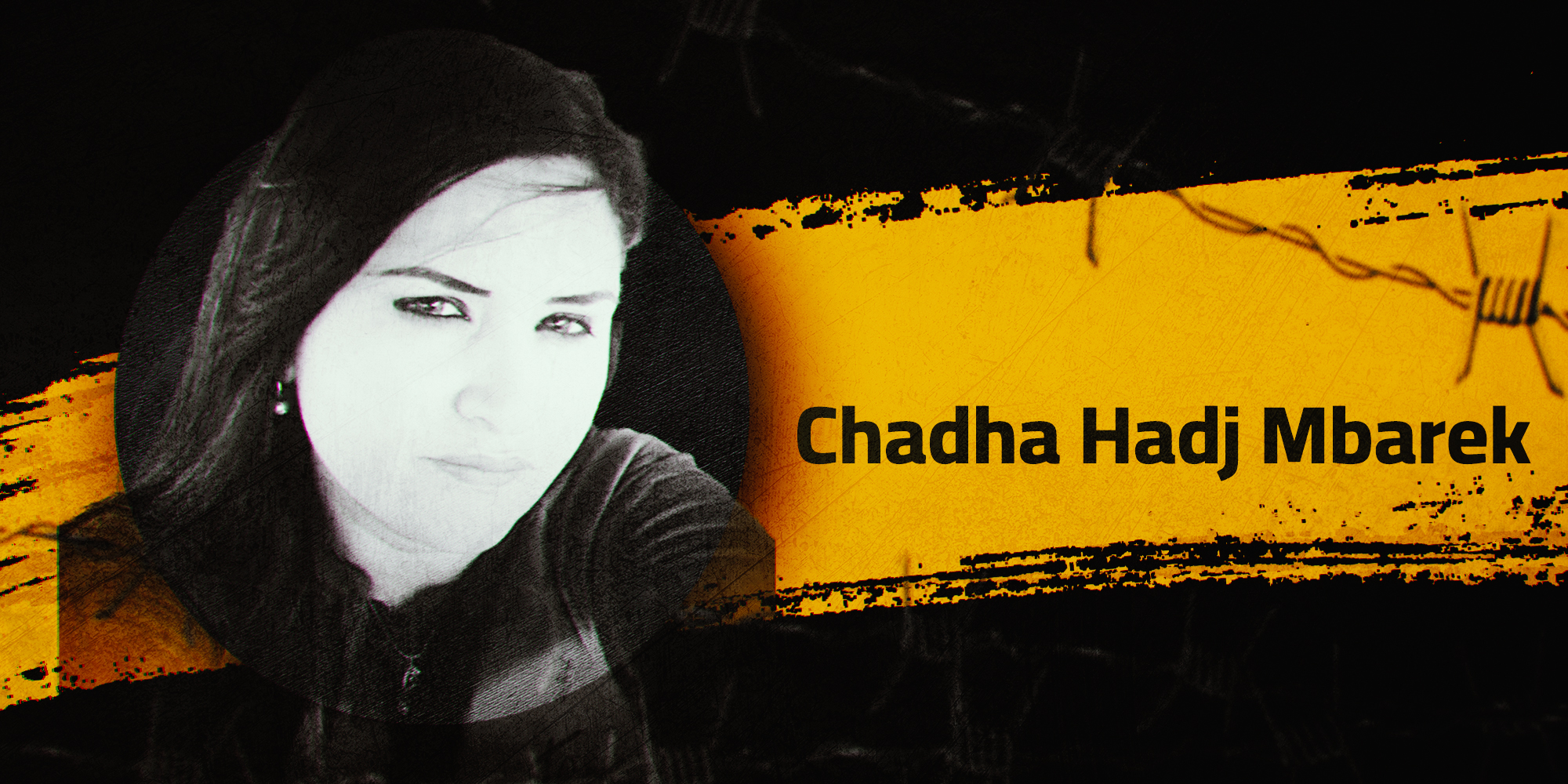
Chadha Hadj Mbarek: From Copy Editor to High-Risk Suspect
For years, Chadha Hadj Mbarek worked largely out of the spotlight as a language corrector for media and content production company Instalingo in Sousse. Instalingo became the center of a major case in 2021 in which it was accused of producing hostile content, conspiracy against state security, money laundering, and other serious charges involving a broad spectrum of political and media figures. Hadj Mbarek was thus arrested and accused on the basis of penal code provisions relating to conspiracy against external state security and insulting the president. After a long investigation, on June 19, 2023 a judge at the Sousse Court of First Instance dropped all charges against her, noting that there was no evidence of any activities beyond her limited role as corrector with no editorial responsibility. She was released as proceedings continued involving others on trial in the same case.
However, Hadj Mbarek’s acquittal was not the end of her ordeal. A wave of defamatory posts and comments on pro‑government pages attacked the judge’s decision to release her, claiming she was part of an organized media plot. Within weeks, a new arrest warrant was issued by the indictment chamber, and she was once again detained and transferred to Messaadine prison in July 2023. The legal basis was article 61 bis (external conspiracy) and article 67 (insulting the president), and she was tried before criminal chambers in Sousse and later Tunis. In February 2025, she was sentenced to five years in prison, a ruling which the journalists’ union described as excessively harsh and dangerous for press freedom; the union called out the absence of concrete acts and the failure to distinguish between linguistic corrections and editorial decision‑making. Her lawyer underlined that she had been treated as if she were responsible for the company’s editorial content, despite the fact that her job was limited to language correction.
Hadj Mbarek’s detention has taken a heavy toll on her health. In Messaadine prison, she suffers from eye hypertension, joint pain, severe digestive issues and fainting spells, which have driven her to several hunger strikes. In a letter made public she wrote that she could no longer tolerate painkillers and described constant vomiting, pain and fear that she would die if nothing changed. She also has a hearing impairment, and the union has pointed out that investigators did not provide adequate accommodations during interrogations, casting doubt on the validity of her statements. Complaints about harassment and violence from cellmates have not led to any tangible response from authorities. The case has also affected her family: accused of photographing her case file, her father and brother were detained for 48 hours, and the family moved following threats and smear campaigns. Her brother has stated that these pressures are “derisory compared to the tragedy my sister is living, deprived of care, justice, and dignity.” Hadj Mbarek’s story is a clear example of how the regime’s campaign against media critical of the government has come to affect even rank‑and‑file staff.
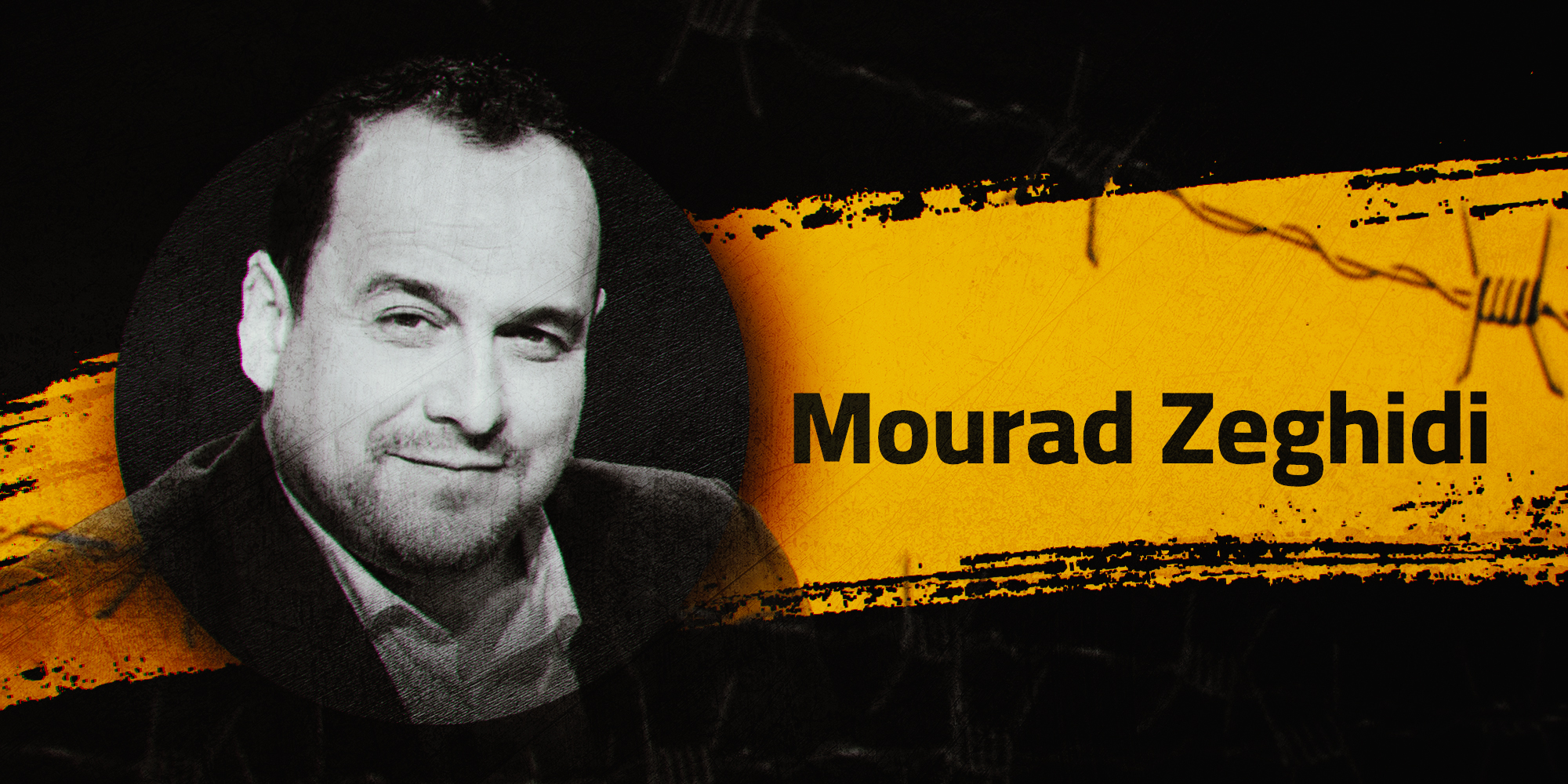
Mourad Zeghidi: Opinion Criminalized under Decree 54
For many Tunisians, Mourad Zeghidi is a familiar figure on radio and television: a journalist and commentator known for his calm tone, insistence on nuance, and refusal to adopt a partisan posture. He has often voiced concern for public and individual freedoms and publicly supported journalists and activists facing prosecution, including colleagues such as Mohamed Boughalleb. His social media posts and on‑air comments have often criticized government policies but have not broken with professional standards around verification and balanced reporting. As Decree 54 on cybercrime began to be applied more aggressively, however, authorities took an interest in his statements.
On May 11, 2024, the anti‑crime sub‑directorate informed the public prosecutor that Zeghidi had “deliberately offended the Head of State” through online publications and mocked presidential decisions. The same day, prosecutors opened an investigation, ordered a search of his home, seized his devices and placed him in custody, although the posts in question dated back more than three years. His defense argued that this exceeded the prescriptive period and that the timing of authorities’ investigation revealed a political motive in light of Zeghidi’s recent support for other detainees. During the investigation, accusations against Zeghidi were reframed as a violation of Decree 54 through intentional use of information systems to create and disseminate “false information and rumors” and to attribute false facts with the purpose of defaming and causing harm. He was sentenced by the court of first instance to one year in prison—six months for each of the decree’s two main clauses—later reduced on appeal to eight months. His lawyers stressed that neither the file nor the cited publications contained proof that he knowingly spread false news or incited hatred, and saw the case as punishment for critical opinion.
Even after serving his sentence on the basis of Decree 54, Zeghidi remained in detention because of a second case linking him to alleged money laundering within the framework of an “entente” with TV host Borhen Bsaies. Anti‑terrorism legislation was invoked to justify extended pre‑trial detention, although the defense still had not been granted full access to the file when the investigation was closed and sent to the indictment chamber. His arrest and ongoing detention shocked his family, steeped in a tradition of activism dating back to anti‑colonial struggles. His sister Meriem has described how the family’s time and emotional energy now revolve around prison visits, queuing to deliver food and medicine, and short moments with him. She appears at protests wearing a T‑shirt with his image and a phrase he repeated in court—“I assume responsibility”—turning his words into a quiet form of resistance. Rights organizations and press‑freedom reports now routinely cite his case as an example of how Decree 54 is being used against the freedom to express one’s opinion and how anti‑terror provisions can be layered on top to keep critics behind bars.
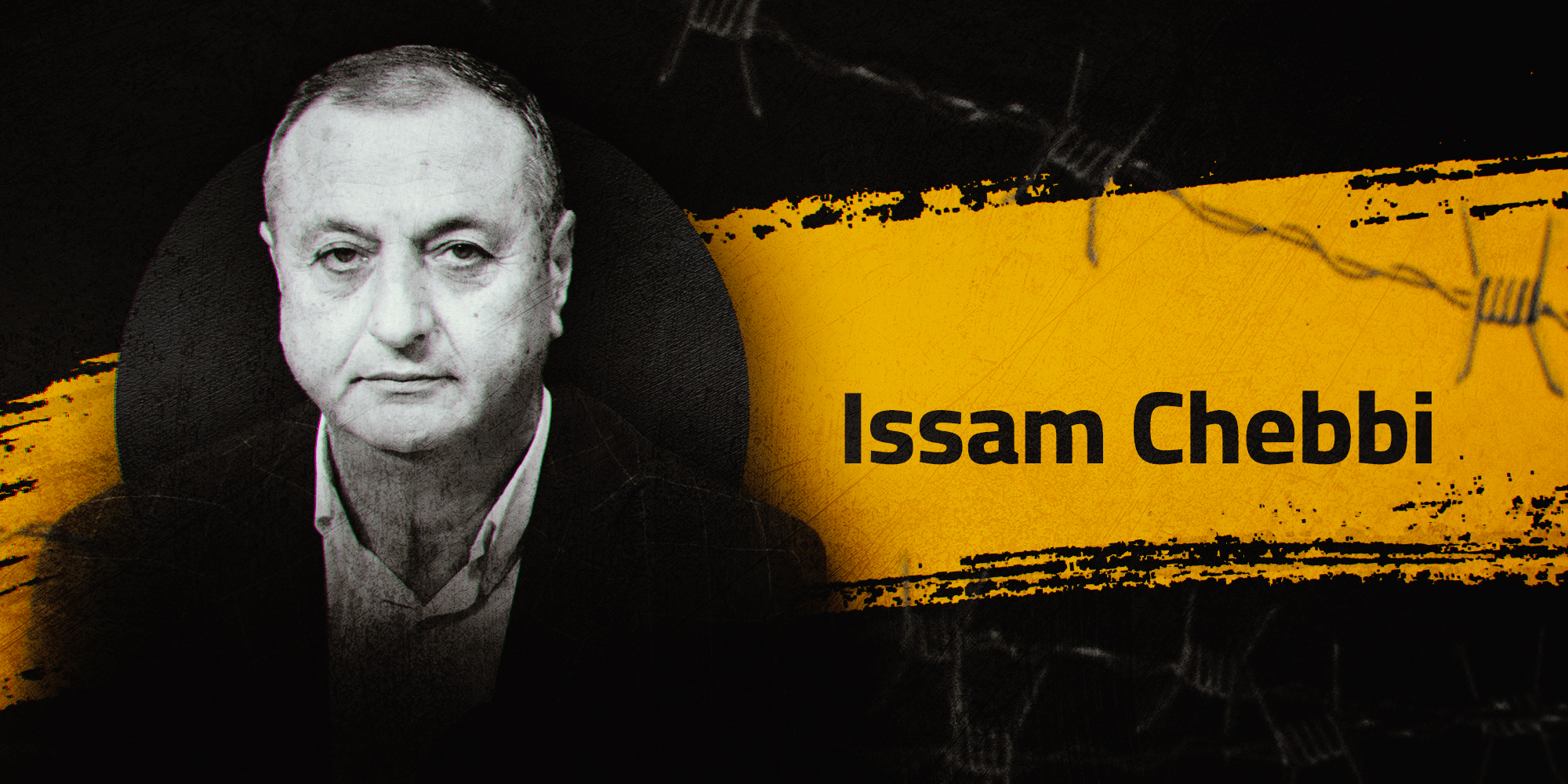
Issam Chebbi: Peaceful Opposition Framed as Conspiracy
Lawyer and opposition politician Issam Chebbi is a leading member of the Republican Party and a prominent voice in alliances opposing President Kais Saied’s roadmap. He was active in initiatives calling for a national dialogue as an alternative to the concentration of powers after July 25, participating in press conferences and political coordination among parties and civil society actors. His legal troubles began when he was swept into the large “plot against state security” case opened in early 2023 against dozens of political, media, and economic figures. The case originated with the arrest of businessman and former Ettakatol leader Khayam Turki by the National Unit for Investigation of Terrorist Crimes, which seized his phones and built a file combining intelligence reports and communication intercepts.
From there, the investigation expanded to include an array of actors accused of “conspiracy against internal and external state security,” “forming or joining a terrorist organization,” and “participating in a plot aimed at changing the form of the state, inciting armed conflict between citizens, and undermining food security.” Chebbi was listed among those allegedly involved, alongside personalities such as Ahmed Néjib Chebbi, Jawhar Ben Mbarek, and Ghazi Chaouachi. Much of the evidence cited consists of WhatsApp conversations about the political situation, contacts with foreign diplomats, and participation in meetings discussing how to respond to the post‑July 25 context. Defense lawyers argue that this activity falls squarely within the remit of opposition politics and that the anti‑terrorism law is being stretched to criminalize dissent. The indictment relies on around a dozen charges grounded in multiple articles of the anti‑terrorism and money‑laundering law and ten penal code articles, including article 72, which provides for the death penalty in cases of attempts to change the system of government or provoke armed internal conflict.
Procedural practices in this case underline the pressure on defendants’ rights. Authorities imposed a media blackout on proceedings, and major hearings have taken place by video link, with defendants appearing from prison rather than in person before the court. Defense teams denounce these arrangements as arbitrary and argue that they reinforce the adversarial nature of the trial. The investigative judge who initially issued the arrest warrants later fled the country and is now subject to an international arrest warrant, a scenario that has further eroded confidence in the process. While some of those mentioned in the file, including certain foreign contacts, have been cleared, politicians such as Chebbi continue to face the full weight of conspiracy charges. Lawyers emphasize that an expert analysis of intercepted communications concluded that conversations among defendants aimed at organizing dialogue rather than plotting violent action, but that this conclusion was not integrated into the final investigative report. Chebbi’s situation illustrates how organized political opposition is being reinterpreted as potential terrorism, leaving little room for legal, non‑violent contestation of the presidency’s course.
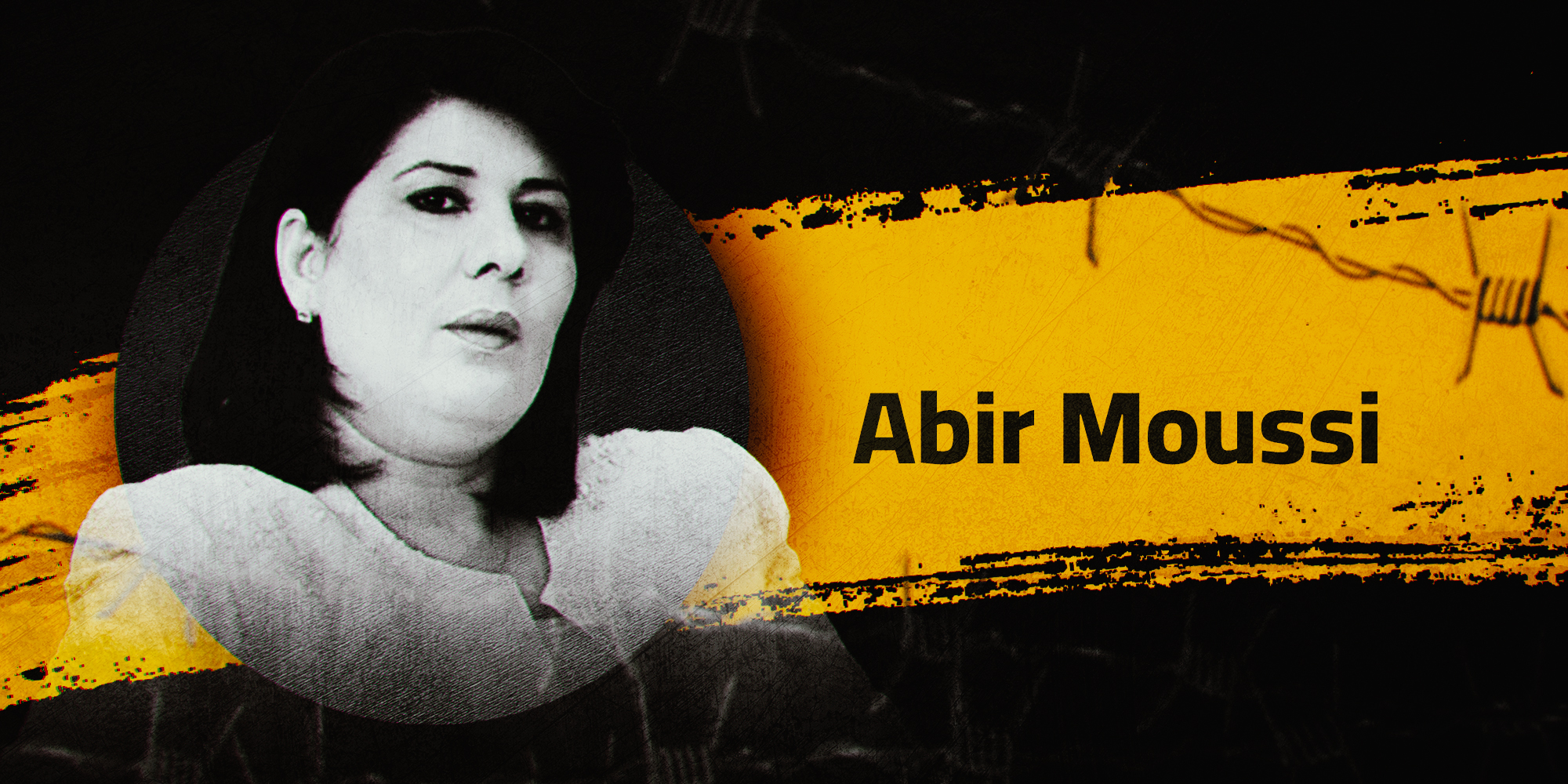
Abir Moussi: A Polemical Figure Facing Capital Charges
Abir Moussi, president of the Free Destourian Party (PDL), has long been one of Tunisia’s most polarizing political figures. Her public persona was built upon fierce hostility to Ennahdha and the post‑2011 order, as she defended elements of the pre‑revolution system while denouncing both Islamist and leftist opponents. After July 25, she opposed President Saied’s dismantling of parliament and warned against what she described as a slide toward personal rule. Her arrest in October 2023 marked a turning point, demonstrating that the crackdown would not spare even those who stood ideologically closer to the old regime. Initially detained after an incident at the presidential palace (Carthage)and for alleged violations related to party activities and communications, she was gradually drawn into broader cases involving charges of conspiracy against state security and in relation to Decree 54. By 2025, she was being tried before a specialized anti‑terrorism chamber, with prosecutors invoking article 72 and exposing her to a possible death sentence.
Court sessions have been tense, with heavy security measures, restricted media access, and mobilization of PDL supporters outside court buildings. Prosecutors portray her as seeking to destabilize institutions, pointing to protests, sit‑ins, and attempts to submit complaints or legal challenges as part of a plan to obstruct the functioning of the state. Her lawyers respond that these actions fall within the normal exercise of political rights, and that applying terrorism‑related provisions to a party’s mobilization activities blurs the line between opposition and criminal conspiracy. Observers note that while Moussi’s discourse is often aggressive and divisive, the core legal issue is whether calling for political change, organizing demonstrations, and criticizing the president can legitimately be equated with attempts to overthrow the state by violent means. International organizations monitoring Tunisia’s rule‑of‑law situation increasingly list her among political detainees or highlight her profile as emblematic of the broadening scope of individuals targeted by the government’s repressive policies.
The impact on her party and on the political scene has been significant. Moussi’s detention has weakened the PDL’s organizational capacity and presence in the media, while the broader climate has made it risky for parties across the spectrum to mobilize in the streets or hold large public meetings. Analyses of the “July 25 regime” and its relations with intermediary bodies emphasize that parties, even those critical of the 2011 revolution, are now treated as competitors to be neutralized rather than actors to be negotiated with. Moussi’s case sends a signal to all organized political forces that none are protected from prosecution when they challenge the presidency’s trajectory. The possibility of a capital sentence under article 72 adds a further layer of pressure, indicating how far authorities are willing to go in recasting political conflict as criminal conspiracy.
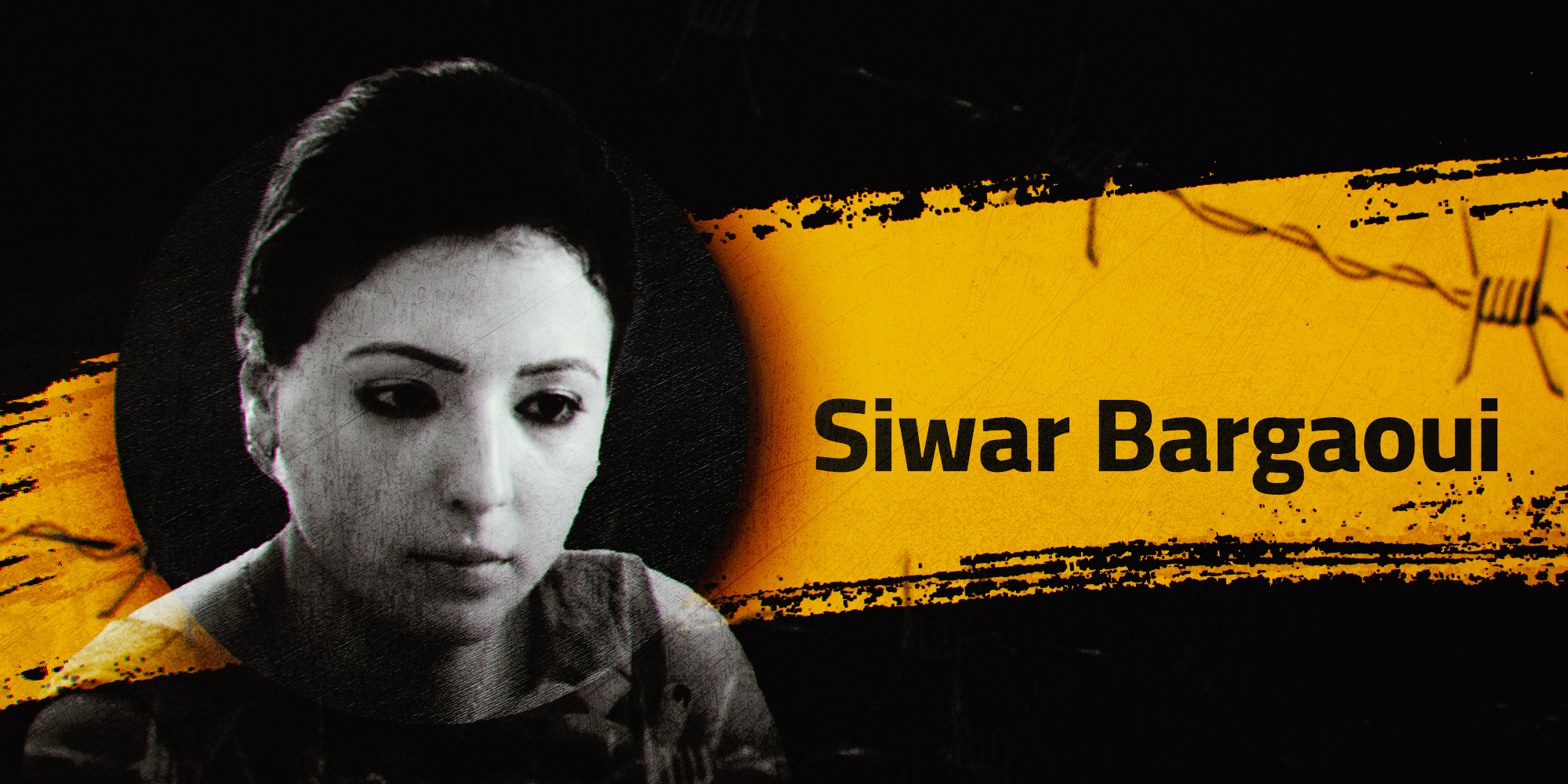
Siwar Bargaoui: A Young Political Activist in the Shadows
In contrast with the cases of the well‑known personalities described above, the case of journalist Siwar Bargaoui has attracted relatively little public attention. Bargaoui was arrested in September 2024 and incarcerated three days later, faced with charges of falsifying voter signatures, misusing personal data and offering voters gifts and money in exchange for their support for presidential candidate Ayachi Zammel who ran against Kais Saied in the 2024 election.. Her name is largely absent from major political statements and international campaigns, and information about her case reaches the public only in fragments through rights‑focused coverage. What emerges is the picture of a young journalist whose campaign work for Ayachi Zammel and the Azimoun movement landed her behind bars to serve overlapping sentences with repeated postponements of hearings and generic refusals of requests for provisional release.
This situation illustrates how the architecture of repression under Tunisia’s current regime affects those without prominent platforms or strong institutional backing. Bargaoui’s defense relies on a small circle of lawyers and relatives, limiting her access to national media or coordinated support structures. Families of high‑profile detainees often receive visits from party delegations, unions, or foreign observers; in her case, contacts with the outside world are fewer, and the ability to put pressure on the courts is minimal. Context reports on the authorities’ use of conspiracy charges and on the silencing of political trials emphasize that opacity is not limited to emblematic cases but extends to lesser‑known individuals caught in the same legal frameworks. A combination of prolonged pre‑trial detention periods, scarce information around accusations, and lack of visibility around legal proceedings creates a kind of legal limbo in which individuals can remain behind bars for long periods without the safeguard that public scrutiny might provide.
The personal and social consequences for such detainees and their families are profound. Relatives must navigate the legal system largely on their own, often without clear timelines or explanations for procedural delays. Economic pressures accumulate as they juggle work, legal fees, and prison visits. They point out that when young, lesser‑known activists can be detained for long periods on vague charges of “falsifying information” or “misuse of personal data,” the chilling effect extends well beyond elite political debates and reaches everyday citizens considering whether to speak out, take part in protests, or participate in political campaigns or movements that might be perceived as a threat by the government.
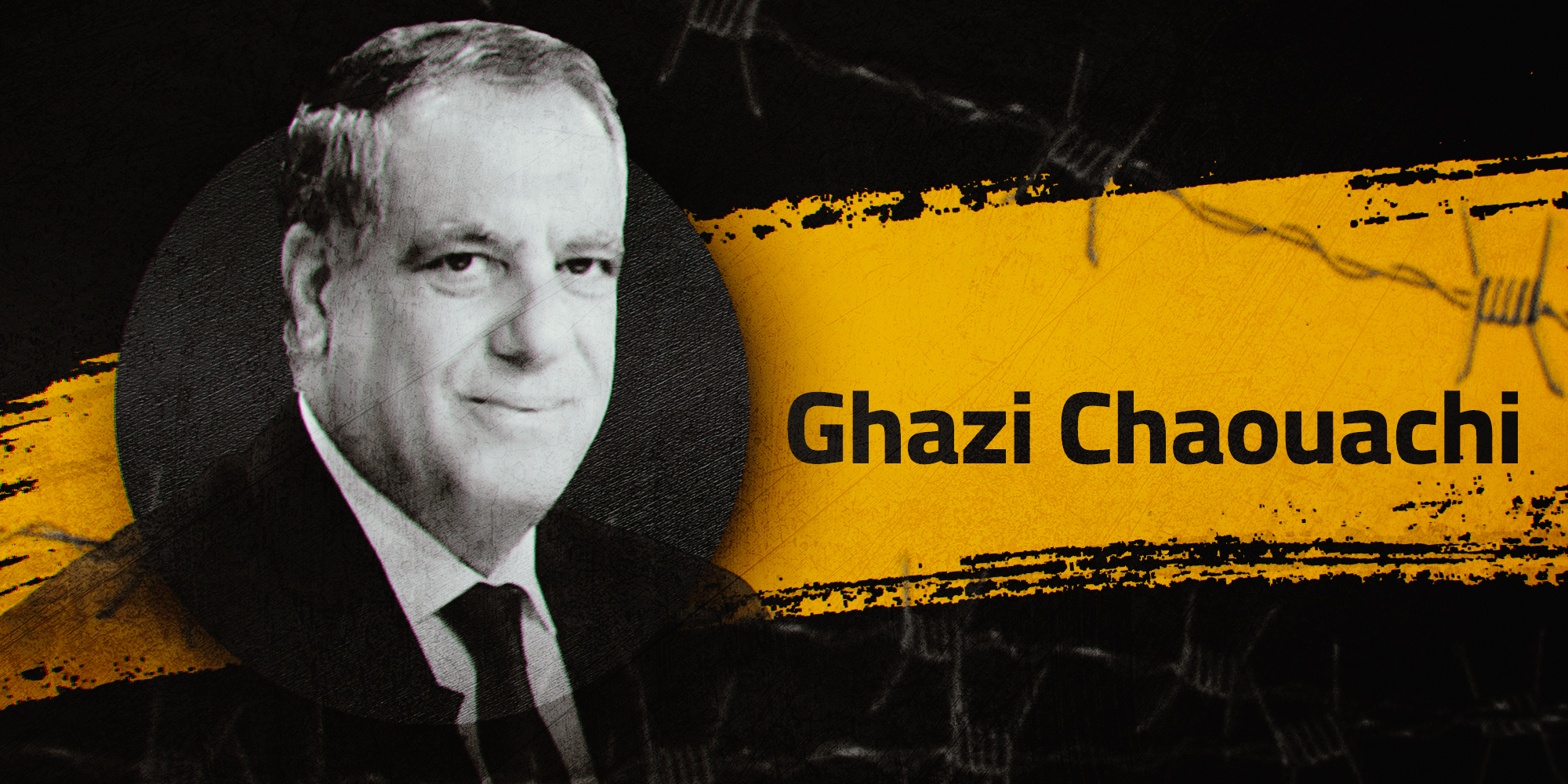
Ghazi Chaouachi: 20-Year Sentence for Discussing Politics on WhatsApp
Lawyer, former MP and ex‑minister Ghazi Chaouachi played a central role in Tunisia’s post‑2011 institutional life as co‑founder of the Democratic Current (Attayar) and an active parliamentarian. Between 2014 and 2019, he was among the legislators who most frequently proposed amendments, reflecting his involvement in legislative detail and oversight work. After July 25, he became one of the clearest critics of President Saied’s concentration of power and helped launch an initiative in late 2022 to build a national dialogue, deliberately excluding the president in an attempt to construct an alternative political roadmap. On February 24, 2023, he appeared before the court as part of the defense for detainees in the “plot against state security” case; hours later, in the early morning of 25 February, he was himself arrested at home, and his name added to the same file.
Accusations against him mirror those against other defendants in case no. 6835/36: internal and external conspiracy, forming or joining a terrorist organization, and participating in a plan aimed at changing the form of the state, provoking armed conflict between citizens, and undermining economic and food security. Investigators highlighted two elements: a WhatsApp exchange with Khayam Turki and a trip to France during which he visited his son in Lyon while traveling with fellow politician and lawyer Ridha Belhaj. Defense lawyer Dalila Ben Mbarek explains that some defendants were arrested on the basis of an anonymous intelligence source, while Chaouachi and others were targeted specifically because of their messaging‑app conversations about the political context. An expert appointed by the court reportedly concluded that exchanges among Chaouachi, Chebbi and Ben Mbarek reflected efforts to organize dialogue rather than any concrete plan to overthrow the state by force, but this conclusion was not integrated into the final indictment. In April, a first‑instance court sentenced him to 18 years in prison; on November 28, 2025, the Tunis Court of Appeal raised the sentence to 20 years, making it final.
For his family, the consequences have gone far beyond his imprisonment. His son Elyes recalls that tensions with the presidency date back to parliamentary debates over the Constitutional Court, when his father refused to delay its creation despite pressure. After a heated meeting, a presidential adviser reportedly indicated that Chaouachi would no longer be welcome at the palace. Since his arrest, Elyes has himself been the target of multiple legal cases, including accusations of insulting the president and terrorism‑related charges, and has received heavy sentences in absentia. He also reports physical and verbal attacks in Lyon in June 2025 carried out by unidentified individuals trying to seize his phone. His sister has encountered obstacles in her professional life, and their mother, a senior judge, has been reassigned from a presidency of a court of appeal to a mere membership in another court. Visits to Ghazi have become more difficult following his transfer to Nador prison, which is farther from the family’s home. For many observers, the fact that he has been condemned to serve a 20-years prison sentence largely on the basis of a WhatsApp conversation epitomizes the extent to which everyday political communication among opposition figures can now be recast as evidence of terrorism and conspiracy.
Conclusion
Across these six cases, similar legal tools and methods have been used to pressure, prosecute, incarcerate and ultimately silence those whose work in the media or participation in opposition politics are perceived as a threat to the regime in place. Decree 54 is used to prosecute online expression and media commentary, reclassifying criticism as “false information” and “defamation” delivered through information systems. Penal code provisions relating to insulting the president and conspiracy, and anti‑terrorism and money‑laundering laws, are layered on top to justify heavy sentences and prolonged pre‑trial detention. Procedural practices—retroactive use of old publications, neglect of prescriptive periods, remote hearings without defendants in the courtroom, and limited access to case files—undermine confidence in due process. Journalists like Chadha Hadj Mbarek and commentators like Mourad Zeghidi, opposition politicians such as Issam Chebbi, party leaders like Abir Moussi, lesser‑known political activists like Siwar Bargaoui, and institutional figures such as Ghazi Chaouachi all find themselves subject to the same repressive architecture.

The impact is felt well beyond the individuals directly targeted. Families experience economic, psychological and professional pressures, with some relatives also facing prosecution or administrative sanctions. Health issues in detention, particularly in overcrowded prisons with limited medical care, constitute yet another layer of punishment. For the broader public, these prosecutions send a clear signal: journalism, commentary, the organization of opposition activities and even private political conversations can carry high personal risk. Analyses of the post–July 25 order stress that intermediary bodies—parties, unions, independent media and civil society organizations—are being systematically weakened, reducing avenues for collective expression and negotiation. The stories of these six individuals offer a concrete, well-documented picture of how this strategy is implemented in practice, and how the boundaries between political disagreement and criminal liability in Tunisia are being fundamentally redrawn.


Vous êtes incroyablement exclusifs réducatifs.
Vous êtes antidemocrates et antiliberte.
Vous êtes anti socials.
Ou comment expliquer le fait de ne pas faire paraître une seule photo d’un seul prisonnier d’opinion d’un courant d’idée et politique,ni même citer un seul nom du même courant, alors que certains d’entre eux sont parmi les plus connus par leurs engagements et leurs luttes.
Vous avez au Maroc, un très bon exemple de gagner les élections et changer de bord politique sans nier à personne le droit d’existence.
Moi personnellement je ne suis pas de votre sensibilité idiologique mais je défendrai toujours votre droit de vous exprimer.