Conceived as a model to help society’s most vulnerable groups—including women, Tunisia’s law on social and solidarity economy has, in fact, had the opposite effect.
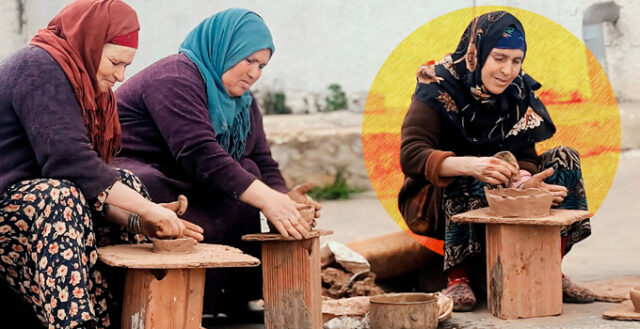
Conceived as a model to help society’s most vulnerable groups—including women, Tunisia’s law on social and solidarity economy has, in fact, had the opposite effect.

Hamida, now 63, spent years unable to name what she endured—rape perpetrated by her own husband. Her experience, unfortunately far from rare, highlights the deep-seated taboo around marital sexual violence in Tunisia, where cultural, religious, and legal norms continue to enforce the silent suffering of countless women.

The combat waged by Ultras groups in stadiums has infused social movements with a new dynamic. By challenging the government’s policies from up in the stands but also expanding their mobilization beyond, these groups have come to stand at the forefront of the struggle for civil liberties.

The women who use injectable drugs in Tunisia number in the thousands. Victims of violence, they turn to sex work where they are exposed to HIV infection. And yet they are ignored, rendered invisible by the Tunisian government and feminists alike, as one activist explains to Nawaat.

With a generation of young fathers more involved in raising their children, is Tunisia’s father figure being redefined? The answer is not clear. While the concept of “head of household” may be changing, equality between parents remains a (very) long way off.

For a long time, La Goulette seemed to be a symbol of diversity and co-existence. Some recall with nostalgia bohemian beach-goers and the intermingling of communities. But such postcard images reflect the past. Today, different populations have entered onto the scene, and the picture is one tainted by poverty.

Cannabis users in Tunisia are facing a wave of repression that the country “has not seen since the Ben Ali era,” as one activist puts it. And President Kais Saied’s war on drugs serves as pretext for the reemergence of a police state.

They demand better public transport, medicine for the neighborhood clinic and real solutions for unemployment. The state has turned a deaf ear. Residents of Douar Hicher have issued a warning: “the spark that will ignite the revolution of the hungry is here.”

Smuggling in Tunisia is often presented as a field of mystery and conspiracy. But we actually know a lot about how it works, and that engaging with it effectively requires strengthening rather than alienating border communities.

“I regret the day I threw a rock at a police officer,” says a resident of Mellassine. 13 years after the revolution, public resentment toward the police is no less palpable in a neighborhood rife with drug trafficking, crime and misery. For many young men and women here, the only apparent escape route from their daily struggle is one heading overseas.
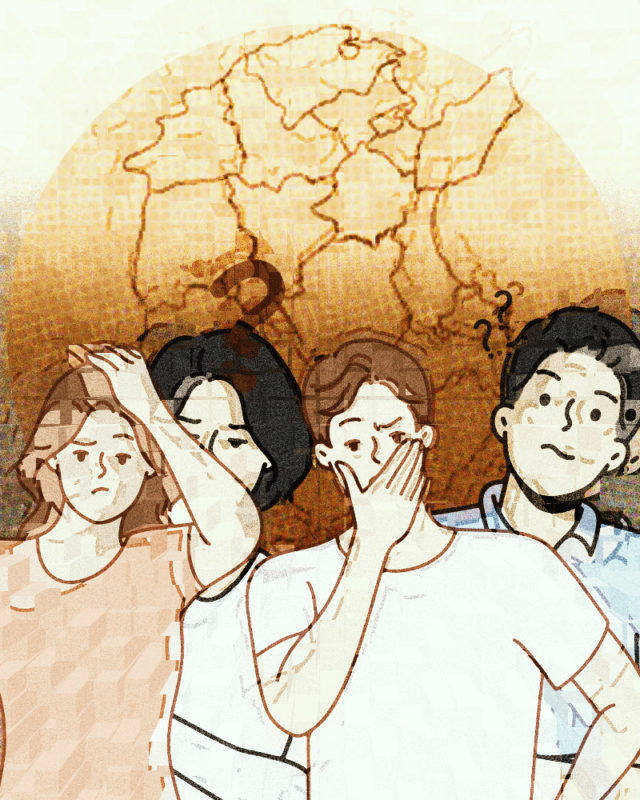
More and more, Tunisian youth are turning away from politics to focus on their personal trajectories. With the outlook grim for national salvation, young people are seeking out their own paths to individual salvation. What is the situation of these youth? What do they imagine for their future? Report.

Each year, thousands of Tunisians attempt the perilous journey across the Mediterranean in order to reach Italy. But dreams of an Italian promised land fall away as migrants are faced with a harsh reality. Once ashore, Tunisian workers enter into a life of precarity.

Nurses, doctors, engineers, university students, restaurateurs…are leaving Tunisia in droves. The country is losing its skilled workforce to Europe and the Gulf countries, with no end to the exodus in sight.

As Serbia expulses dozens of Tunisians from Belgrade, thousands of others are making their way towards Europe along the Balkan route. « I can count on one hand the number of them who are still here », says a sixty-something-year-old resident of a small village in the center of Djerba. Report.

24-year-old Lamin is from Sierra Leone. He has never tried to reach Europe and dreams of building his life in Tunisia, where he wants to start his own business. Although his situation is far from perfect in the absence of a legal work contract, Lamin reports that he takes everything in stride. Portrait.

This project is a deep dive into the unseen Tunis. A unique introspection into marginal spaces in Tunisia today, 10 […]

Mobile applications for transportation have sprung up as an alternative to standard taxis, but at a much higher cost. While Bolt, In Driver, Yassir and other applications are ostensibly more profitable for drivers, passengers feel they have been left to foot the bill for a worn-down public transportation system. The unchecked liberalization of transportation services in Tunisia is riding on the mediocrity of the sector’s public services.

As Tunisians celebrated Eid on Tuesday, crowds of people took to the newly opened, walk-in vaccination centers across the country. The centers—offering vaccinations to anyone over 18-years-old for the first time—had been announced only one day earlier for a limited two-day period. But with the limited time frame, limited vaccine supplies, unclear directives from officials, and short notice given to volunteer organizers, many centers were overwhelmed with some witnessing disruptions, overcrowding, clashes, or the total freezing of operations.
